12 Most Beautiful White Villages in Andalusia, Spain (Pueblos Blancos)
Clifftop towns, houses tucked under rock and one village painted blue: the pueblos blancos of southern Spain we send our friends to, and how to see them without a tour bus.

Diego Palomar
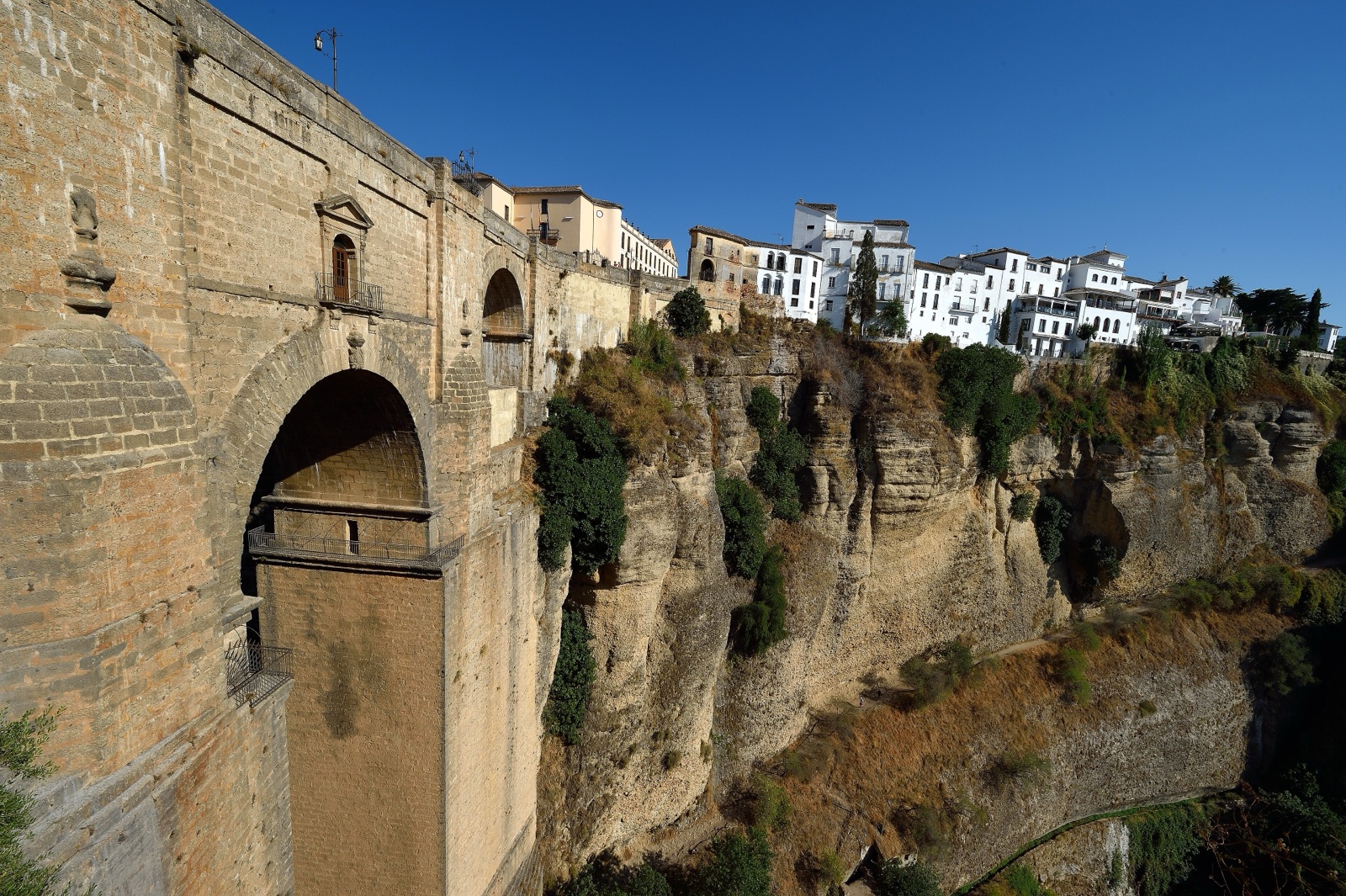
Cover photo: Tim Adams, CC BY 3.0, via Wikimedia Commons.

Drive an hour inland from the Costa del Sol and the beach towers disappear. The road climbs through olive groves and cork oaks, and then, on top of a crag, a scatter of houses so white in the midday sun that you have to squint. These are the pueblos blancos, the white villages of Andalusia.
Most of them began as Moorish strongholds, which is why they sit so high and look so hard to reach. The whitewash came later and stayed for practical reasons: lime keeps houses cool in August, and centuries ago it was also used as a cheap disinfectant. Today it is part of the landscape, and in many families repainting the walls before the village fiesta is still a small ritual.
We live on this side of Spain. These are the twelve we keep sending friends to.
1. Ronda (Málaga)
Ronda is bigger than a village, but leaving it out would be strange. The town is split in two by El Tajo, a gorge more than 100 meters deep, and stitched together by the Puente Nuevo, an 18th-century stone bridge that took more than four decades to build. Cross it first. Then take the path that goes down from Plaza de María Auxiliadora to see the bridge from below. That is the view everyone wants, and it is a 20-minute walk.
Day-trippers from the coast fill Ronda from late morning to late afternoon. If you can, sleep there and walk the old town after dinner, when it goes quiet.
2. Setenil de las Bodegas (Cádiz)
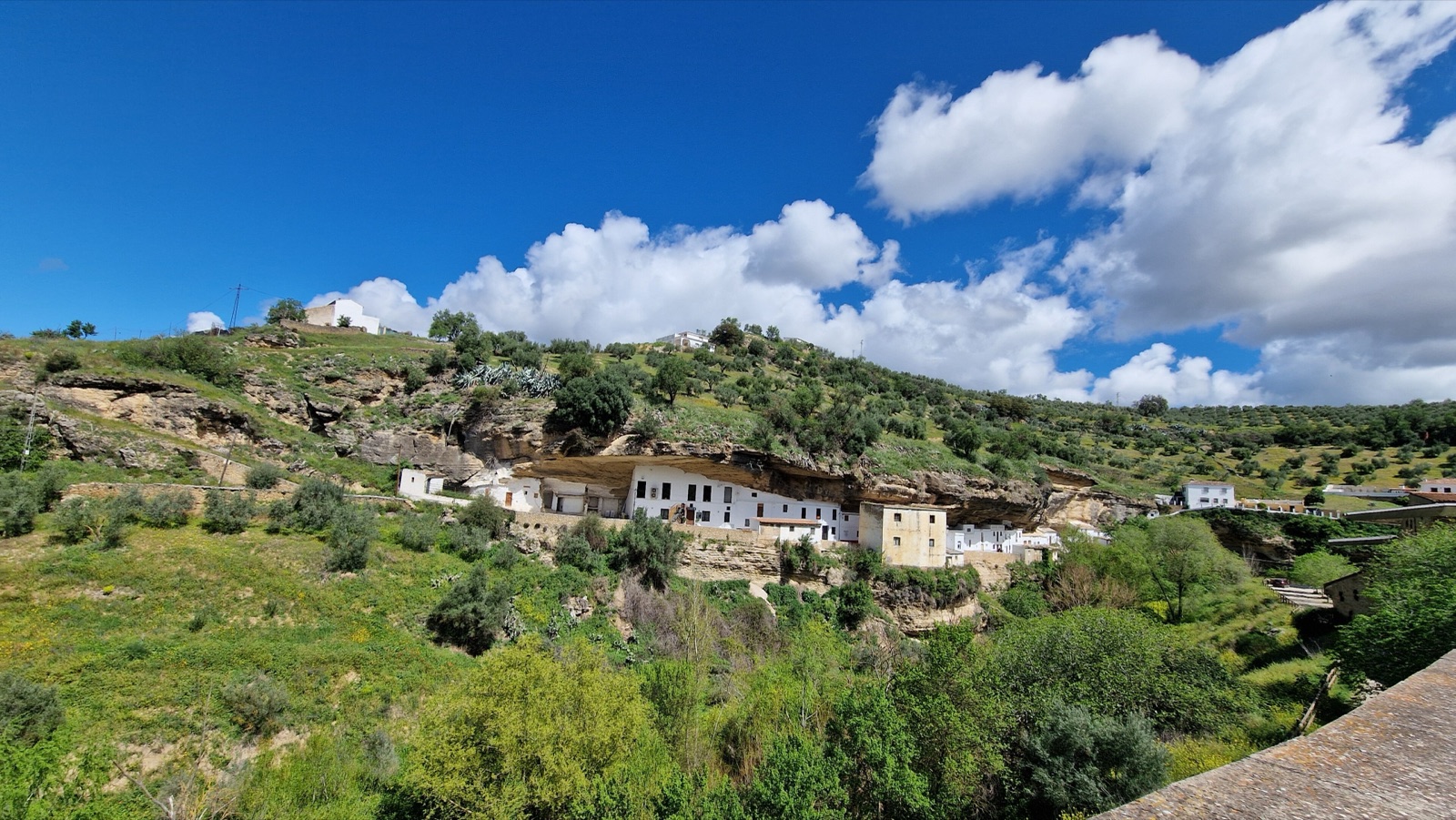
Setenil de las Bodegas. Photo: Makoki20, CC0, via Wikimedia Commons.

In Setenil, the village didn't build on top of the rock. It moved underneath it. Many houses use a huge overhang of stone as their roof, and on Calle Cuevas del Sol you can have lunch on a terrace with a ceiling of rock. Cross the river to Cuevas de la Sombra, the shady side, and it feels like a different village.
3. Zahara de la Sierra (Cádiz)
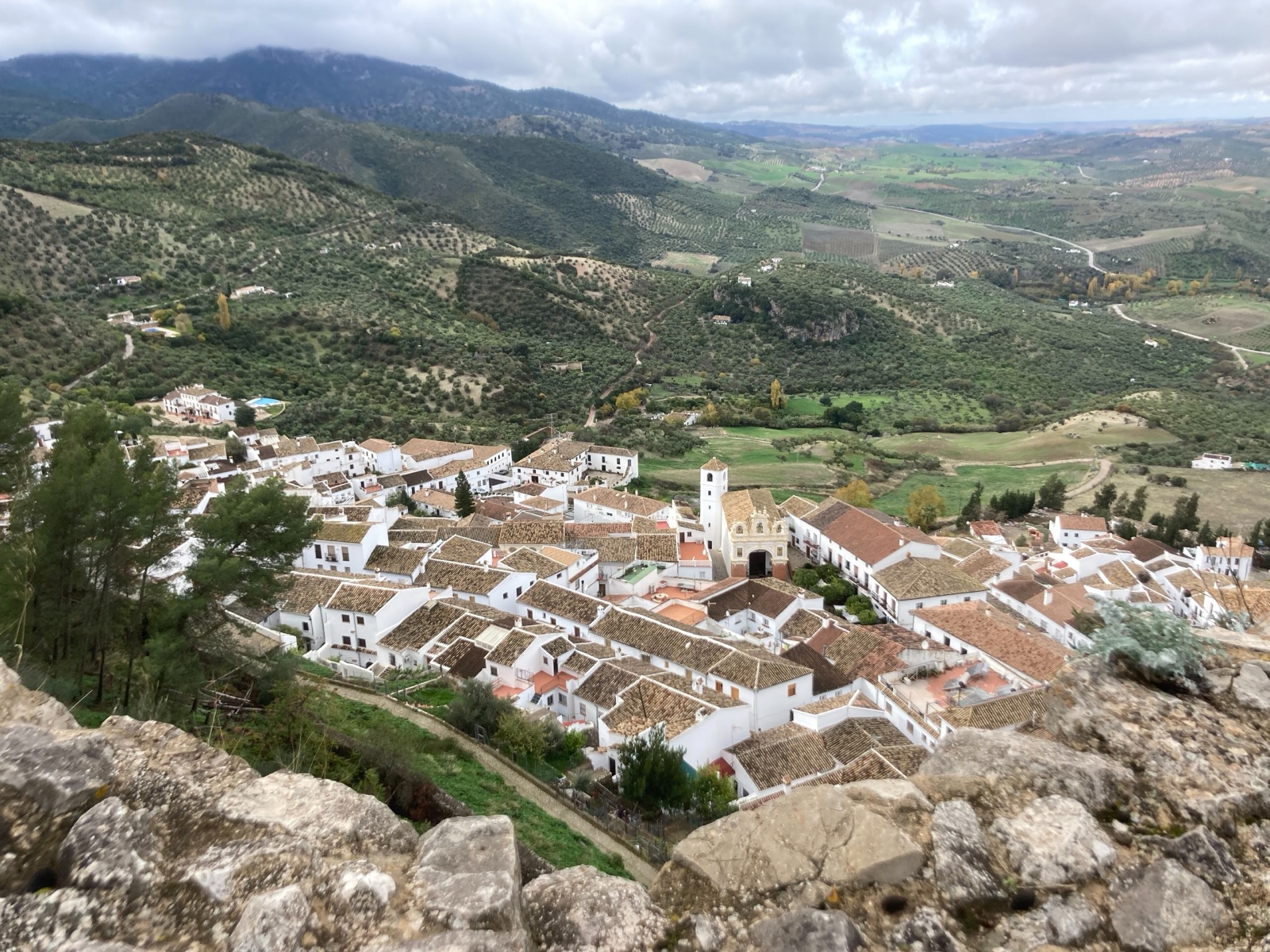
Zahara de la Sierra from the castle. Photo: JakobHosp, CC0, via Wikimedia Commons.

Zahara climbs a steep hill up to a Moorish castle tower, with a turquoise reservoir at its feet. The walk to the tower is short but steep, about 20 minutes from the main square, and the view over the lake and the mountains is the reward. From Zahara, the road to Grazalema crosses the Puerto de las Palomas pass, one of the most spectacular drives in the region. Take it slowly: it is all hairpins.
4. Grazalema (Cádiz)
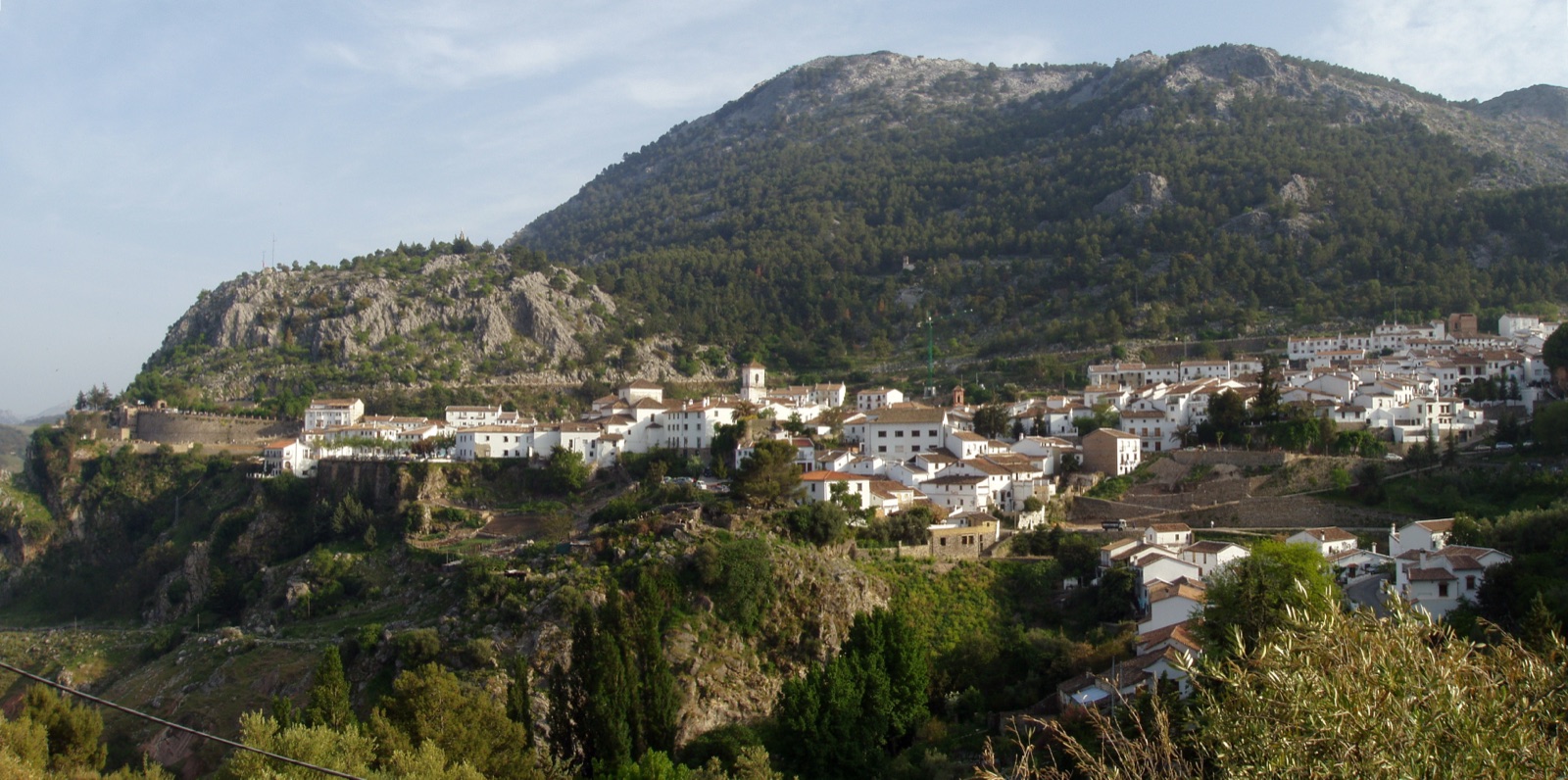
Grazalema. Photo: Malopez 21, CC BY-SA 4.0, via Wikimedia Commons.

Grazalema sits inside a natural park, in one of the rainiest corners of Spain, which explains the green hills and the forests of pinsapo, a rare Spanish fir. It is the base for hikers in the Sierra de Grazalema, and the village has been known for its thick wool blankets for centuries. You can still buy them in the local workshop.
5. Arcos de la Frontera (Cádiz)
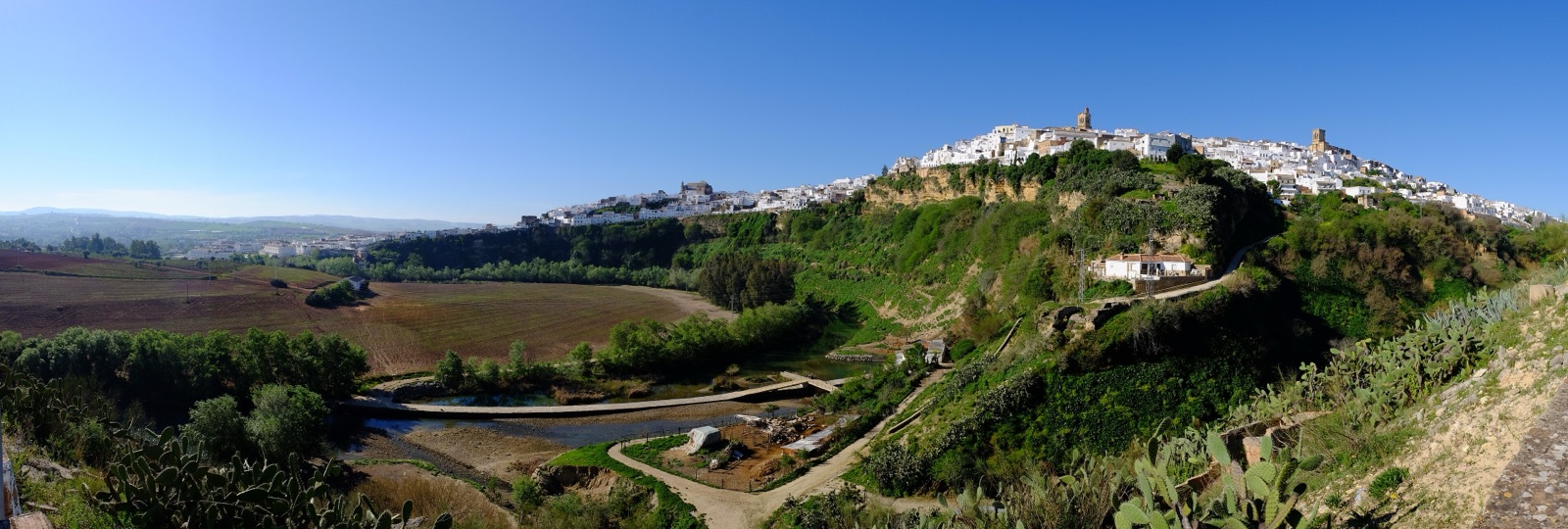
Arcos de la Frontera on its cliff. Photo: Quim Gil, CC0, via Wikimedia Commons.

Arcos is built right on the edge of a cliff above the Guadalete river. Next to the church of Santa María, the Plaza del Cabildo ends in a viewpoint with a sheer drop, and in the evening you can watch kestrels circling below your feet. Leave the car at the bottom of the hill. The old town is a maze of steep alleys that were never meant for cars, and some of them are barely wider than a car mirror.
6. Vejer de la Frontera (Cádiz)
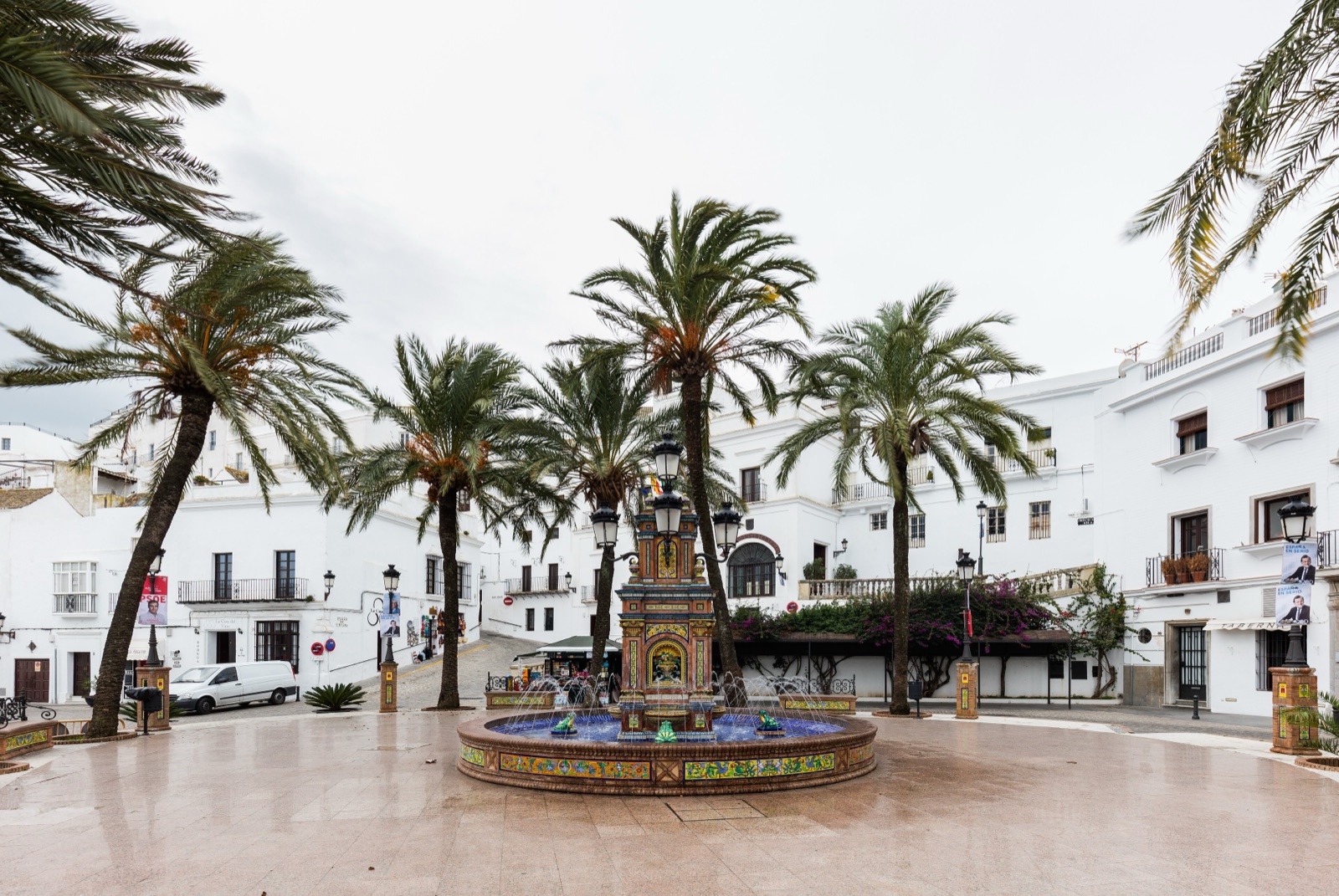
Plaza de España, Vejer. Photo: Diego Delso, CC BY-SA 4.0, via Wikimedia Commons.

Vejer has kept a strong Moorish feel, with its arches, patios full of geraniums and the old walls around the historic center. Its main square, with palm trees and a tiled fountain, is known locally as the Plaza de los Pescaítos. The wild beaches of the Costa de la Luz are about 15 minutes away by car, and the village has some of the best restaurants in the province. Come for the streets, stay for dinner.
7. Olvera (Cádiz)
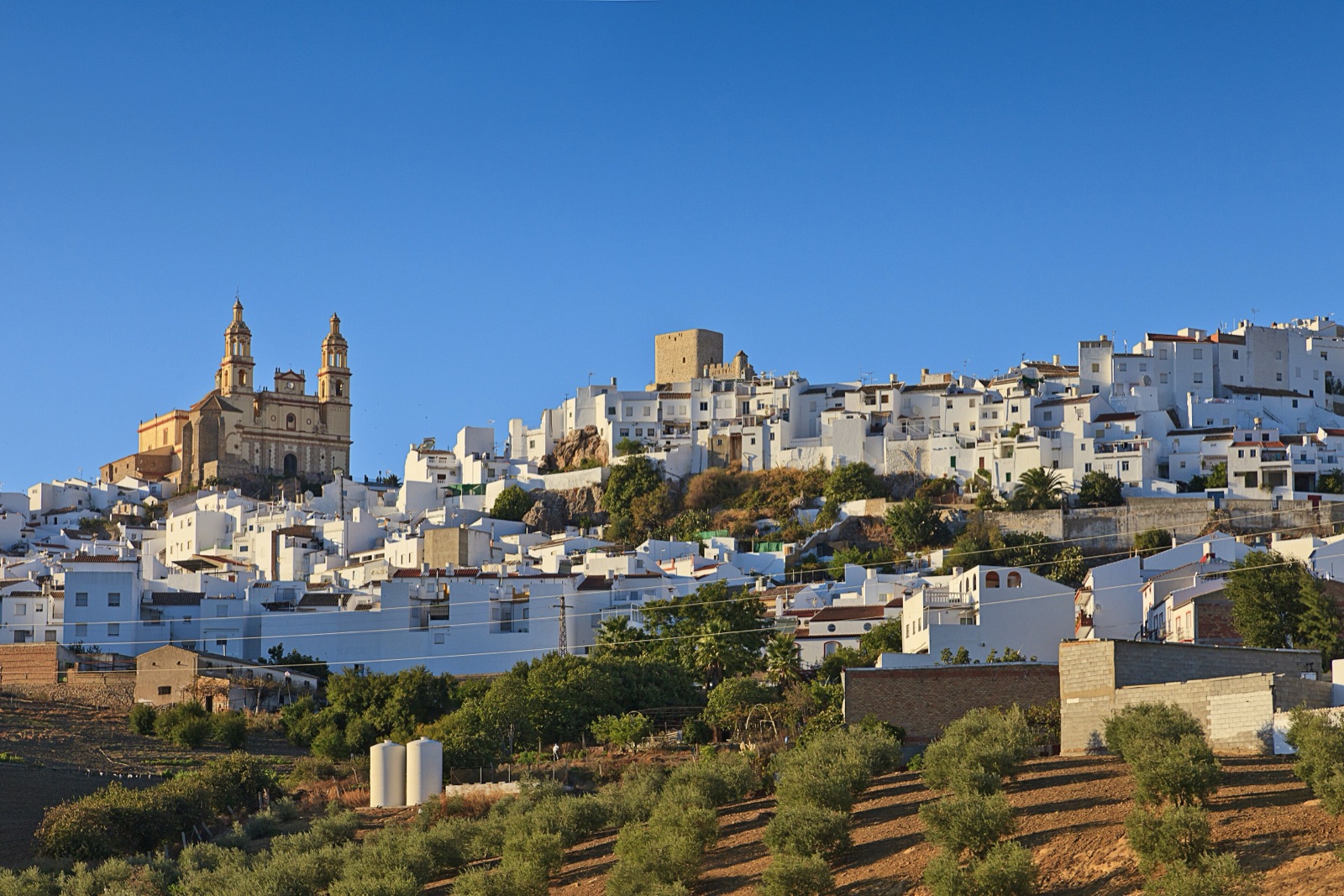
Olvera. Photo: Tomas Fano, CC BY-SA 2.0, via Wikimedia Commons.

You recognize Olvera from miles away: a big neoclassical church and a Moorish castle on top of a hill of white houses, surrounded by olive trees. It is also the start of the Vía Verde de la Sierra, an old railway line turned into a walking and cycling path of about 36 km, with tunnels and viaducts. You can rent bikes along the route.
8. Frigiliana (Málaga)
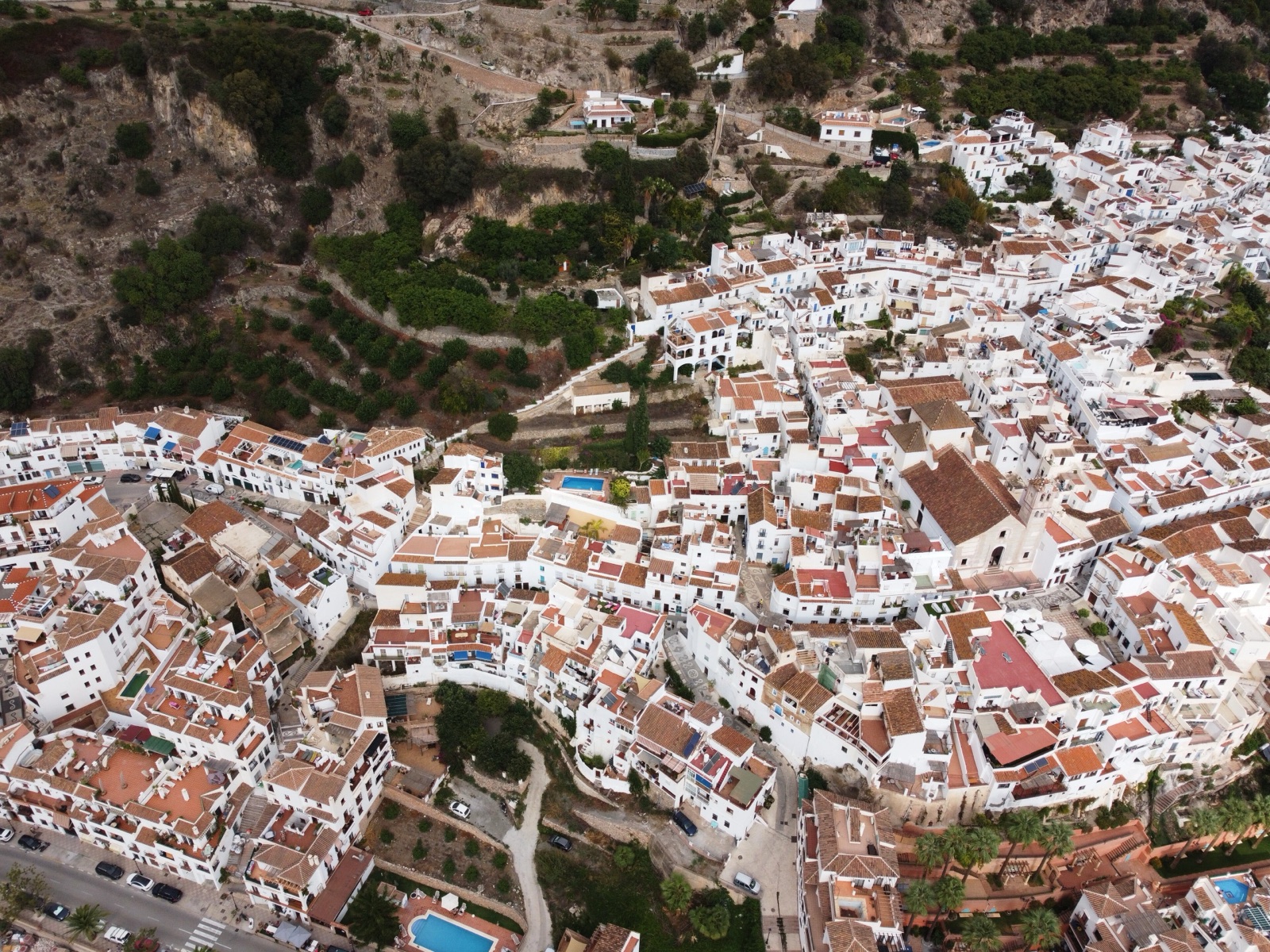
Frigiliana from above. Photo: Jorge Saturno, CC BY 4.0, via Wikimedia Commons.

Frigiliana is a short drive up from Nerja. Its old Moorish quarter is all cobbled lanes, steps, potted geraniums and blue doors, with the sea in the background. Arrive early, before the tour groups, or come back for dinner. At the end of August the village holds the Festival of the Three Cultures, which remembers its Christian, Muslim and Jewish past.
9. Casares (Málaga)
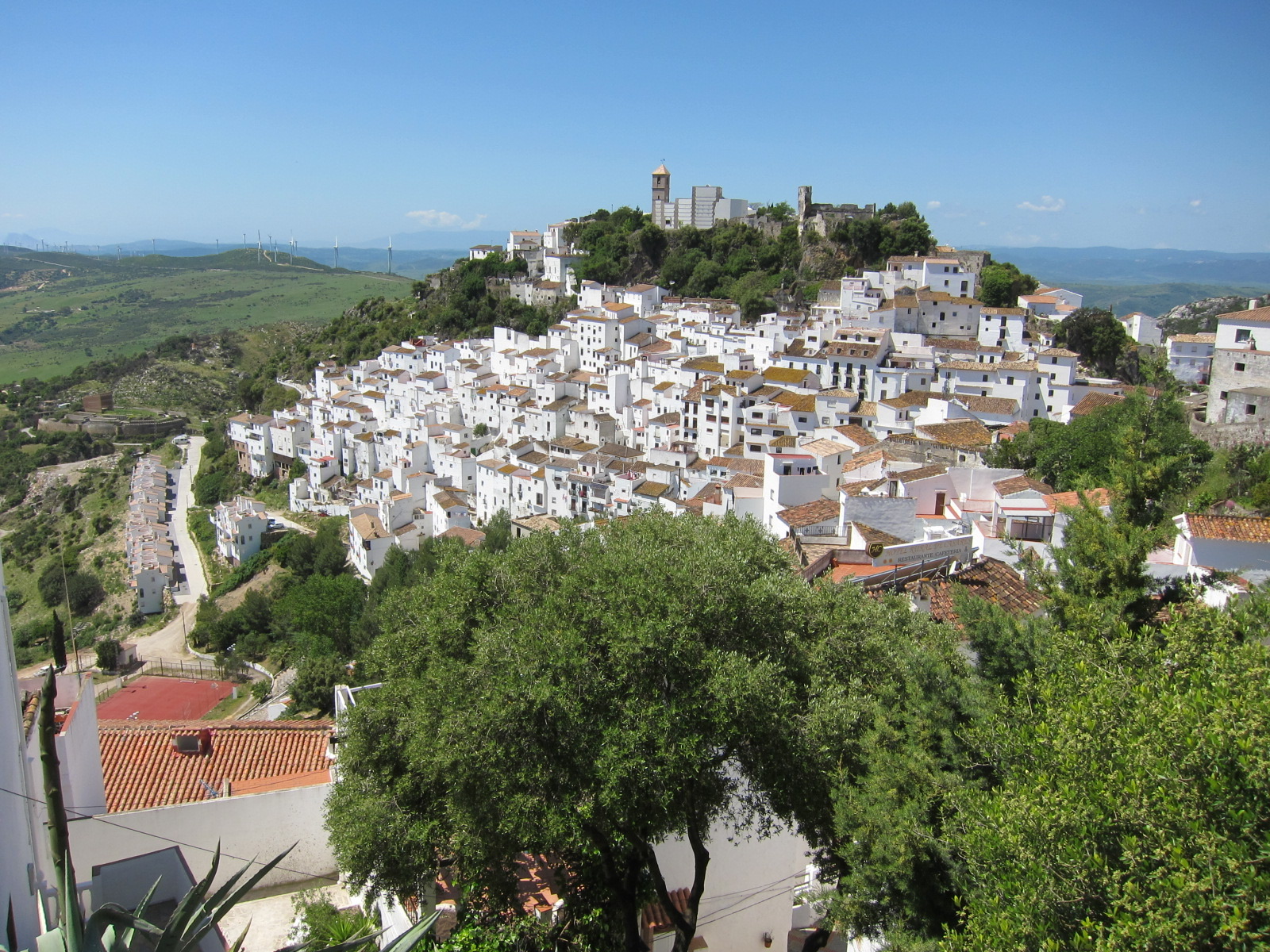
Casares. Photo: jaycross, CC BY 2.0, via Wikimedia Commons.

Casares tumbles down a ridge above Estepona, crowned by the ruins of a castle. On a clear day you can see Gibraltar and the mountains of Morocco from the top. It is also the birthplace of Blas Infante, considered the father of Andalusian identity, and his house is now a small museum.
10. Júzcar (Málaga)
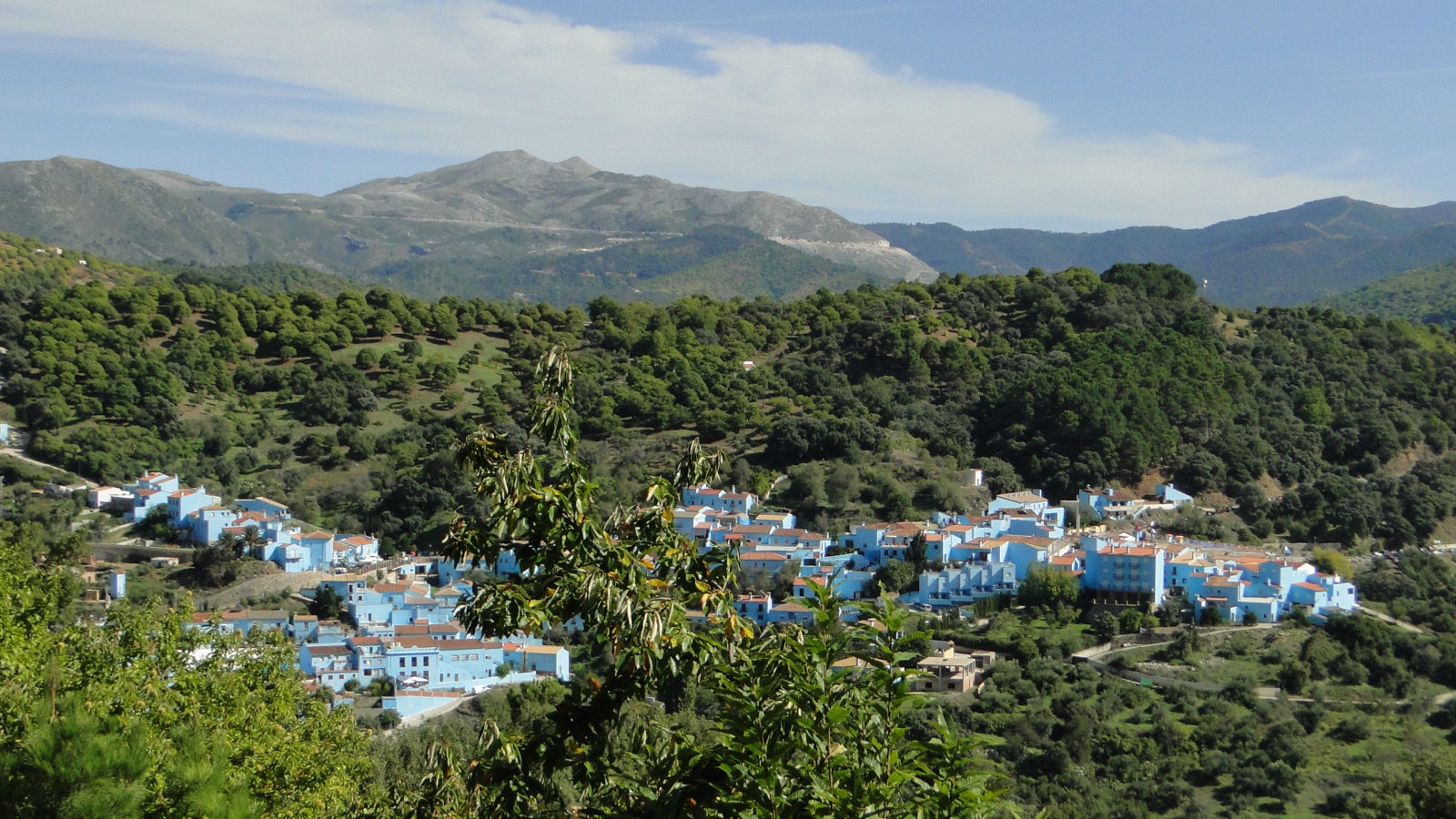
Júzcar, the blue village. Photo: Rafael Tello, CC BY-SA 4.0, via Wikimedia Commons.

Júzcar is the white village that isn't white anymore. In 2011 it was painted blue to promote a Smurfs movie, and when the promotion ended, the villagers voted to keep the color. It is a fun detour from Ronda through the chestnut forests of the Genal valley, which turn copper in November.
11. Capileira (Granada)
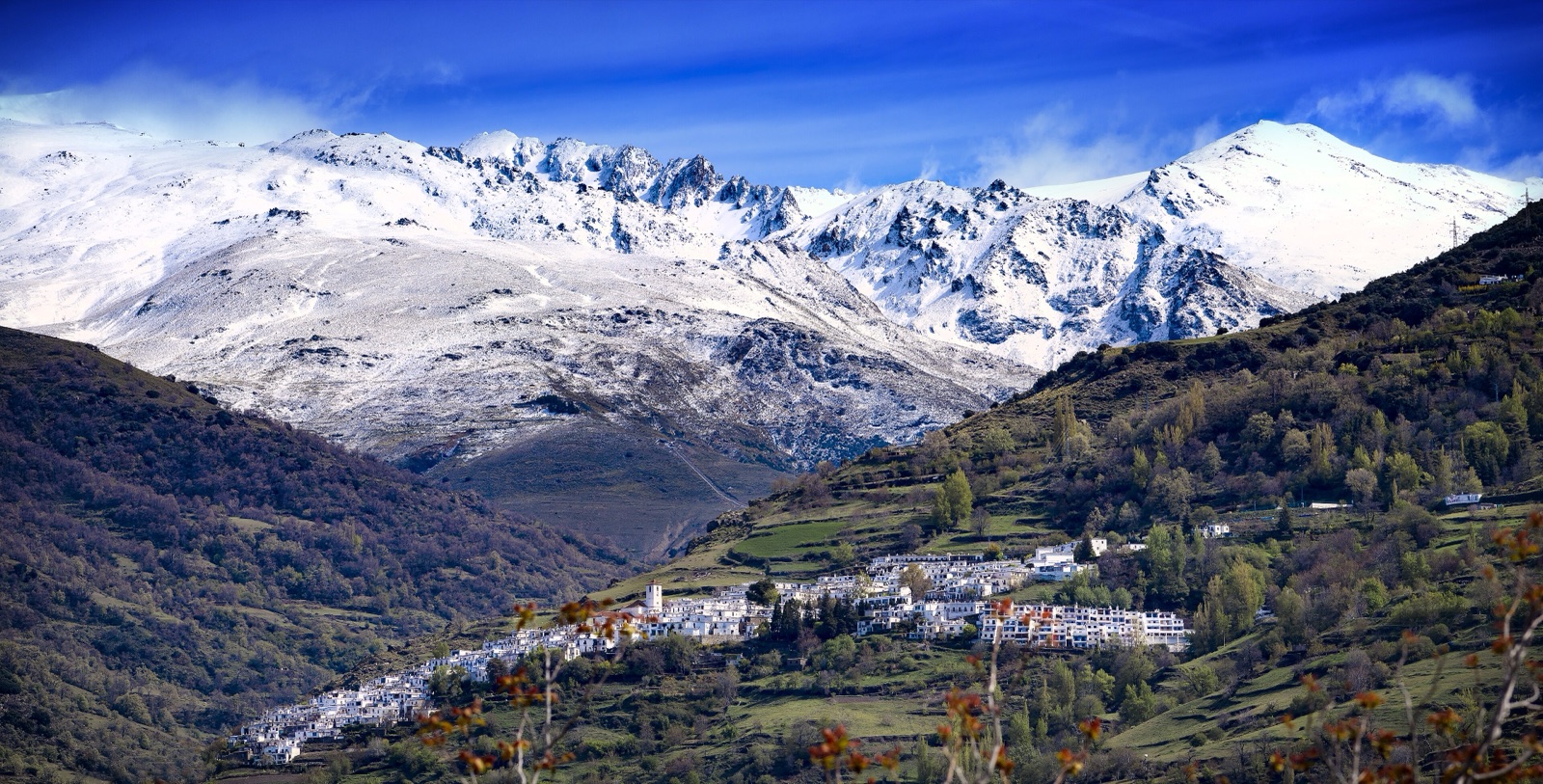
Capileira and the Sierra Nevada. Photo: Mark Chinnick, CC BY 2.0, via Wikimedia Commons.

Capileira is the highest of the three villages of the Poqueira gorge, in Las Alpujarras, on the southern slopes of the Sierra Nevada. Its houses have flat roofs and tinaos, covered passages between buildings, a legacy of the Berber settlers, and the views go straight up to the Mulhacén, which at 3,479 m (11,414 ft) is the highest peak in mainland Spain. Stop in Pampaneira and Bubión, just below, on the way up.
12. Mojácar (Almería)
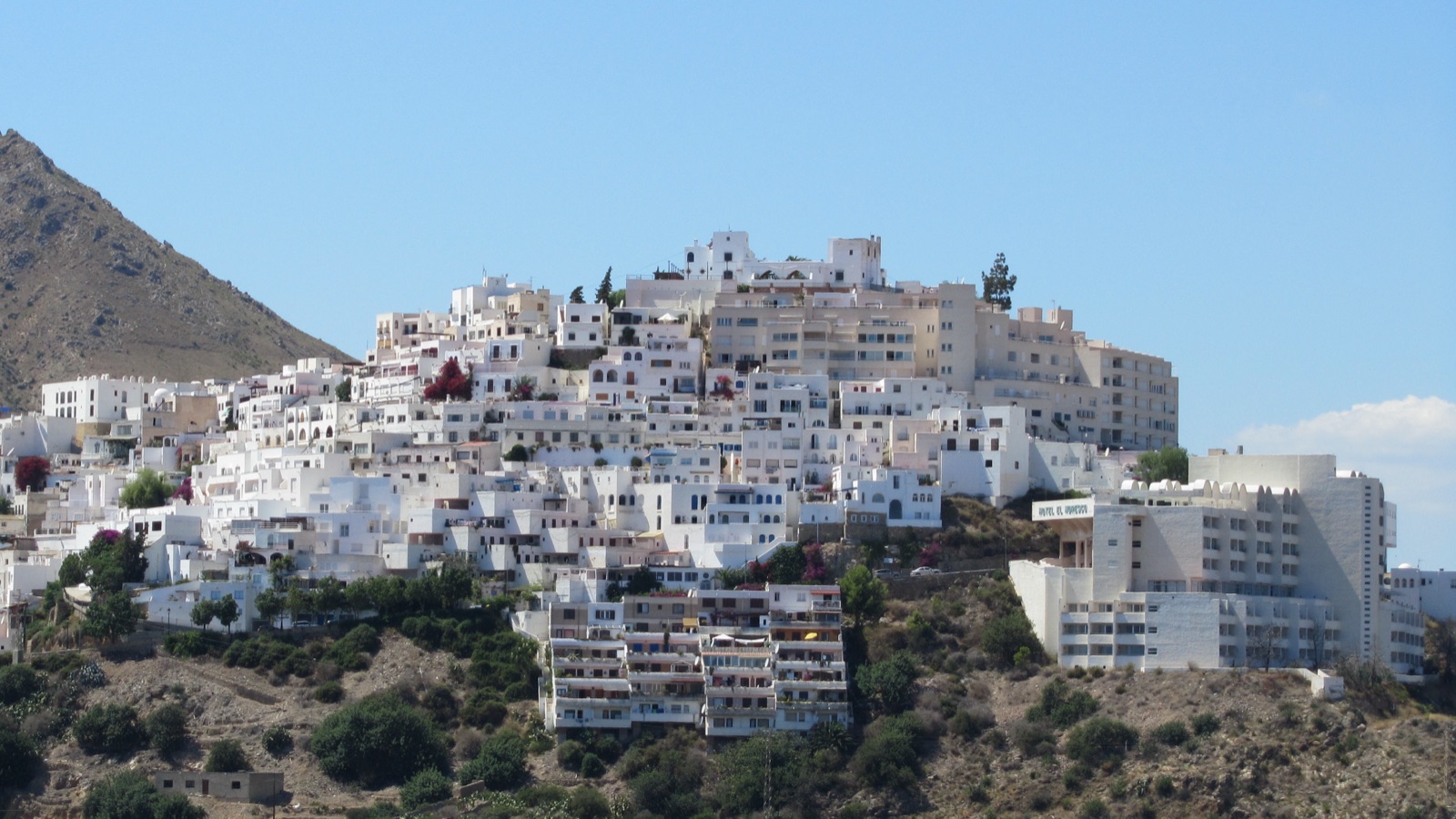
Mojácar. Photo: INDALOMANIA, CC BY-SA 3.0, via Wikimedia Commons.

Mojácar's cube-shaped houses cascade down a hill a few minutes from the sea, in the driest part of Spain. Look out for the Indalo, a small prehistoric figure holding an arch over its head. You will see it painted on doors all over the area as a sign of good luck.
Planning the trip
A car makes all the difference. With one, you can see three or four villages in a day; by bus, you will manage one. The classic White Villages route runs through the Sierra de Cádiz between Arcos and Ronda, and both make good bases. For Frigiliana, stay on the coast in Nerja. Capileira deserves a night of its own.
Spring and autumn are the best seasons: April to June for wildflowers, October and November for mild days and quiet streets. In July and August inland Andalusia can go over 40°C (104°F), so see the villages in the morning and spend the afternoon somewhere with a pool.
Park at the entrance of each village and walk in. The old streets are steep, narrow and often one-way. And wear shoes with grip: polished cobbles get slippery.
What to eat along the way
Look for payoyo, a cheese made from the milk of the local payoya goats, chicharrones (slow-cooked pork belly), and the almond and honey sweets that convents still make and sell through a revolving window. And don't skip the ventas, the roadside restaurants on the edge of the villages. That is often where you will eat best.
Zokko is a community marketplace based in Spain. In La Plaza we write about the places, the food and the everyday life we know.
Diego Palomar
Escribe en La Plaza sobre tecnología, viajes y consumo.
Comentarios (0)
No hay comentarios todavía. ¡Sé el primero en comentar!