Christmas in Spain: Traditions from Nochebuena to Three Kings Day
From the children who sing the lottery numbers on December 22 to the Three Kings parades on January 5: how Christmas works in Spain, day by day.

Diego Palomar
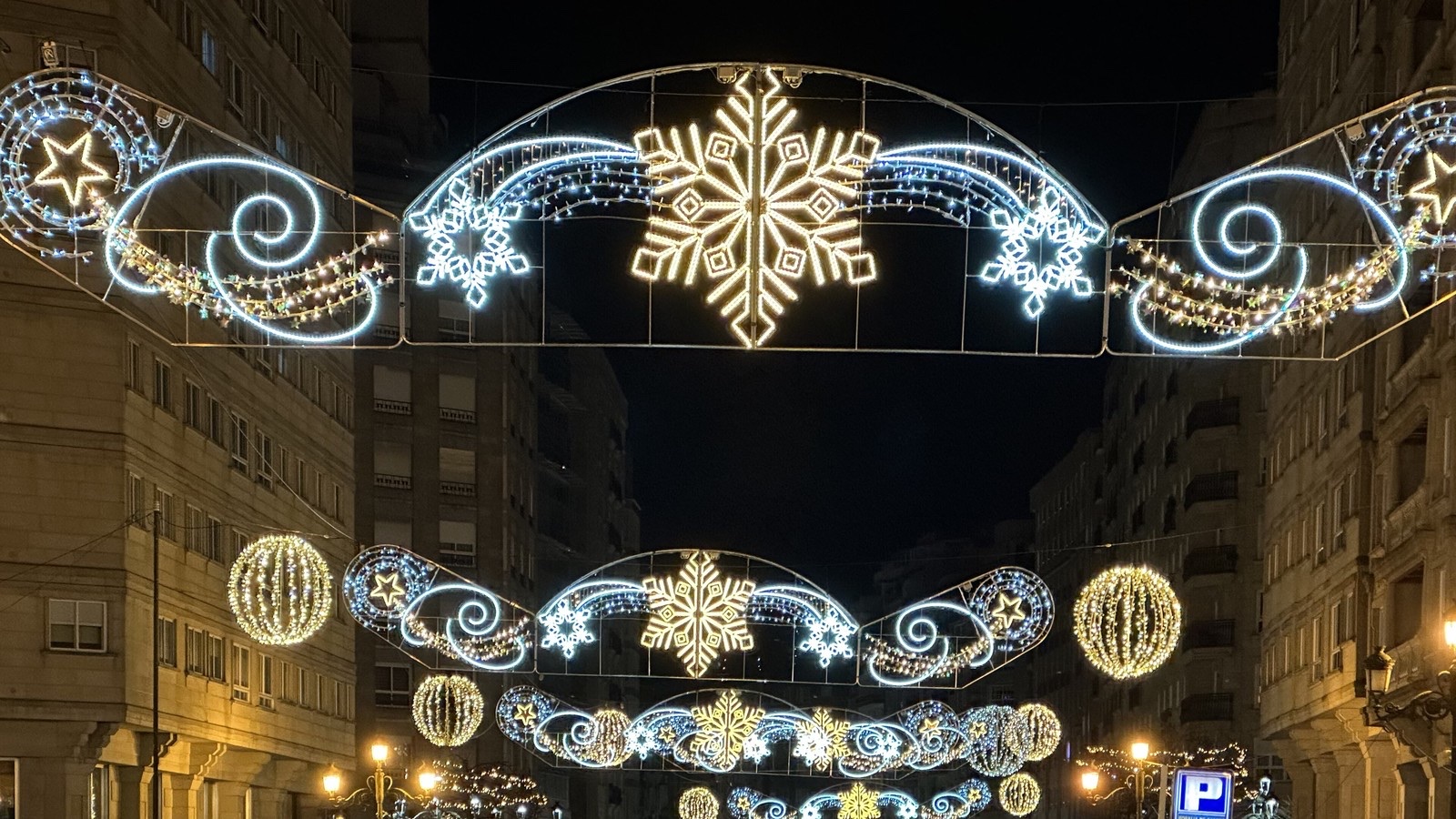
Cover photo: Sergei Gussev, CC BY 2.0, via Wikimedia Commons, cropped.

On the morning of December 22, much of Spain tunes in to listen to children sing. On a stage in Madrid one drum holds numbered balls and another holds the prizes, and pupils of the San Ildefonso school take a ball at random and sing out what is written on it, in an unmistakable sing-song. That is the Christmas Lottery, which Spain's tourist office describes as the practically official start of the holidays.
After the draw comes the big family dinner on the night of December 24, but the presents traditionally wait until January 6, when the Three Kings bring them. In between there is a day of pranks on December 28 and twelve grapes at midnight on December 31.
El Gordo and the Christmas lottery, December 22
The Sorteo Extraordinario de Navidad starts at nine in the morning on December 22 at the Teatro Real, Madrid's opera house, which has hosted it since 2012. You can watch it live on TVE. The pupils of the San Ildefonso school have sung the numbers of the national lottery since March 9, 1771, and girls joined them in 1984, when the school became co-ed. The first prize is El Gordo, literally "the fat one."
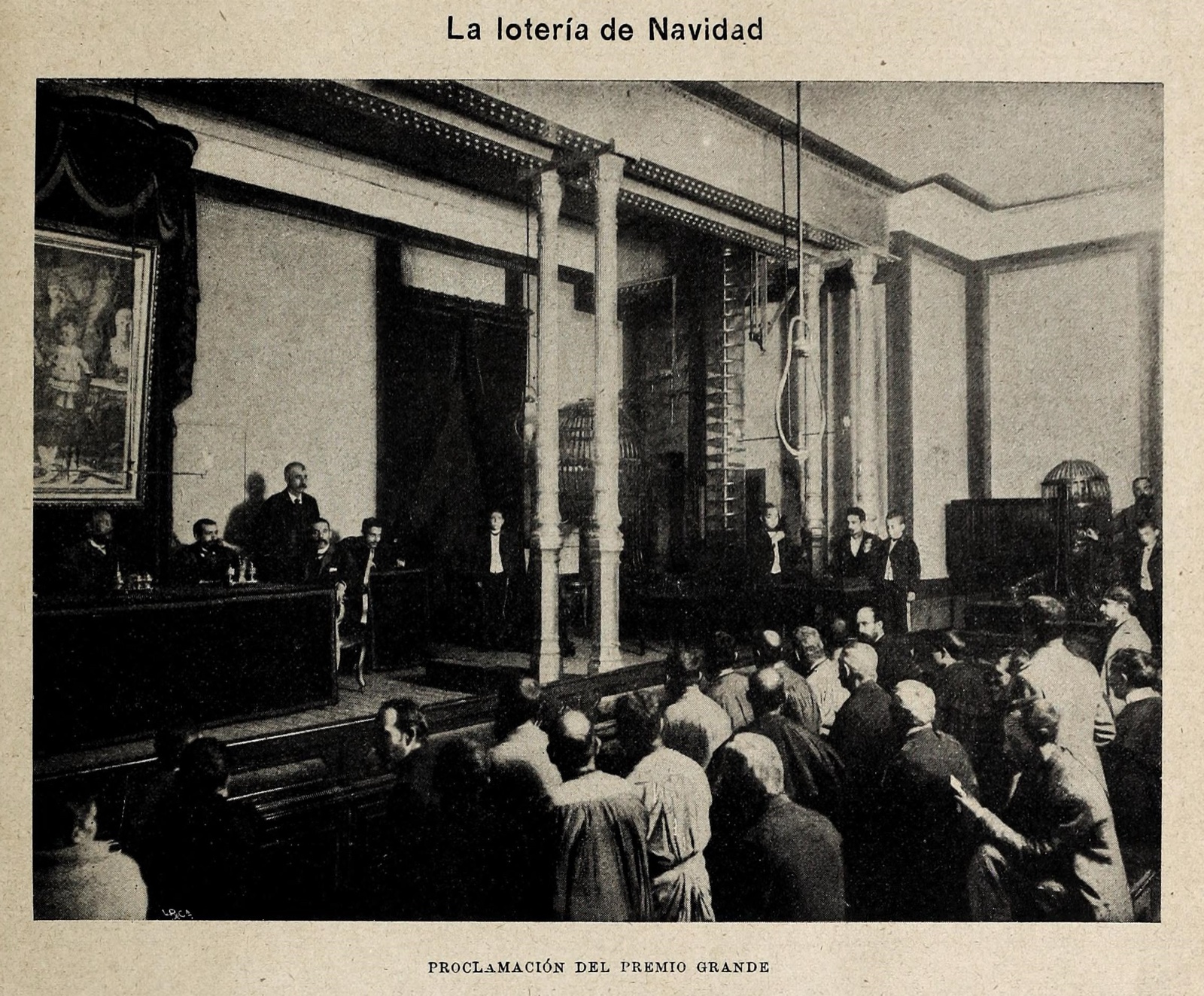
Announcing the first prize of the Christmas draw in 1896. Photo: Christian Franzen, public domain, via Wikimedia Commons.

A full ticket costs 200 euros and is sold in tenths, called décimos, of 20 euros each. El Gordo pays 4 million euros per series, which is 400,000 euros for each tenth. The tax office takes 20 percent of anything above 40,000 euros per tenth, so a winning tenth is worth 328,000 euros after tax. Groups can share a number too: companies, associations and groups of friends split a tenth into participaciones, unofficial shares, so that everyone holds a piece of the same ticket. The prizes are spread widely, and winners usually celebrate loudly in the street.
The draw is more than two hundred years old. In early 1812, during the war against Napoleon, a minister, Ciriaco González Carvajal, proposed a national lottery in Cádiz as a way to raise money for the state without squeezing taxpayers. The draw held there on December 18 of that year is counted as the first Christmas draw. It was named Sorteo de Navidad in 1892 and first televised in 1957.
Nochebuena, December 24
Nochebuena, "the good night," is the most special night of the season. At the family table the meal usually starts with a spread of starters: Iberian ham, cheeses, seafood and preserves. A spoon dish follows, a soup or broth that changes with the region, such as puchero in Andalusia, escudella in Catalonia, garlic soup in Castilla-La Mancha or almond cream in the Balearic Islands. The main course is roast lamb, suckling pig or stuffed turkey, or a fish baked in the oven, such as besugo (sea bream) or sea bass. After that the table fills with sweets and the sobremesa begins, the long time everyone stays at the table after eating.
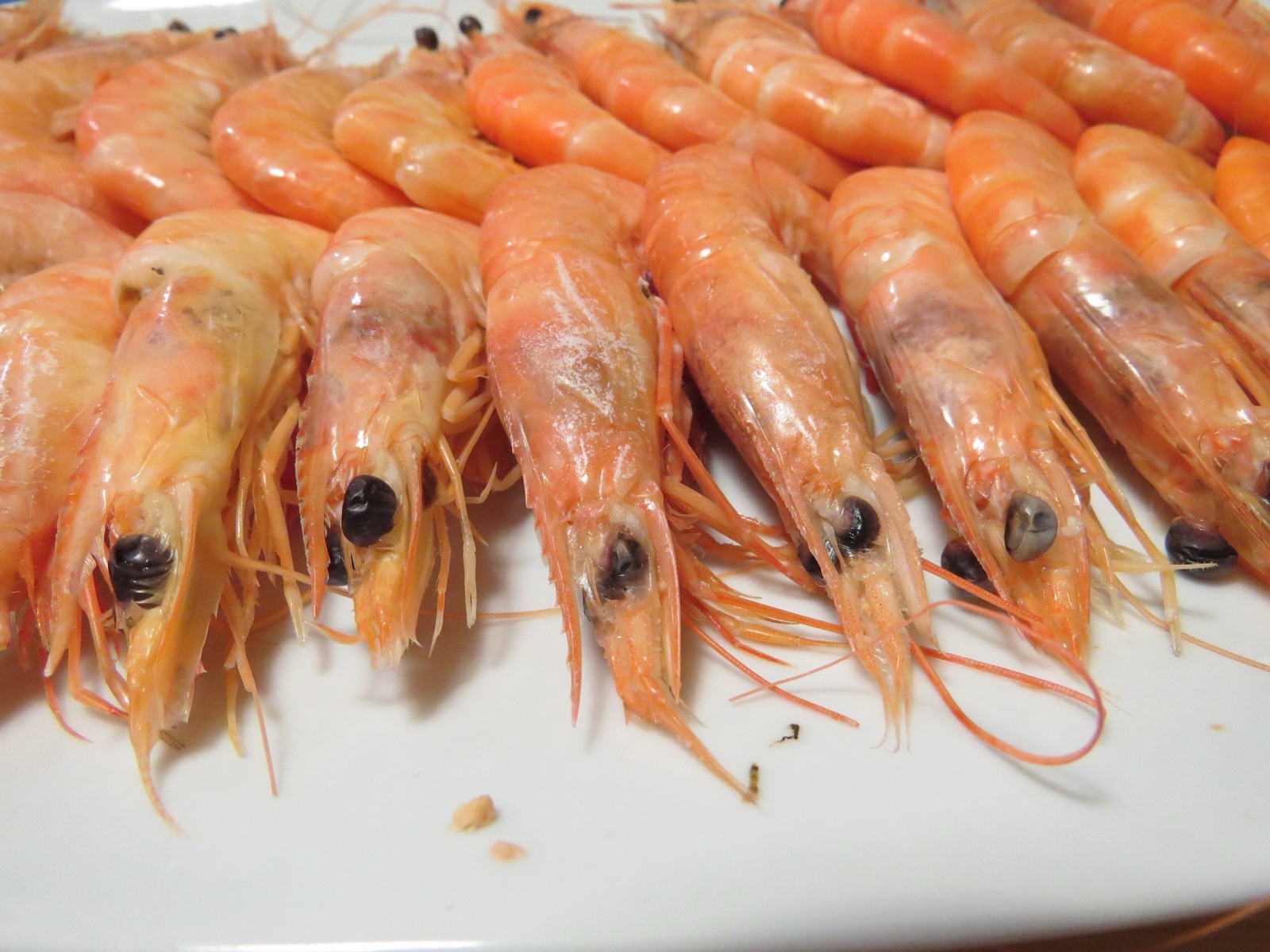
Boiled prawns, a classic Christmas starter. Photo: Basotxerri, CC BY-SA 4.0, via Wikimedia Commons.

Cava goes into the glasses for the toast. The word is ¡Salud!, although you will probably hear many people shout the more popular ¡Arriba, abajo, al centro y adentro!, which means "up, down, to the center and in."
Some families end the night at the Misa del Gallo, the "Rooster's Mass," named because it is held at midnight, when the rooster crows. It probably goes back to Pope Sixtus III in the fifth century. These days it does not always start exactly at midnight, and some families eat before it and others after.
In Jerez de la Frontera, in Andalusia, neighbors gather in courtyards and flamenco clubs in December to sing flamenco carols around a zambomba, a clay pot covered with skin or cloth and a long reed stuck through the middle. Rubbing the wet reed with your hand makes a deep sound, and a mortar, a tambourine, castanets and a scraped anís bottle complete the band. The custom goes back to the late 18th century, and the Jerez zambomba was declared an Asset of Cultural Interest in 2015.
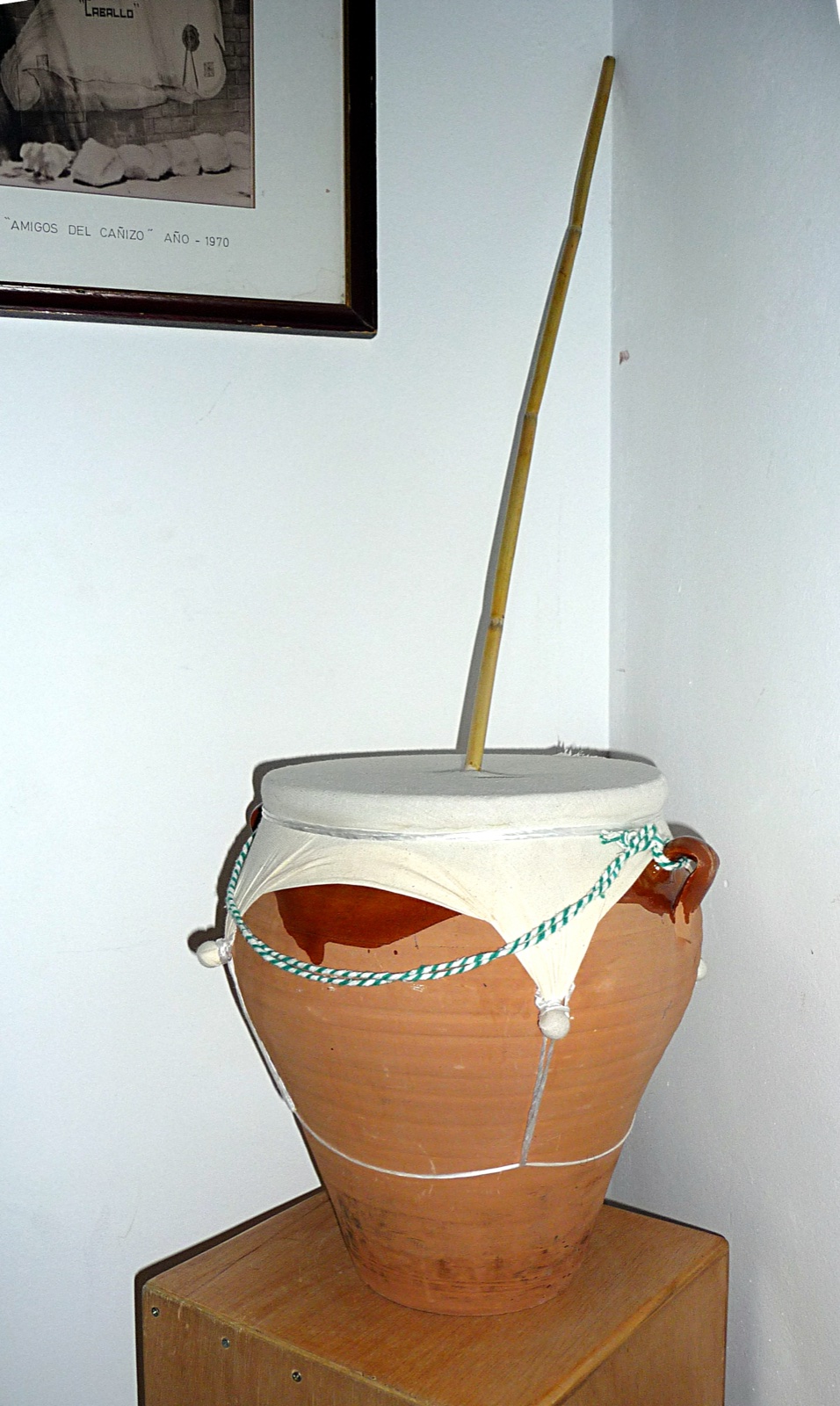
A zambomba, the friction drum of the Jerez carols. Photo: El Pantera, CC BY-SA 4.0, via Wikimedia Commons.

Christmas Day and Sant Esteve
December 25 is a public holiday across Spain, and it usually means another long meal with the family. In Catalonia families serve pasta shell soup and escudella, followed by turrón and neules. The next day, December 26, is Sant Esteve, a second day of family gatherings, with cannelloni made from the leftovers of the Christmas roast. A Catalan saying sums up the logic: "Per Nadal, cada ovella al seu corral; per Sant Esteve, cada ovella a casa seva," or "For Christmas, every sheep in the farmyard; for St. Stephen's, every sheep at home." December 26 is not one of the nine holidays observed across the whole country.
Who brings the presents?
Ask a Spanish child who brings the presents and the answer depends on the family and the region. The traditional gift-bringers are the Three Kings on January 6, but Papá Noel, the Spanish Santa Claus, now leaves toys on Christmas Eve in many homes, so a lot of children no longer have to choose. Some regions also have their own gift-bringing figures.
In Catalonia it is a log. From December 8, the Feast of the Immaculate Conception, families keep a Tió de Nadal covered with a blanket and feed it every evening. On Christmas Eve or Christmas Day the children beat it with sticks while singing a song that begs it to poop nougat instead of salty fish. Then they leave the room, and when they come back and lift the blanket they find sweets, turrón and small presents, or coal if they have been naughty. Barcelona's city council lists the Tió, the nativity scene and the caganer as Christmas symbols.
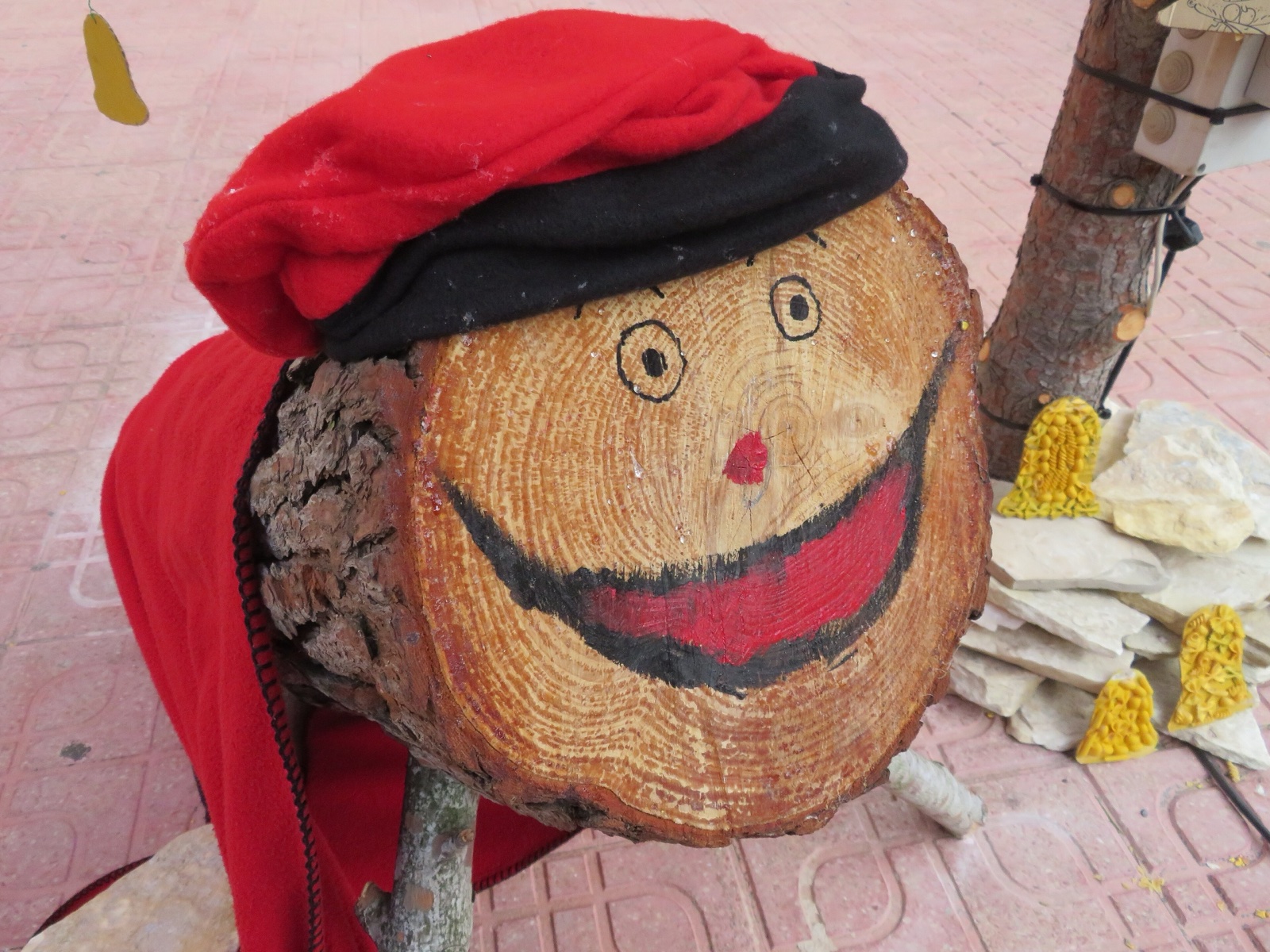
A Tió de Nadal with its painted smile. Photo: Juan Emilio Prades Bel, CC BY 4.0, via Wikimedia Commons.

In the Basque Country and Navarre the gift-bringer is Olentzero, a charcoal burner who comes down from the mountain on the night of December 24 with a donkey loaded with presents. He is traditionally drawn as a stout man with a coal-smudged face, a beret and a pipe. That afternoon, towns hold parades with music and carols, and Lesaka, in Navarre, is considered his place of origin.
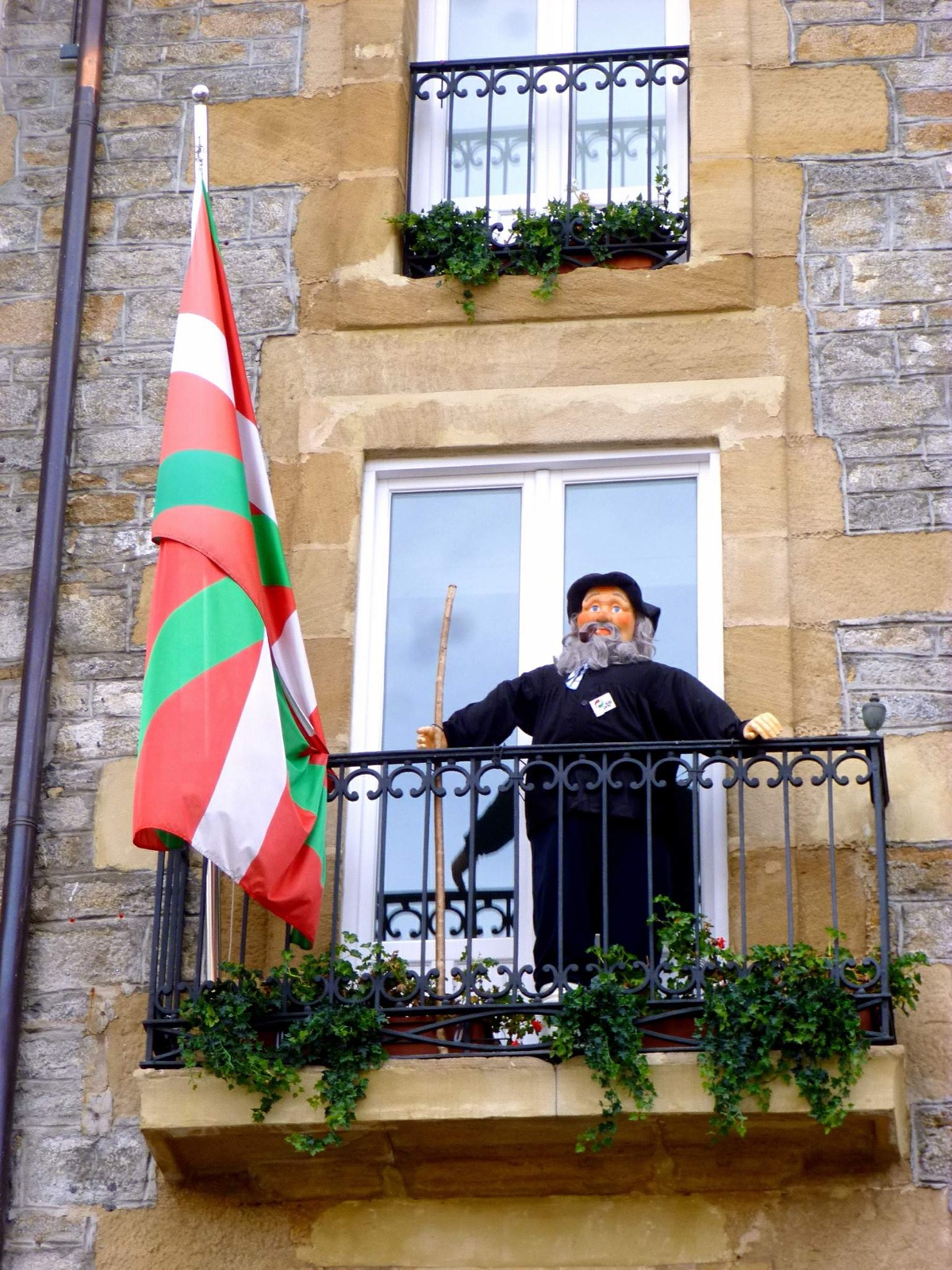
An Olentzero doll on a balcony in Vitoria-Gasteiz. Photo: Zarateman, CC0, via Wikimedia Commons.

In the mountains of Galicia, the Apalpador, another charcoal burner, comes down on the night of December 31, feels the children's bellies to see whether they are hungry and leaves a handful of chestnuts. He had almost been forgotten and has been revived in recent years.
December 28: Spain's day for pranks
December 28 is the Día de los Santos Inocentes, the Day of the Holy Innocents. It recalls the biblical story of King Herod and the children of Bethlehem, but over the centuries it has turned into the Spanish version of April Fools' Day: the media publish wild fake stories, and the classic prank is to pin a little paper doll on someone's back without them noticing. Do it, and you have pulled an inocentada on them. Many Christmas market stalls sell the equipment: wigs, itching powder, fake ink. Treat any surprising headline that day with a pinch of salt.
In Ibi, a town in Alicante, a group of men in outlandish costumes takes over the town hall in a mock coup and rules for a day under the motto Justícia Nova. They battle an "opposition" with flour, eggs and firecrackers, and anyone who crosses the church square and ignores their orders ends up covered in flour and egg. Then the two sides make peace and collect a "revolutionary tax" from local shops to raise money for a nursing home. The festival, Els Enfarinats ("the floured ones"), stopped in the 1950s and came back in 1981. It belongs to the winter festivals of Ibi, declared of regional tourist interest in 2009.
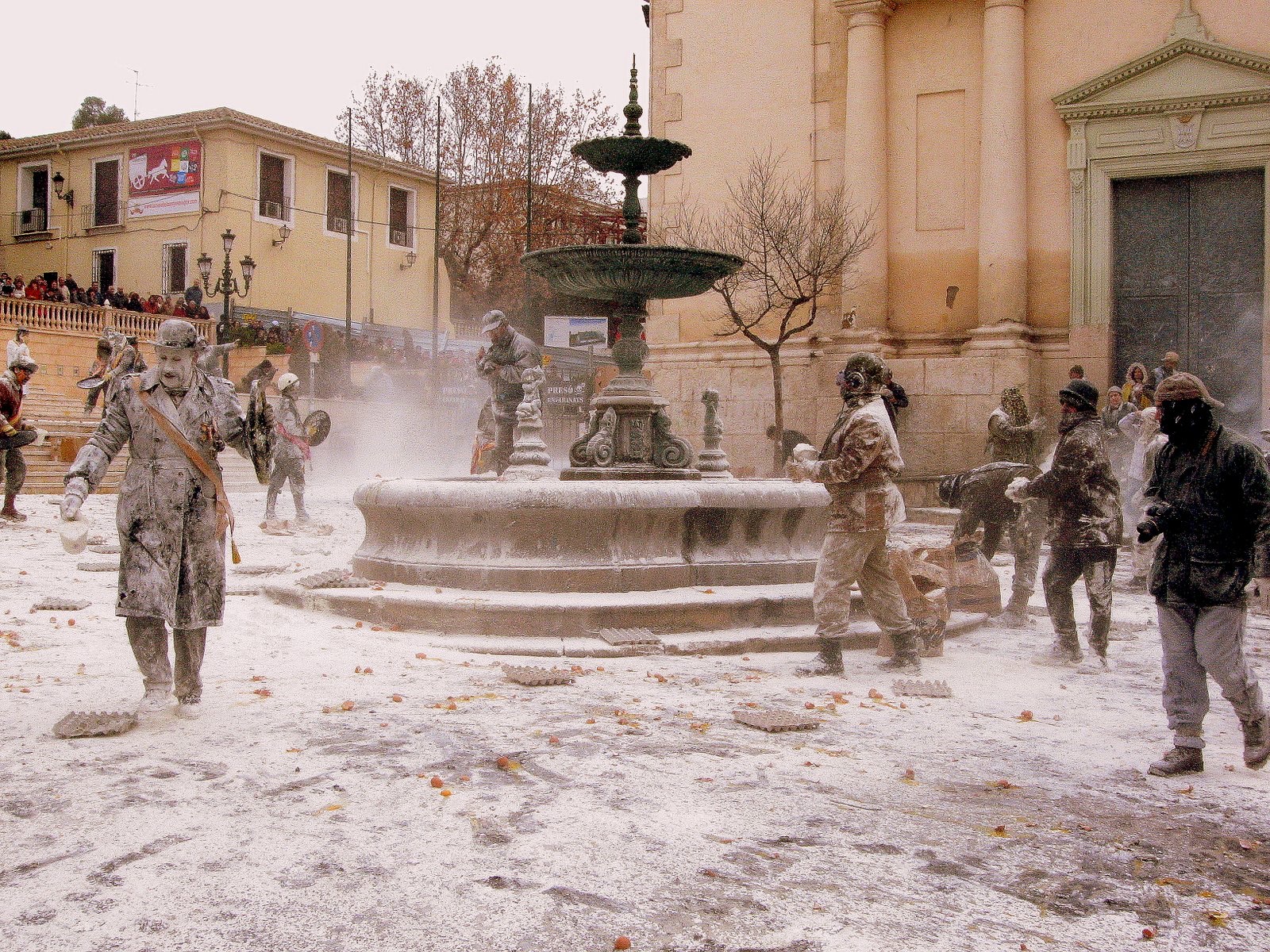
Els Enfarinats in Ibi, Alicante. Photo: Fotógrafo Ibi, CC BY-SA 4.0, via Wikimedia Commons.

New Year's Eve and the twelve grapes
On December 31 the country watches the clock on Madrid's Puerta del Sol and eats one grape for each of the twelve chimes at midnight, for luck in the new year. Our guide to the twelve grapes of luck explains how the countdown works and how to do it at home without running out of time. In Madrid, more than 40,000 people also run the San Silvestre Vallecana, a 10-kilometer (6.2-mile) race, on the last day of the year.
After the grapes, plenty of people in Madrid head for chocolate and churros at San Ginés, close to the Puerta del Sol. Its manager says that many go straight there after the chimes, and a line forms from the first minute of the year. If you are not in Madrid, our recipe for churros with hot chocolate gets you most of the way there.
Three Kings Day, January 5 and 6
Spain's traditional gift day is January 6, when the Three Kings, Melchor, Gaspar and Baltasar, bring presents to the children. Before then, children write the Kings letters about how they have behaved and what they want. Shopping centers put up mailboxes, and royal pages often turn up to collect the letters in person.
On the afternoon of January 5, every city holds a cabalgata, the parade in which the Kings arrive. Madrid's starts around 6 p.m. on the Paseo de la Castellana and ends at the Plaza de Cibeles, with floats handing out sweets to the children. In Barcelona the Kings arrive by sea: since the 1960s the mayor has met them at the port and given them the keys to the city, so that they can open every door in town for one night. Alcoy, in Alicante, has held its parade without a break since 1885. The Kings ride on camels, and royal pages climb long ladders to hand presents to children on their balconies.
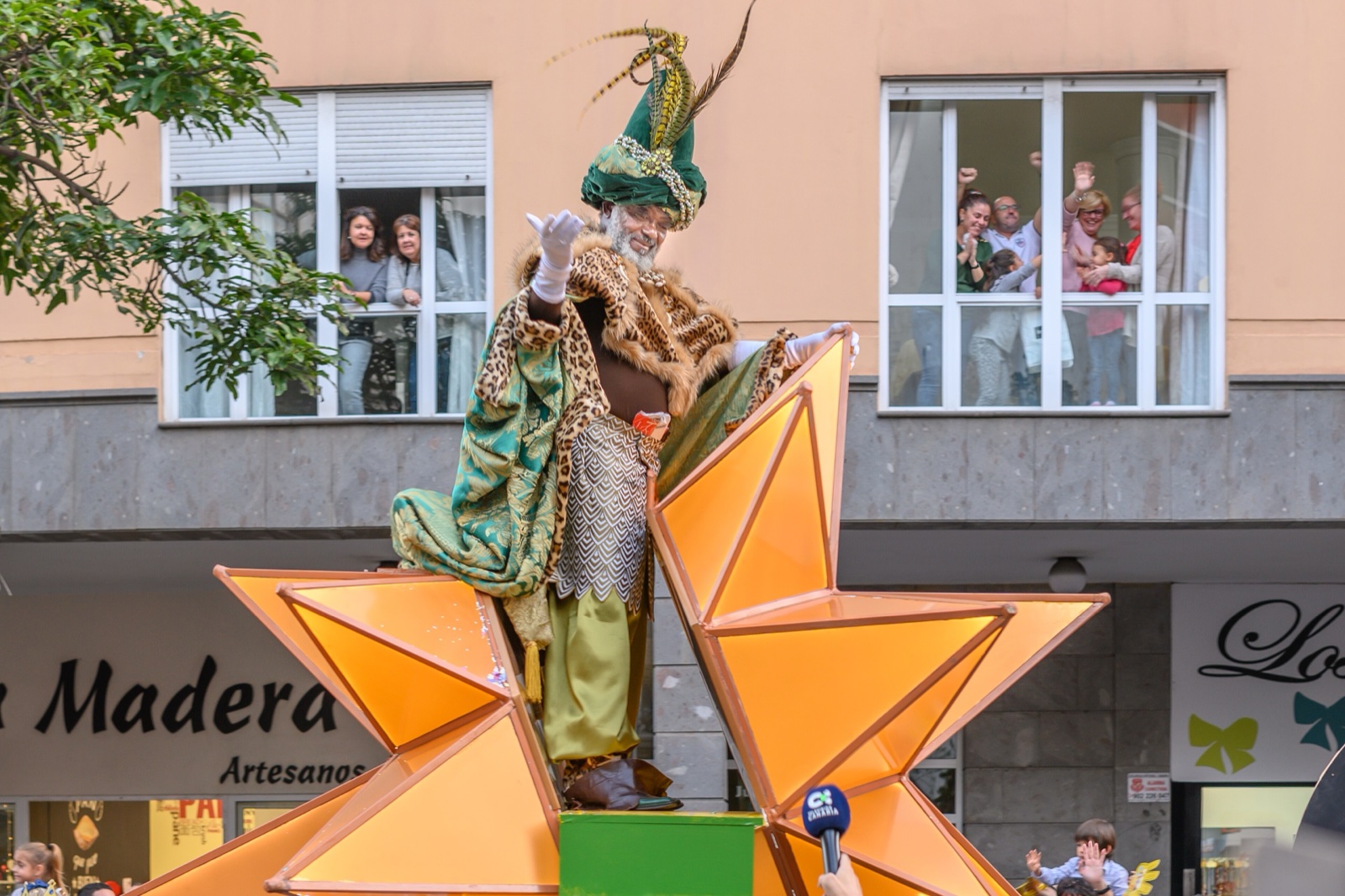
One of the Three Kings at the parade in Las Palmas de Gran Canaria. Photo: Bengt Nyman from Vaxholm, Sweden, CC BY 2.0, via Wikimedia Commons.

Then the children go to bed after leaving their shoes by the window or at the foot of the tree, a custom the historian Francisco José Gómez dates to the 19th century. In the morning those who behaved find their presents, and the others may find carbón dulce, a black sugar candy that looks like coal. The cake for the day is the roscón de Reyes, usually eaten on the afternoon of the 5th or on the 6th, with a small figure hidden inside. Our roscón de Reyes guide has the details. January 6 is a public holiday across the country.
Nativity scenes, markets and lights
Nativity scenes, called belenes, are part of the Christmas decorations. Madrid's Plaza Mayor market sells their figures, and Barcelona's Fira de Santa Llúcia sells figures, moss and cork for building the scenes at home. Both tourist offices describe these displays among the traditional Christmas purchases.
The photograph below shows a nativity scene sculpted in sand on Las Canteras beach in Las Palmas de Gran Canaria. Catalan and Valencian scenes hide a caganer, a figure squatting behind a bush or a tree to relieve himself. He is said to bring good luck, and these days he often wears the face of a celebrity.
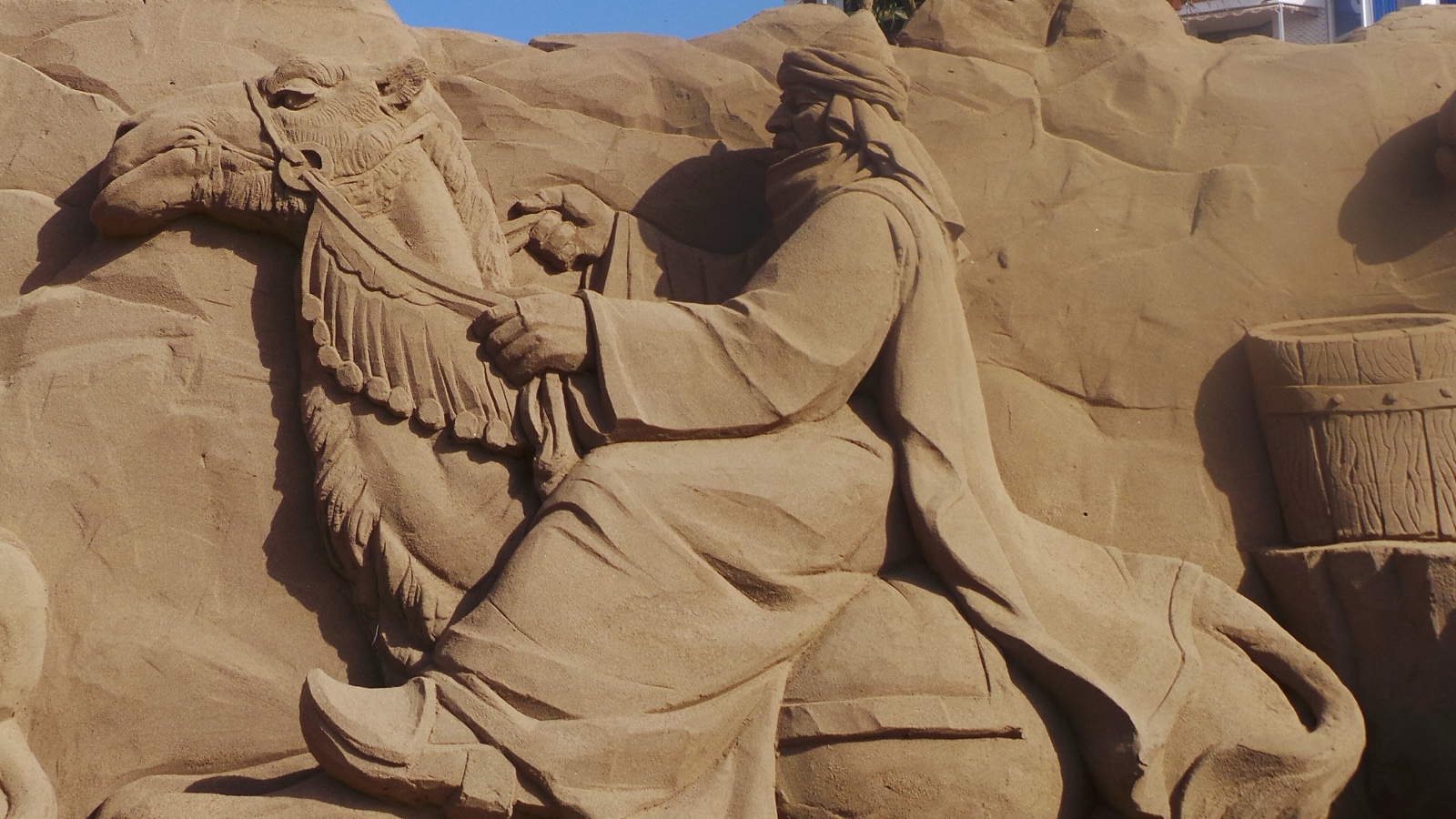
Part of the sand nativity scene on Las Canteras beach, Las Palmas de Gran Canaria. Photo: El Coleccionista de Instantes Fotografía & Video, CC BY-SA 2.0, via Wikimedia Commons.

Madrid's Christmas market in the Plaza Mayor has 104 stalls selling nativity figures, decorations, musical instruments and joke items, and it runs from late November to December 31. A Christmas market was already held in the 17th century on the nearby Plaza de Santa Cruz. Barcelona's Fira de Santa Llúcia has filled the space in front of the cathedral since 1786, with more than two hundred stalls selling figures, moss, cork, trees and zambombas.
According to the tourist office, Madrid, Barcelona, Málaga and Vigo have had some of the most eye-catching Christmas lights in recent years, and from late November most Spanish cities switch theirs on every night. Street stalls in almost any tourist area sell roasted chestnuts in paper cones, a good way to keep warm under them.
Christmas sweets
The tourist office describes sweets as a defining part of Christmas in Spain. The tray that follows the meal holds turrones, mazapanes, polvorones and mantecados, and the roscón de Reyes closes the season. Turrón is made with honey, sugar, egg whites and toasted almonds. Our polvorones recipe shows how to make the crumbly almond cookies that sit next to it on the tray.
Planning a trip
December 25, January 1 and January 6 are public holidays across Spain, and some monuments close on them: the Alhambra, for example, shuts on December 25 and January 1. Restaurants and hotels offer special menus on Nochebuena, so book early. If you want to be on the Puerta del Sol at midnight, arrive hours before. Winter days in Spain are often sunny, and the Canary Islands are an option for Christmas in the sun.
Quick answers
When does Christmas start in Spain? Practically on December 22, with the lottery draw, and the holidays run until January 6.
When do Spanish children get their presents? Traditionally on January 6, from the Three Kings, although Papá Noel also visits many homes on Christmas Eve.
What do Spaniards eat on Christmas Eve? A spread of starters, a soup, a roast or baked fish and a table full of sweets, with cava for the toast.
Is December 26 a holiday in Spain? Not nationwide. In Catalonia it is Sant Esteve, the second day of Christmas.
Where can I see a Three Kings parade? In almost every city and town on the afternoon of January 5. Madrid, Barcelona and Alcoy are good places to start.
Zokko is a community marketplace based in Spain. In La Plaza we write about the places, the food and the everyday life we know.
Diego Palomar
Escribe en La Plaza sobre tecnología, viajes y consumo.
Comentarios (0)
No hay comentarios todavía. ¡Sé el primero en comentar!