Authentic Paella Valenciana: The Real Recipe from Valencia
Chicken, rabbit, flat green beans and saffron, cooked in a wide pan until the bottom turns crisp. The paella Valencian families make on Sundays, adapted for a home kitchen in the US.

Marta Ledesma
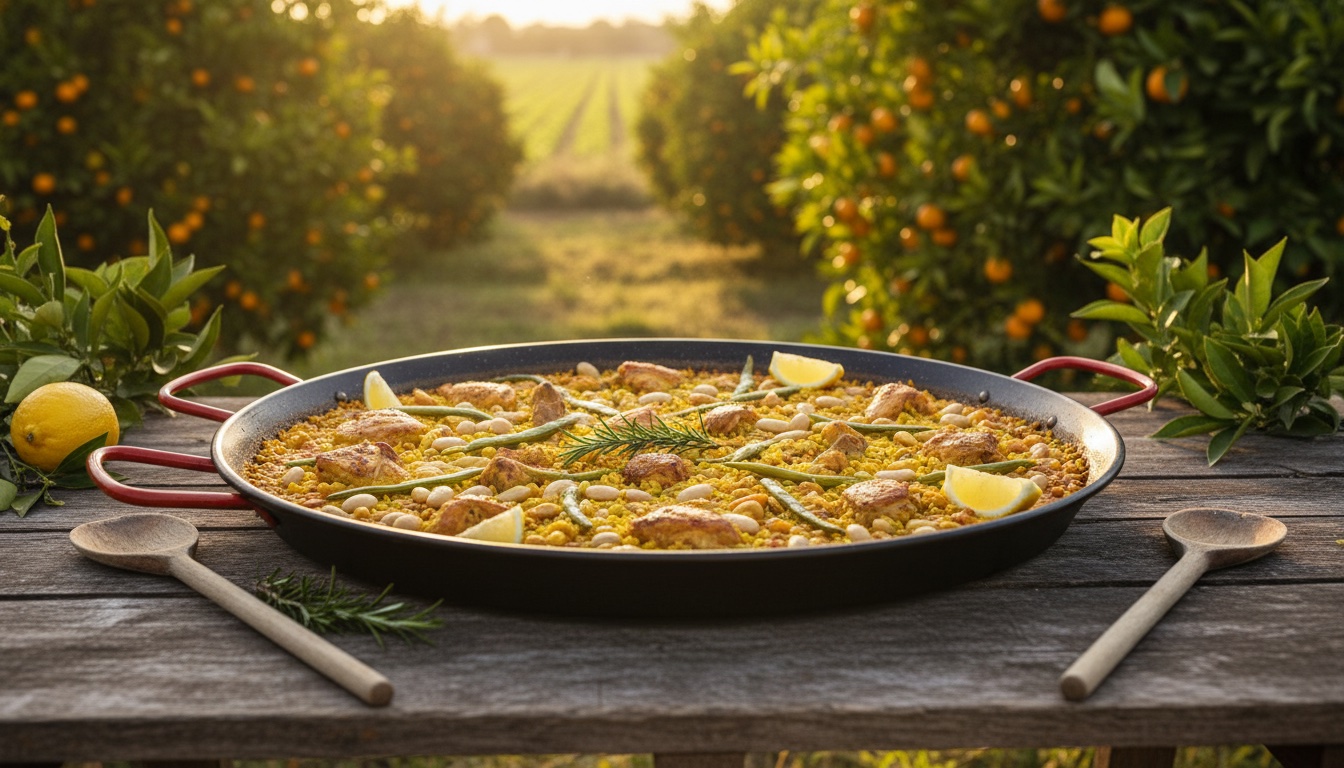
Ask for paella in a Valencian village on a Sunday and someone will point you to a backyard, where a grandfather is tending a wide, shallow pan over a fire of orange-tree wood while the rest of the family pretends not to watch. When it's ready, nobody plates it. Everyone eats straight from the pan with their own spoon, working from the edge toward the middle.
The original paella from Valencia has no seafood and no chorizo. It's a farmhouse dish of rice, chicken, rabbit and green beans, scented with saffron. None of the steps is hard, but each one sets up the next, so it pays to follow them in order.
What goes in a paella valenciana
Valencians argue about a lot of things, but most agree on the base: short-grain rice, chicken, rabbit, flat green beans, garrofó (large white beans), tomato, olive oil, saffron, water and salt. Sweet paprika is common. Some families add a sprig of rosemary at the end, others add snails. Shrimp, peas, bell peppers and chorizo belong to other rice dishes, and any Valencian cook will tell you so.
Paella is the Valencian word for the pan itself, which tells you how much the pan matters. What you're after is a thin layer of rice, about a finger deep, that cooks evenly and toasts at the bottom.
Ingredients (serves 4 to 5)
- 2 cups (400 g) Spanish short-grain rice, ideally bomba or Calasparra
- 2 lb (about 900 g) bone-in chicken thighs and drumsticks, cut into small pieces
- 1 lb (450 g) rabbit, cut into pieces (or more chicken)
- 8 oz (225 g) flat green beans (Romano beans), cut into 2-inch pieces
- 1 cup (about 150 g) large lima beans or butter beans, fresh or frozen
- 1 ripe tomato, grated (about 1/2 cup)
- 1/2 cup (120 ml) extra virgin olive oil
- 1 tsp sweet Spanish paprika (pimentón dulce)
- A generous pinch of saffron threads (about 0.5 g)
- 7 to 8 cups (1.7 to 1.9 liters) water
- 2 tsp kosher salt, plus more to taste
- 1 sprig fresh rosemary (optional)
You'll also need a paella pan 15 to 16 inches (38 to 40 cm) across. A big skillet can handle half the recipe, but the wide, thin layer of rice is the point, so if you plan to make this more than once, buy the pan.
How to make it
Brown the meat slowly. Heat the oil in the pan over medium-high heat, season the chicken and rabbit with a little salt and brown them on all sides. Give it a good 15 minutes. Those golden bits stuck to the pan are where the flavor of the broth comes from, so don't rush this part.
Add the beans. Push the meat to the edges, put the green beans and lima beans in the middle and sauté them for three or four minutes.
Tomato, then paprika. Clear a space in the center, add the grated tomato and let it cook down for about three minutes, until it darkens. Stir in the paprika for no more than ten seconds, because it burns in an instant, and then mix everything together.
Make the broth in the pan. Pour in the water. In Valencia the measure is the rivets of the handles: the water should reach them. Add the saffron and the salt, bring it to a boil and let it simmer for 20 to 25 minutes. Then taste it. It should be a little saltier than a soup, because the rice will drink it all.
Add the rice and leave it alone. Turn up the heat, scatter the rice evenly across the pan and shake the pan gently so it settles. Then put the spoon away, because from here on nobody stirs.
Cook. Keep it on high for about eight minutes, then lower the heat to medium-low for another eight to ten, until the liquid is gone and the rice is tender. If your burner is smaller than the pan, give the pan a quarter turn every couple of minutes so the edges cook too.
Listen for the socarrat. In the last minute or two, raise the heat and listen. A soft crackling means the bottom layer is toasting into socarrat, the crispy crust Valencians fight over. Stop as soon as it smells toasty. If it smells burnt, you've gone too far.
Rest it. Lay the rosemary on top, take the pan off the heat and cover it with a clean kitchen towel for five minutes. Then bring the pan to the table with a bowl of lemon wedges and let everyone dig in.
Where paella usually goes wrong
Most paellas that go wrong were stirred. Moving the rice releases its starch, which is what you want in a risotto, and the crust never forms. Next comes the rice itself: long-grain rice stays dry and separate, while bomba soaks up three times its volume of broth without turning mushy. In a deep pot you end up with a rice stew. Chorizo takes over every other flavor in the pan, which is why putting it in paella is a running joke in Spain. And give the paella its five minutes of rest at the end, because that's when the rice finishes cooking.
Swaps for American kitchens
No rabbit? Use all chicken and add a few wings for a richer broth. Large lima beans or butter beans are the closest thing to garrofó. For the rice, look for bomba or Calasparra in a Spanish store or online; arborio works in a pinch if you use a little less water. Saffron has no real substitute. Turmeric gives the color but not the smell, and a small jar of good saffron lasts for several paellas. And if you don't have an outdoor fire, a gas grill with the lid open does a surprisingly good job.
Paella valenciana or seafood paella?
Seafood paella, paella de marisco, is a coastal cousin made with fish stock, shrimp, squid and mussels. The mixed version with both meat and seafood is everywhere in tourist areas, but you'll rarely see it on a Valencian family table. All of them can be delicious. Just don't call the mixed one valenciana when you're in Valencia.
Quick answers
How long does it take? About an hour and 15 minutes, most of it while the broth simmers on its own.
Can I make it ahead? It's at its best straight from the pan. Leftovers keep for two days in the fridge; reheat them in a skillet with a splash of water.
What do Valencians drink with it? Often a cold beer or a glass of wine, and for something Spanish, a dry rosé or a young Garnacha works well.
Zokko is a community marketplace based in Spain. In La Plaza we write about the places, the food and the everyday life we know.
Marta Ledesma
Escribe en La Plaza sobre cultura, gastronomía y consumo.
Comentarios (0)
No hay comentarios todavía. ¡Sé el primero en comentar!