Pisto Manchego: Spanish Vegetable Stew Recipe
Slowly cooked peppers, zucchini, onion and tomato, with guidance from La Mancha and ingredient choices for an American kitchen.

Marta Ledesma
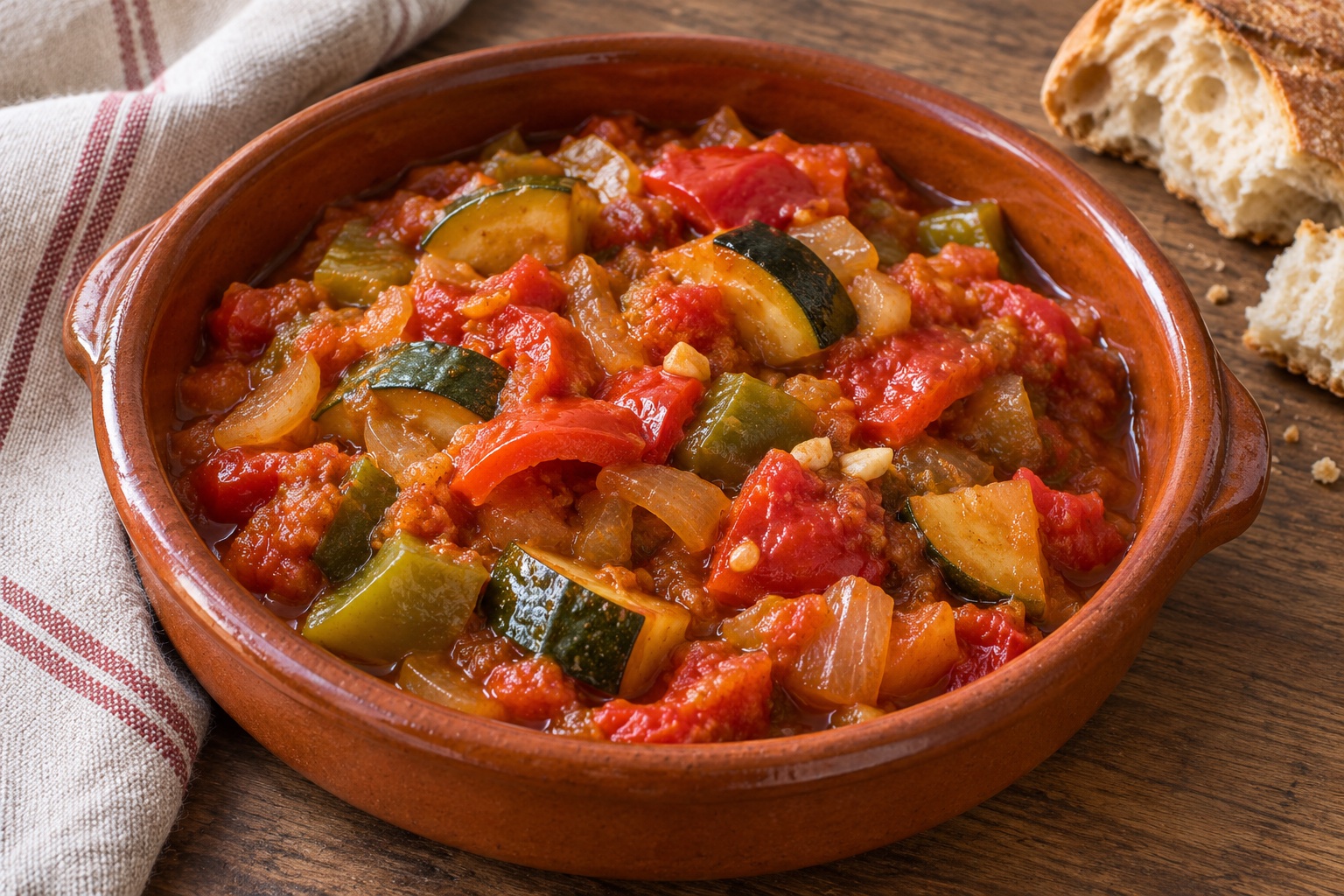
Pisto needs a pan wide enough for the tomato to cook down. Put the same vegetables in a small covered saucepan and you can end up chasing liquid long after everything is soft. The aim is a spoonful of tender vegetables held together by concentrated tomato, with no watery puddle spreading around the plate.
Pisto manchego comes from the cooking of La Mancha, and Spanish versions vary considerably. The recipe here uses onion, green and red bell peppers, zucchini, garlic and tomato. It follows the vegetable order published by Castilla-La Mancha's official tourism website, with practical guidance for buying the ingredients in the United States.
What makes it pisto manchego
Castilla-La Mancha's official tourism recipe cooks the vegetables slowly and finishes with tomato and a splash of white wine. It describes a thick result and serves it alone, with an egg, or as an accompaniment. Use that thick texture as your target, allowing for differences between versions.
The municipal tourism website for Almagro offers a shorter list built around green peppers and tomatoes. It describes pisto as a dish made from garden produce and suggests serving it with bread, eggs or meat. Onion and zucchini therefore belong to a documented version, even though they are absent from another local version.
The word manchego in the name points to La Mancha. It does not mean that the dish needs Manchego cheese. The vegetable base below contains no cheese, egg or meat. Choose an accompaniment when you serve it; keep the pisto as a vegetable base.
Choosing vegetables at a US grocery store
Use ordinary bell peppers, with a green pepper for its firmer, less sweet flavor and a fleshy red pepper for sweetness. Remove the stems and seeds before chopping. You do not need imported peppers to follow this version, and hot peppers are not a direct replacement for the bell peppers in the list.
A large zucchini supplies the soft green pieces that sit among the peppers. Keep the skin on, as the regional tourism recipe does, and cut the pieces a little larger than the other vegetables. Very fine zucchini dice can disappear before the tomato has reduced, so give them enough size to remain visible.
For the onion, choose a regular yellow or white cooking onion. Finely chopped garlic flavors the soft vegetables evenly. Large chunks can dominate a spoonful even when you use little garlic.
Crushed tomatoes are convenient when fresh tomatoes are pale or disappointing. Choose plain tomatoes rather than a seasoned pasta sauce, since the latter can bring herbs, sugar and salt that change the recipe. Karlos Arguiñano's pisto with cod also allows canned tomatoes when fresh ones are unavailable.
Ingredients and yield
Makes about 4 side-dish servings, depending on the size of your vegetables and how far the tomato reduces. This is an editorial serving suggestion for the regional tourism ingredient list, which does not state a yield. For a main course, plan the portion around the bread and any other food you serve with it.
- 1 large onion, peeled and diced
- 1 green bell pepper, stemmed, seeded and diced
- 1 fleshy red bell pepper, stemmed, seeded and diced
- 1 large zucchini, skin on, cut into slightly larger dice
- 1 garlic clove, peeled and finely chopped
- About 14 oz (400 g) plain crushed tomatoes, canned or freshly crushed
- A splash of dry white wine
- Olive oil, enough to coat the pan for gently cooking the vegetables
- Salt, to taste
The regional recipe leaves the wine and oil amounts open. Use a small splash of wine, not a glassful that turns the vegetables into soup. For the oil, begin with enough to let the onion soften without sticking, then watch the pan as the vegetables cook. The amount depends partly on the pan's surface area.
No exact total time is assigned to this version because the tourism recipe uses texture cues instead of a clock. Chopping size, vegetable moisture and skillet width all affect it. Make it when you have time to watch the vegetables and check the bottom of the pan.
How to make pisto manchego
Prepare the vegetables. Dice the onion and peppers, cut the unpeeled zucchini into slightly larger pieces, and finely chop the garlic. Have the crushed tomatoes ready before you start cooking. Set a wide skillet or a heavy-bottomed shallow casserole over medium heat.
Soften the onion. Add enough olive oil to coat the pan, then add the onion. Cook gently, stirring as needed, until it is soft and translucent. Reduce the heat if the edges begin to brown before the pieces have softened.
Cook the peppers and zucchini. Add the green pepper, red pepper and garlic. Lower the heat and cook until the peppers soften. Add the zucchini and continue cooking gently, stirring occasionally, until it is tender but still holds its shape.
Reduce the tomato. Stir in the crushed tomatoes and a splash of dry white wine. Cook over medium-low heat, uncovered, stirring along the bottom, until the tomato has reduced and the mixture is thick. If it catches before the vegetables are tender, lower the heat and add a little water as needed.
Season and serve. Taste and adjust the salt once the tomato has reduced. Remove from the heat and let the vegetables rest briefly. Serve the pisto on its own, with bread, or as a side dish, spooning any remaining tomato mixture over the vegetables.
Why the vegetables go in at different stages
The regional method starts by softening onion, follows with peppers and garlic, and then adds zucchini before the tomato. That order helps you judge each vegetable while it is still visible. Once everything is coated in tomato, an undercooked pepper is harder to spot until you bite into it.
Do not add the next vegetable just because the previous ingredient has become hot. A pepper can be steaming while remaining quite firm. Take a small piece out, let it cool enough to taste and check whether it has softened. Aim for vegetables that are tender together when they reach the spoon.
Zucchini requires gentler handling as it softens. Fold it through the peppers rather than repeatedly crushing it against the pan. Some breakdown is natural, especially as you reduce the tomato, but the recipe does not call for a smooth vegetable puree. Once the pieces are evenly distributed, leave them to cook and stir when needed.
Getting the tomato texture right
Cook uncovered during the tomato stage so the liquid can leave the pan. A lid catches steam and returns moisture to the vegetables. If splattering is an issue, lower the heat or use a splatter screen that still lets steam escape. A hard boil makes the bottom more likely to catch.
Pull a spoon through the middle and look at what happens. When the mixture closes slowly and holds together on the spoon, you are close to the intended thick texture. A rush of thin red liquid into the gap means it needs more reduction. Use that observation alongside the softness of the vegetables.
The pan should stay moist enough that the tomato does not scorch. Stir from the corners and the center, where thickened tomato may collect. If you smell burning, move the unburned mixture into a clean pan without scraping the dark layer from the bottom. Adding water cannot remove a scorched flavor already mixed through the dish.
If the pisto tastes sharp or flat
Taste after reducing, since the tomato's flavor and the salt become more concentrated as water evaporates. If you season heavily at the start, you may have little room to adjust later. Begin conservatively and make the last decision when the vegetables have reached the texture you want to serve.
Almagro's recipe allows a little sugar when the tomatoes make the dish too acidic. Use it to correct the flavor only when needed. First make sure the tomato has cooked and reduced; raw-tasting tomato and an acidic finished sauce are different problems. If you use sugar, add it cautiously and taste again.
A dish that seems flat may simply need a small salt adjustment. Take a spoonful into a separate bowl, season that sample lightly and compare before changing the whole pan. This is particularly helpful when canned tomatoes already contain salt. Adjust the pan only after tasting that sample.
Changes that preserve the character of the dish
The vegetables in the ingredient list follow the regional tourism recipe. If you want the shorter pepper-and-tomato approach, Almagro provides a local reference for it. Treat that as a different version and pay attention to its texture, rather than removing ingredients at random from a pan already designed around zucchini and onion.
Arguiñano's recipe uses a pepper and tomato base with cod and a fried egg. It shows how pisto can accompany other food, but the fish is not required for the vegetable dish here. Keep cod preparation separate unless you are following a recipe that includes its handling and cooking instructions.
If you prefer to leave out the wine, omit the splash and let the tomatoes supply the liquid. The flavor will change slightly, but you do not need to replace it with vinegar automatically. Vinegar adds acidity without supplying the same flavor as wine.
Serving pisto for lunch or dinner
Spoon it into a shallow bowl with bread for scooping up the tomato and oil. The regional tourism source also suggests it as a side dish, which is useful when the rest of dinner is already planned. Because the vegetables are fully cooked, they should be soft enough to eat comfortably without a knife.
An egg is a documented accompaniment, but cook it separately and add it when serving. For safety, the FDA recommends cooking eggs until both whites and yolks are firm. Keep the vegetable base separate if you want leftovers that can be reheated without an egg becoming part of every portion.
For a larger meal, serve the pisto beside simply cooked meat or another dish of your choice. Almagro lists pork and rabbit among its accompaniments. Use those combinations as serving ideas. With the vegetables and bread ready, add whatever else suits your table.
Making it ahead and reheating
Pisto can be made ahead, which frees the stove when you are finishing another dish. Portion the cooked vegetables into shallow containers and refrigerate promptly. Do not leave a deep casserole on the counter until its center reaches room temperature. Smaller containers allow the food to cool more quickly.
Follow USDA leftovers guidance: refrigerate within 2 hours, or within 1 hour if the surroundings are above 90°F (32°C). Keep the refrigerator at 40°F (4°C) or below. Refrigerated leftovers should be used within 3 to 4 days.
Reheat to 165°F (74°C), stirring so the center and the edges heat evenly. A very thick portion may need a small splash of water to keep it from catching. Once heated, uncover briefly if that water has made the mixture too loose. Make a fresh egg separately if you want one with the reheated vegetables.
The regional tourism recipe notes that pisto without potato can be frozen; there is no potato in this version. The USDA gives a general quality window of 3 to 4 months for frozen leftovers. Freeze in portions you expect to use and label them so you can tell the vegetable base from a container that includes other food.
Questions before you cook
Does pisto contain Manchego cheese? This version does not, and neither of the linked regional tourism recipes requires it. Manchego in the name refers to La Mancha.
Is it the same as ratatouille? The ingredient overlap can help explain it to an American diner, but follow the Spanish ingredient list and cooking method here rather than assuming every ratatouille recipe will make the same dish.
Can I use canned tomatoes? Yes. Choose plain crushed tomatoes and use the stated weight. Judge the finished texture as they reduce, since cans differ in how much liquid they contain.
Can I make it without eggs? Yes. The vegetable base stands on its own; the egg is an accompaniment. Serve it with bread or alongside the rest of your meal.
Sources
Castilla-La Mancha's tourism website supplies the base vegetable list, wine and cooking order. Almagro's municipal tourism page documents the pepper-and-tomato version and serving options. Karlos Arguiñano supplies the canned-tomato option and a cod variation. FDA guidance covers eggs; USDA guidance covers leftovers.
Zokko is a community marketplace based in Spain. In La Plaza we write about the places, the food and the everyday life we know.
Marta Ledesma
Escribe en La Plaza sobre cultura, gastronomía y consumo.
Comentarios (0)
No hay comentarios todavía. ¡Sé el primero en comentar!