Cocido Madrileño: The Classic Madrid Stew Recipe
Chickpeas, beef, pork and sausages simmered for hours and served in three courses: how Madrid cooks its winter stew, with a recipe for an American kitchen.

Marta Ledesma
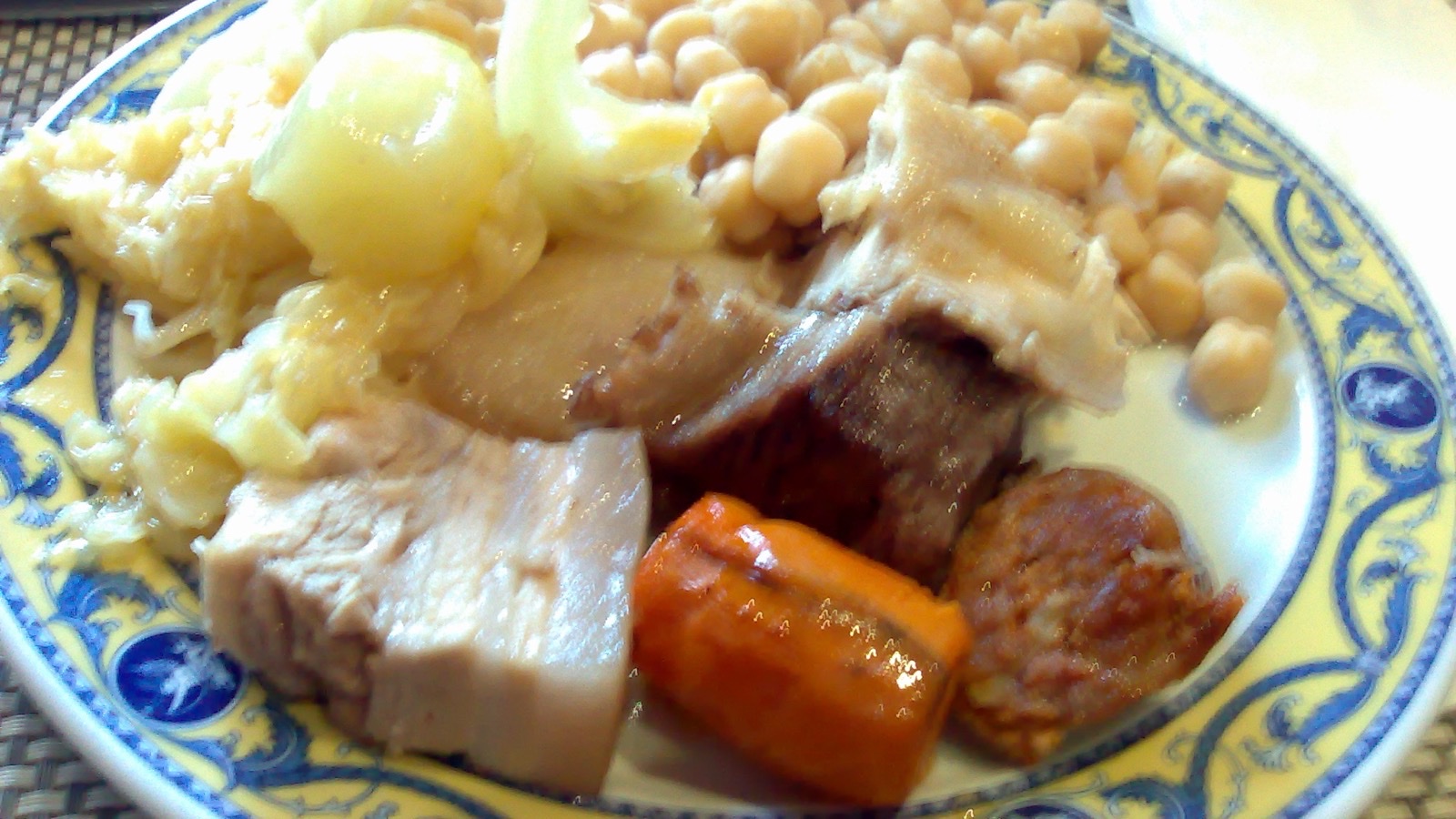
Cover photo: Adriao, public domain, via Wikimedia Commons, cropped.

Cocido madrileño takes a good part of a Sunday to make. You soak the chickpeas the night before, you start the pot in the morning, and then you wait. What comes out of that pot traditionally arrives at the table in three separate trips. This is the traditional Madrileño way to serve it.
The recipe below is a home adaptation for a 10-quart (9 L) pot, written in cups, pounds and ounces, with swaps for an American supermarket. It uses a slow-pot schedule; cooking times are approximate, so check that the chickpeas and meat are tender before serving. Alfonso López Alonso's own recipe provides guidance on chickpea preparation, cabbage and serving, but uses a pressure cooker with a different timetable. The way the dish is served has a history of its own.
What cocido madrileño is
It's a chickpea stew. Chickpeas share the pot with beef, pork, chicken, a couple of sausages and a handful of vegetables. It's a cold-weather dish, and the classic way to serve it is to separate everything that came out of the pot into three courses. Spaniards call them vuelcos, which roughly means "turnings out," because each part is tipped out of the pot onto its own dish.
The order is fixed:
- The soup. The broth that all the meats and chickpeas made, served hot with very fine noodles.
- The chickpeas and vegetables. Tender chickpeas with potato, cabbage, carrot and turnip.
- The meats. Beef shank, chicken or hen, fatty pork belly, chorizo, blood sausage and a marrow bone, plus the pelota, a seasoned dumpling of meat and bread, where it's made.
The Community of Madrid treats the dish as part of its intangible cultural heritage, and the regional tourism board describes it as less a recipe than a social ritual, tied to family gatherings and Sunday lunches. Plenty of restaurants now squeeze it into two courses, with the soup first and everything else on one plate, because that's what fits a weekday lunch menu. At home, on a Sunday, many families still serve the three dishes separately.
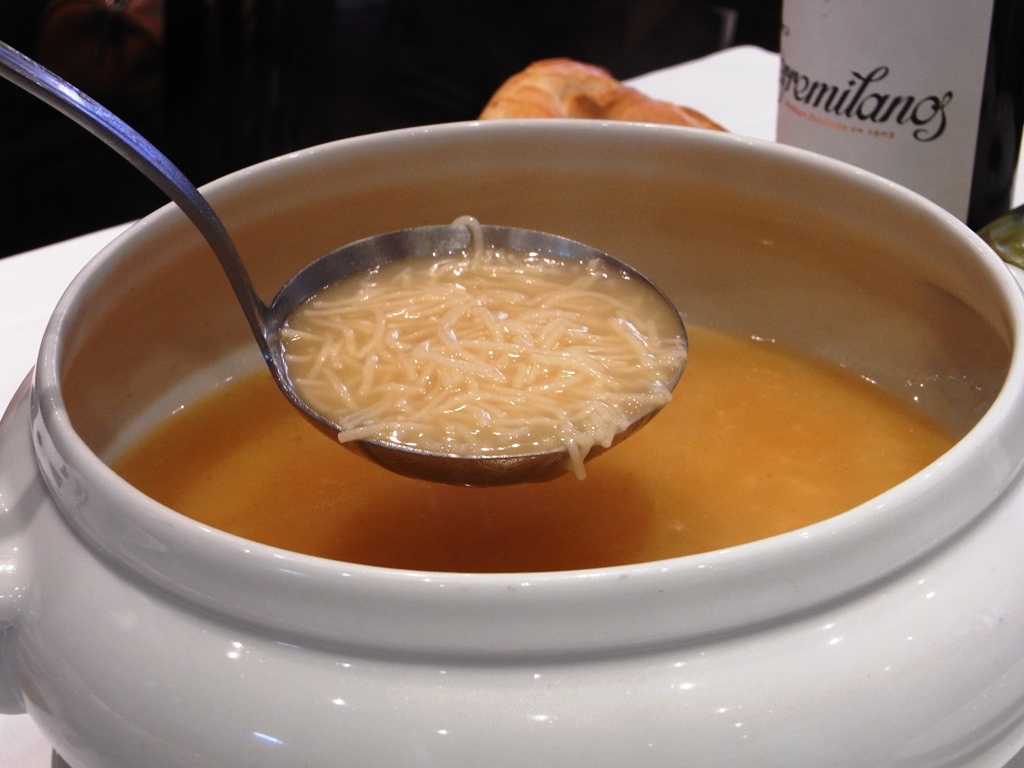
The first vuelco: broth with fine noodles. Photo: Javier Lastras from España/Spain, CC BY 2.0, via Wikimedia Commons.

Where it comes from
The Community of Madrid tourism board traces cocido to the Castilian olla podrida, documented in the 16th and 17th centuries. It describes the dish becoming established in Madrid's inns and eating houses during the 19th century, and in family homes as a Sunday meal during the 20th.
Lhardy opened in 1839 in a house on the Carrera de San Jerónimo, and it's still there. The restaurant tells its own history on its website.
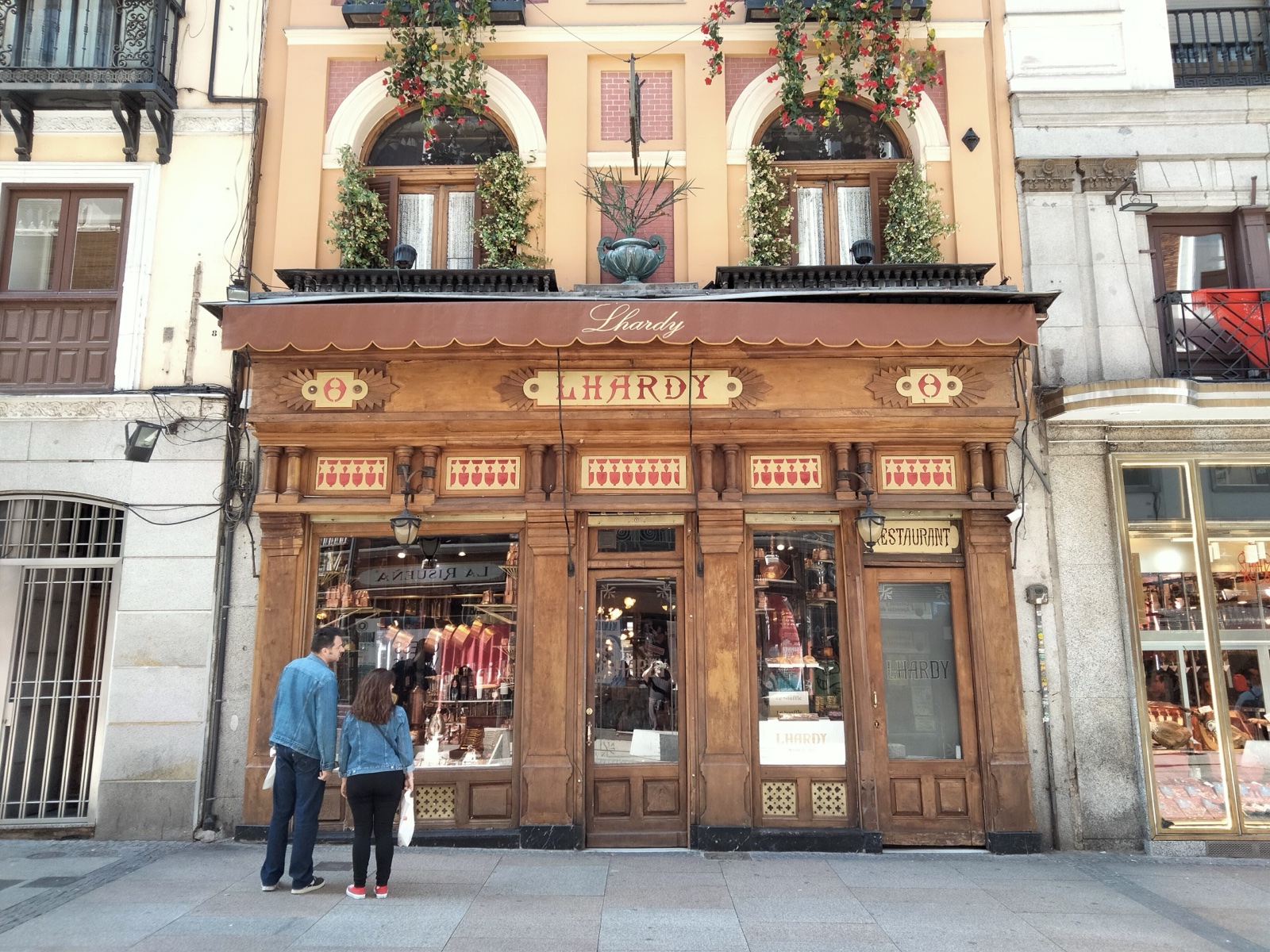
Lhardy, on the Carrera de San Jerónimo. Photo: Enric, CC BY 4.0, via Wikimedia Commons.

The illustration below, by Inocencio Medina Vera, appeared in Blanco y Negro on May 22, 1909. It shows a family eating beside a building site.
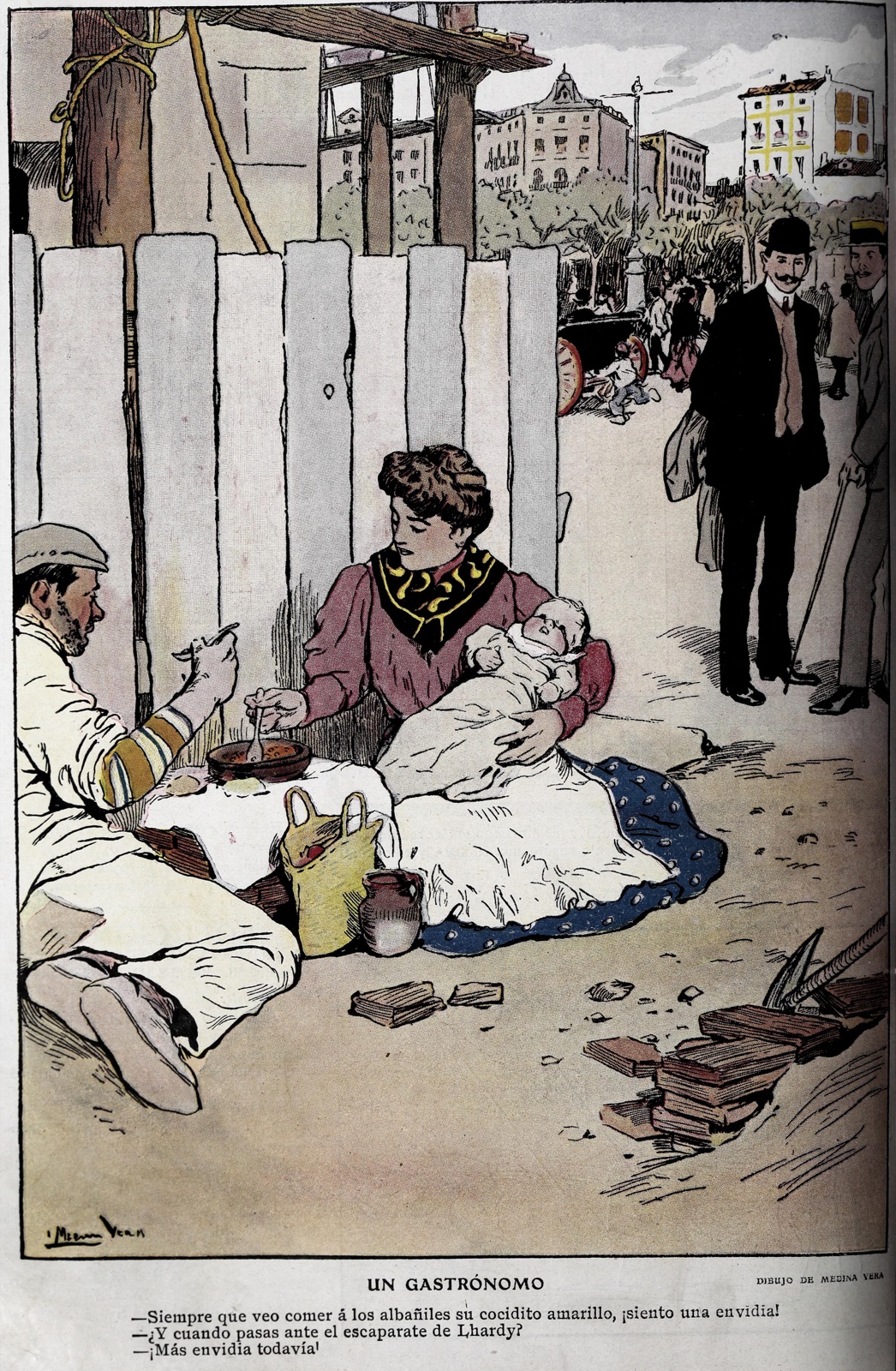
"Un gastrónomo," by Medina Vera, in Blanco y Negro, 1909. Photo: Inocencio Medina Vera, public domain, via Wikimedia Commons.

The chickpeas matter most
Buy good dried chickpeas: their texture carries through the whole stew. The Madrid tourism board names Castilian and pedrosillano chickpeas as the classic choice. The pedrosillano type is small; food writer Alfonso López Alonso recommends it for its buttery texture. A cooking mesh bag makes it easier to lift the chickpeas out without damaging them, as Alfonso López Alonso explains in his own recipe.
The traditional rules are simple:
- Soak them for 10 to 12 hours, in lightly salted water.
- For this recipe, measure out the chickpeas before soaking them; the ingredient list gives the dry weight.
- Put them into the pot when the broth is already boiling.
- If the pot needs topping up, use hot water to keep the simmer steady.
The simmering schedule for this home version is set out below. Many cooks tie them in a mesh bag so they can lift them all out at once and keep the texture even.
Ingredients (serves 6 to 8)
For the pot:
- 1 pound (450 g) dried chickpeas, large Spanish or pedrosillano if you can find them
- 1 teaspoon salt, for the soaking water only
- 1 1/2 pounds (700 g) beef shank
- 1 beef marrow bone
- 1 small stewing hen or 4 bone-in chicken thighs
- 8 ounces (225 g) fresh pork belly, in one piece
- 1 ham bone, optional
- 12 ounces (340 g) fresh Spanish chorizo, the unsmoked kind sold for cooking
- 1 onion morcilla (Spanish blood sausage), about 8 ounces (225 g)
- 4 carrots, peeled
- 1 turnip, peeled
- 4 medium potatoes, peeled and cut in large chunks
- About 4 quarts (4 L) cold water
For the cabbage:
- 1 small green cabbage, cut in wedges
- 3 tablespoons olive oil
- 3 cloves garlic, sliced
- 1 teaspoon sweet paprika (pimentón dulce)
For the soup:
- About 4 ounces (115 g) fine vermicelli or angel hair pasta, broken into short pieces
Ingredient swaps for an American kitchen
Spanish cooks call the beef cut morcillo, the lower hind leg, and the closest match is beef shank, the cut sold in cross-section with the marrow bone inside. Tocino is fresh, streaky pork fat with a little meat in it. Ask your butcher for fresh pork belly, and don't use bacon, which is cured and smoked.
Spanish tradition prefers a hen to a chicken because the meat holds together through hours of cooking instead of falling apart. A stewing hen can be hard to find, so bone-in chicken thighs are a good second choice.
For the chorizo, look for unsmoked Spanish chorizo sold for cooking. Mexican chorizo is raw and crumbly, and it dissolves in the pot. The morcilla should be an onion one. This version uses onion morcilla. If you can't find either, leave it out. You can order chorizo and morcilla online or buy them at a Spanish or Latin grocery.
Canned chickpeas are already soft and won't survive hours of simmering, so use dried ones. Some Madrid cooks skip the carrot, which they say makes the pot too sweet, and others add green beans or chard. The fideos for the soup are very fine noodles. Angel hair broken into short pieces works.
How to make it
Plan on about 16 hours from first soak to last bite: 12 hours of soaking, 30 minutes of prep and about 3 1/2 hours of simmering. You'll need a large pot for the meats and a second, smaller one for the cabbage, because tradition cooks the vegetables apart from the chickpeas, which is why a cocido takes at least two pots.
Soak the chickpeas. Put the chickpeas in a large bowl with the teaspoon of salt and cover with plenty of cold water. Leave them for 12 hours or overnight, then drain.
Start the meats. Put the beef shank, marrow bone, hen or chicken, pork belly and ham bone in the big pot. Add enough cold water to cover them, using about 4 quarts (4 L) as a guide. Leave room for the remaining ingredients and for the broth to simmer; use a larger pot if needed, and do not fill it to the rim. Do not add salt. Bring to a boil, skim off the foam, then turn the heat down to the lowest setting, cover and simmer for 1 hour 30 minutes. The broth should barely bubble.
Add the chickpeas. Bring the broth back to a boil before adding the drained chickpeas, then reduce the heat to a gentle simmer. If the water level drops, top up with boiling water, never cold. Simmer for 1 more hour.
Add the carrots and turnip. Drop in the carrots and the turnip and simmer for 30 minutes.
Add the chorizo and potatoes. Add the whole chorizo and the potatoes and simmer for another 30 minutes. Taste the broth now and add salt only if it needs it, since the pork and the sausages will already have seasoned it.
Finish with the morcilla. During the last 10 minutes of the chorizo and potatoes' 30-minute cooking time, prick the morcilla with a fork so it doesn't burst and add it to the pot. This time overlaps with the previous step.
Cook the cabbage. While the pot simmers, cook the cabbage wedges in a separate pot of salted water until tender, then drain well. Warm the olive oil in a small pan, cook the garlic until golden, take the pan off the heat and stir in the paprika. Pour it over the cabbage right away.
Make the soup. Strain about half of the broth into a smaller pot and bring it to a boil. Add the noodles and cook for 2 to 3 minutes, until tender.
Serve in three rounds. Serve the soup first, very hot. Then bring out the chickpeas, potatoes, carrots, turnip and cabbage on one platter. Last, slice the meats and sausages and put them on a second platter, with the marrow bone for whoever wants it. Let everyone help themselves and mix as they like.
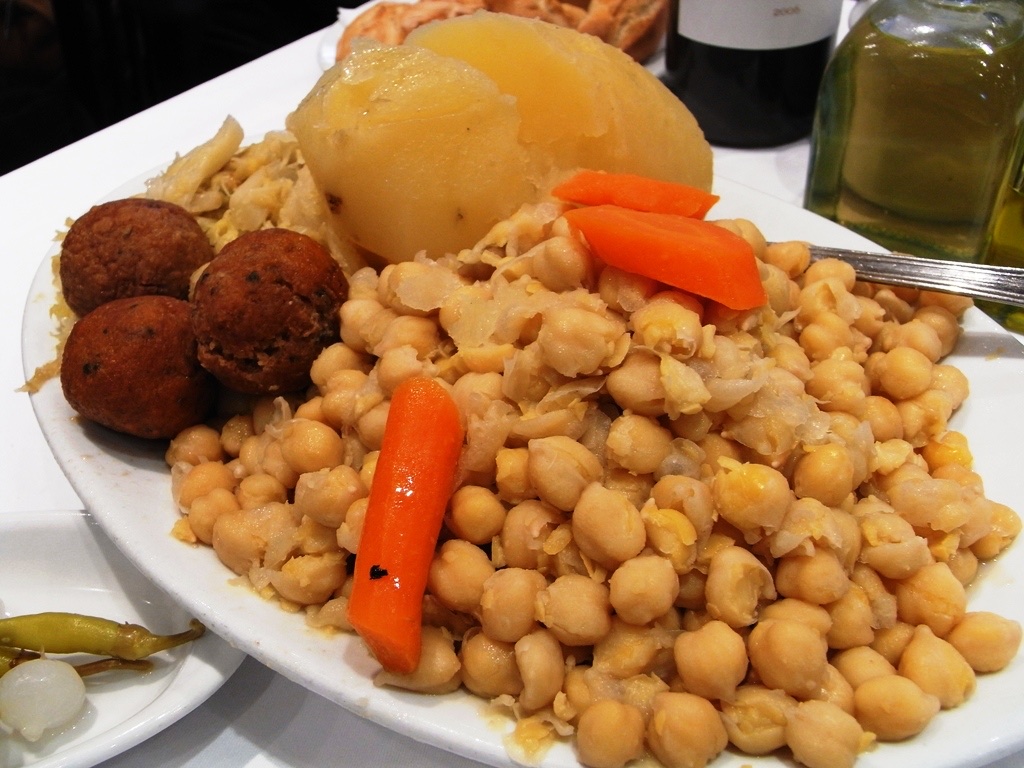
The second vuelco: chickpeas with vegetables. Photo: Javier Lastras from España/Spain, CC BY 2.0, via Wikimedia Commons.

Make-ahead planning and leftovers
Alfonso López Alonso likes to make his cocido the day before and refrigerate the broth overnight. Once chilled, the fat on the surface is easier to lift off with a spoon. This is an optional way to lighten the soup; it does not change the order of the three courses. Keep the broth refrigerated while it cools and rests, as his recipe advises.
His method cooks the cabbage apart from the meat because he prefers to keep its flavor from taking over the whole pot. The separate pan in this home version follows the same approach. It also lets you bring the cabbage to the table with the chickpeas instead of leaving it among the meats.
At the end, serve everything on separate platters and let people combine it on their plates. López Alonso describes his family mixing the chickpeas with the pork fat. He also suggests using the remaining cooked meat for croquettes. A second meal from the pot is part of the appeal, so keep the meats, vegetables and broth rather than discarding what is left after lunch.
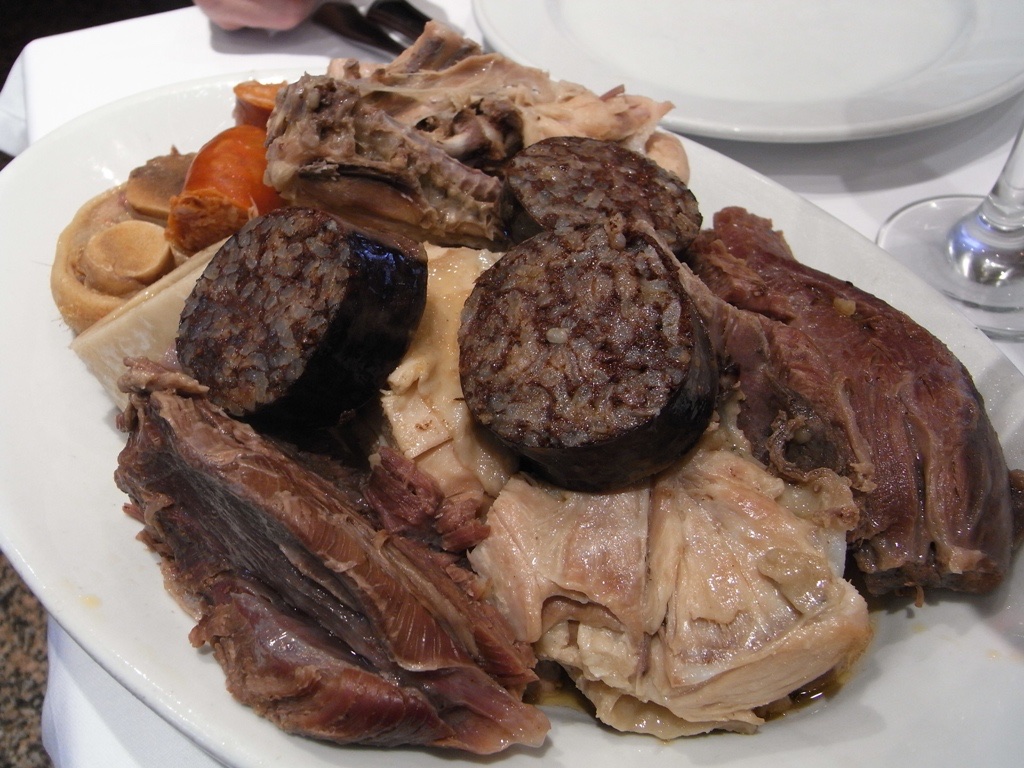
The third vuelco: the meats. Photo: Javier Lastras from España/Spain, CC BY 2.0, via Wikimedia Commons.

Common mistakes
Most failures come from rushing the pot. A hard boil clouds the broth and toughens both the meat and the chickpeas, so keep the heat so low that the surface only trembles. Salt added too early or too heavily is the second problem, because the pork belly, ham bone and sausages all release salt as they cook. Soak the chickpeas overnight and check their tenderness before serving; cooking time can vary with the beans. And soft, collapsed potatoes mean they went in too early, so keep them for the last half hour.
There is also a debate about the pressure cooker. It's much faster, and many home cooks use it, but some chefs say the flavor suffers. Alfonso López Alonso also publishes a pressure-cooker method, with the cabbage cooked separately. Whichever you choose, cocido is traditionally better the day after, once the flavors have had time to spread through the pot.
Where to eat it in Madrid
The Madrid tourism board lists four historic places for a traditional cocido: Lhardy, at Carrera de San Jerónimo 8; Taberna La Bola, at Calle de la Bola 5; Malacatín, at Calle de la Ruda 5; and La Daniela, at Calle de Cuchilleros 9. Go hungry, and don't plan anything for the afternoon.
Quick answers
What is cocido madrileño? A traditional Madrid stew of chickpeas, beef, pork, chicken, sausages and vegetables, served in three courses.
What are the three vuelcos? First the broth as a soup, then the chickpeas with vegetables, then the meats.
Can I use canned chickpeas? They don't work well. Canned chickpeas are already soft and break down in hours of cooking, so use dried ones.
Can I make it in a pressure cooker? Yes, and many Spaniards do, though some cooks say the flavor is thinner than a slow, gentle simmer.
Why no salt at the start? The cured and cooked meats release salt as they simmer, so it's easier to season at the end than to fix an over-salted pot.
Does it taste better the next day? Yes, that is the general view among Spanish cooks.
Do I have to serve it in three courses? No. Madrid restaurants often serve soup first and everything else on one plate. At home, the three platters are still the point.
Zokko is a community marketplace based in Spain. In La Plaza we write about the places, the food and the everyday life we know.
Marta Ledesma
Escribe en La Plaza sobre cultura, gastronomía y consumo.
Comentarios (0)
No hay comentarios todavía. ¡Sé el primero en comentar!