Fabada asturiana: a traditional bean and pork recipe
A four-serving stovetop fabada with Asturian beans, chorizo, morcilla and cured pork, plus shopping, soaking and storage guidance.

Marta Ledesma
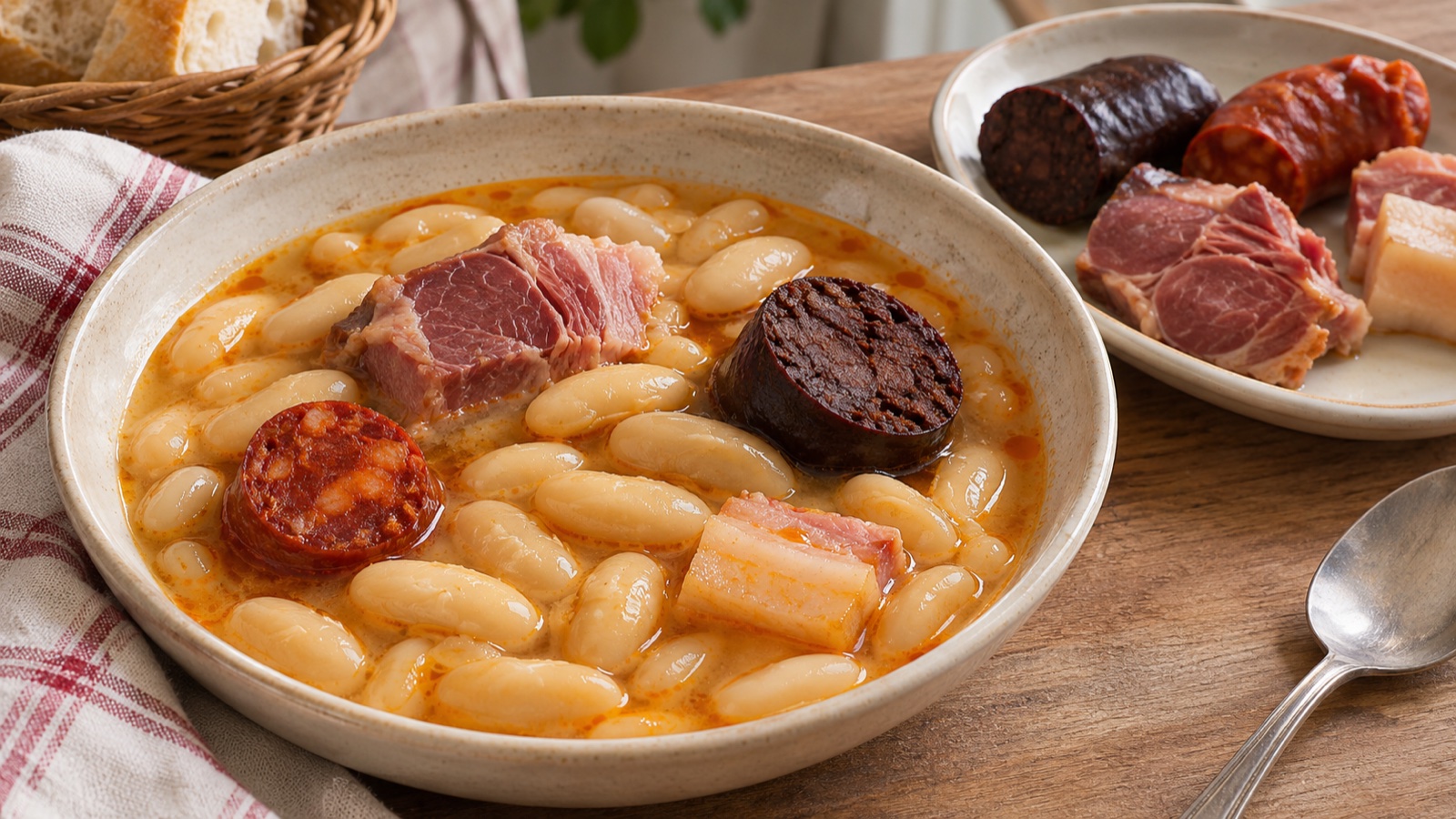
Fabada asturiana is a pot of dried beans cooked with chorizo, morcilla and cured pork. Shopping outside Spain can take some planning. You need to find the beans, work out the meat labels and check which products need refrigeration. At home, allow an evening for soaking, then choose a day when you can keep an eye on the pot through a long stovetop simmer.
This four-serving recipe follows Directo al Paladar’s traditional fabada. The metric weights are the reference amounts; the US equivalents are rounded for shopping and weighing. Allow overnight soaking and about 3 hours of cooking, with extra time if the beans need it. The recipe below includes the source’s optional separate blanching of the meats.
An Asturian pot and its ingredients
Turismo Asturias’s recipe, supplied by As de Picas in Gijón/Xixón, calls for fabes de la granja, chorizos, morcillas, lacón and panceta. It calls the collection of meats the compango. You may encounter that word on a shop’s ready-packed selection of meats for fabada. Before buying a pack, check its contents against the ingredients below. The quantities in the pack may differ from those you need.
Published Asturian recipes vary. The tourism version lists pork rib, garlic, bay, onion, paprika and saffron as optional ingredients. Here, onion, garlic, bay and olive oil are part of the measured recipe. You do not need to buy saffron, paprika or ribs to complete it. If you have been comparing recipes while shopping, keep one ingredient list handy to avoid buying extras from another version.
Choosing beans outside Spain
Look for dried fabes de la granja. If you want protected Asturian beans, the Faba Asturiana regulatory council identifies the protected names as Faba Asturiana and Fabes de Asturias. Its protected geographical indication covers dried beans of the traditional Granja Asturiana variety. Check for the variety name and protected designation on the package; a label that says only “white beans” leaves the variety unclear.
The council identifies these beans as Phaseolus vulgaris. The similar-looking English word “fava” can send a shopper toward broad beans, so keep the Spanish product name when searching a grocer’s catalog. The ingredient you need is a dried bean for this long-cooked pot. Fresh green broad beans and cans of already-cooked beans do not match the starting ingredient or the method below.
Other white beans may need different cooking times. North Dakota State University Extension’s bean guide distinguishes Great Northern beans, which have thin white skins and a delicate flavor, from smaller white navy beans. It notes that bean types differ in texture and cooking time. Those US grocery labels describe different beans. They can help you identify what a store has, but neither name means protected Asturian fabes.
Buy about 1 lb (450 g) of dried beans. A US pound is approximately 454 g, so a one-pound bag covers the recipe amount. Weigh out 450 g if you have a scale. The same weight of drained canned beans will not work with these instructions. They begin with dried beans and include the soaking and cooking; adapting them for canned beans would require a different method.
NDSU advises cooking one kind of bean at a time because both type and age affect cooking time. Avoid topping up a partial bag with a different variety simply to reach the weight. Before soaking, inspect the beans, remove broken beans or foreign material, and rinse under cold running water, following the extension guide’s preparation advice.
Reading the pork labels
Keep the Spanish meat names on the shopping list. This recipe specifies Asturian chorizos and Asturian morcillas. Morcilla is blood sausage; check the product description rather than relying on a dark casing to identify it. If a store stocks several regional products, ask specifically for the Asturian ones named in the recipe.
The sausages are given by count, with two of each for the whole pot. The source does not give their individual weights. Compare packages carefully if you are choosing between makers, since sausage sizes can differ. There is no source weight in ounces to use as a guide. Retain the product packaging so its storage and use-by instructions remain available after shopping.
Lacón is cured pork shoulder, and this recipe specifies salted lacón that is soaked separately overnight to desalt it. Tocino is pork fat. Panceta appears in the tourism recipe; the version below calls for tocino. If a butcher suggests an alternative, ask what the product is and how its curing and salt differ before deciding to adapt the dish.
Use 7 oz (200 g) each of lacón and tocino. For reference, 200 g is about 7.05 oz and 250 g of onion is about 8.82 oz; the listed US weights round those values. The olive oil is also weighed: 45 g is about 1.59 oz. Use weight ounces for the oil. A scale lets you measure it without converting the amount to spoons, cups or fluid ounces.
Preparing the kitchen and the overnight soak
Set aside a large bowl for the beans and a separate container for the lacón. Directo al Paladar notes that the beans expand considerably during soaking. Choose a bowl with room for that expansion, and leave space above the beans. NDSU’s traditional soaking method also ends by discarding the soak water and rinsing with fresh, cool water.
Keep the soaking lacón refrigerated, as the recipe directs. The Food Standards Agency’s chilling guidance advises following package storage instructions and keeping raw meat in its packaging or a clean sealed container on the bottom shelf, where it cannot drip onto other food. Use a container that accommodates both the meat and its soaking water, and keep it separate from food ready to eat.
For cooking, have a heavy-bottomed main pot, a smaller pot for blanching, and water available for replenishing the cooking liquid.
The method distinguishes routine hot-water top-ups from the cold-water interruptions called “asustar les fabes.” The cold splashes deliberately interrupt the boil; the hot additions replace liquid as needed. The source gives no cup measurement for either addition. Read the steps before starting so you know when to replenish the liquid and when to briefly interrupt the boil.
Ingredients for four servings
Makes 4 servings. Category: main course. Cuisine: Spanish. Cooking time: about 3 hours, plus overnight soaking and preparation. Bean tenderness determines when cooking is finished.
- About 1 lb (450 g) dried fabes de la granja
- 1 onion, about 9 oz (250 g), peeled and left whole
- 2 garlic cloves, peeled
- 2 Asturian chorizos
- 2 Asturian morcillas (blood sausages)
- 7 oz (200 g) salted lacón (cured pork shoulder)
- 7 oz (200 g) tocino (pork fat)
- 1 bay leaf
- 1.6 oz (45 g) extra virgin olive oil, weighed
- Water for soaking, blanching and cooking, as needed
- Salt, only if needed at the end
How to make fabada asturiana
- Soak the beans and lacón
The night before cooking, put the dried beans in a large bowl and cover generously with water. In a separate bowl, cover the salted lacón with water to desalt it. Keep the lacón refrigerated during soaking. The next day, drain the beans and discard the lacón soaking water.
- Start the bean pot
Put the drained beans in a heavy-bottomed pot with the whole peeled onion, garlic, bay leaf and olive oil. Add water to about two finger-widths above the beans. Bring to a boil, then add a splash of cold water to interrupt the boil.
- Blanch and add the meats
In a separate small pot, cover the chorizos, morcillas, drained lacón and tocino with water and bring to a brief boil. Lift out the meats and add them to the bean pot. This blanching step follows the source recipe’s optional method for removing some fat.
- Cook gently
Cook over medium-low heat for about 3 hours, until the beans are tender. Skim foam as needed and watch the liquid level so the pot does not dry out. Add small amounts of hot water when needed to keep the beans covered. On two further occasions during cooking, add a splash of cold water to interrupt the simmer.
- Check tenderness and salt
Taste a bean before finishing; it should be tender all the way through. Once the beans are cooked, taste the broth and add salt only if needed. If you add salt, cook for a few more minutes to incorporate it.
- Finish and serve
Lift the meats out and cut them into serving pieces. Remove the onion and garlic if desired. For a thicker broth, blend some of the cooked onion with a little cooking liquid and return it to the pot. Serve the beans and broth with the meats on a separate platter.
Troubleshooting the beans and broth
Beans that are still firm at the estimated finishing time may need longer. Both the beans themselves and the water can affect how quickly they soften. NDSU notes that type and age affect cooking time, and that hard water can affect softening. Its guide says distilled or softened water may give a better result. If your kitchen has hard water, consider that option for the next batch. For the pot already on the stove, there is no fixed extra cooking time to allow.
Check a bean from the pot as the cooking time approaches. NDSU describes properly cooked beans as tender but not mushy, with skins still intact and centers that mash easily with a fork. Check the center as well as the exterior. If it is still firm inside, keep cooking and checking until it is tender throughout, even if the estimated cooking time has passed.
If skins are splitting, check whether the liquid is boiling rapidly. NDSU recommends a gentle simmer to prevent split skins. Turn the heat down if the pot is boiling rapidly; turning it up to hurry dinner can damage the skins. The guide also advises against adding baking soda: although it makes beans more tender, it destroys thiamine and may negatively affect flavor. Baking soda is not an ingredient in this recipe or a recommended rescue adjustment.
Cooling, freezing and planning another meal
Decide which portions you will eat and which you will keep before putting the remaining pot away. For cooked leftovers, the Food Standards Agency recommends dividing food into smaller portions to help it cool and refrigerating within 1 to 2 hours. Avoid leaving the full pot on the counter through the evening. Have suitable containers ready while clearing the table, so you can portion and refrigerate the leftovers promptly.
The agency advises eating refrigerated leftovers within 48 hours or freezing them if that will not be possible. Its refrigerator range is 32 to 41°F (0 to 5°C); its freezer recommendation is around 0°F (-18°C). These Fahrenheit figures are rounded conversions. Use a fridge thermometer to check the actual temperature. The control dial setting alone will not tell you how cold the fridge is.
For freezing, cool the portions promptly, then use airtight containers or suitable freezer bags. The FSA explains that exposure to cold, dry freezer air can cause freezer burn, affecting food quality. Airtight packaging helps protect the portions from that drying air during storage. Label each container with the dish name and freezing date so you can identify it later and see how long it has been stored.
When freezing this dish, distribute the meat among the containers as well as the beans and broth. That avoids thawing the whole batch to retrieve a particular piece.
Thaw frozen portions in the refrigerator. The FSA advises using food within 24 hours after it has fully defrosted and checking that the center is completely thawed: partially defrosted food may cook unevenly. Put the container where any drips can be contained, and allow for thawing when planning the meal. Freezing pauses bacterial activity; the agency cautions that it does not kill all bacteria, which is why safe thawing still matters.
Zokko is a community marketplace based in Spain. In La Plaza we write about the places, the food and the everyday life we know.
Marta Ledesma
Escribe en La Plaza sobre cultura, gastronomía y consumo.
Comentarios (0)
No hay comentarios todavía. ¡Sé el primero en comentar!