Gambas al Ajillo: Spanish Garlic Shrimp Recipe
Spanish garlic shrimp with olive oil, chile and parsley, with practical advice for buying shrimp and keeping the garlic from burning.

Marta Ledesma
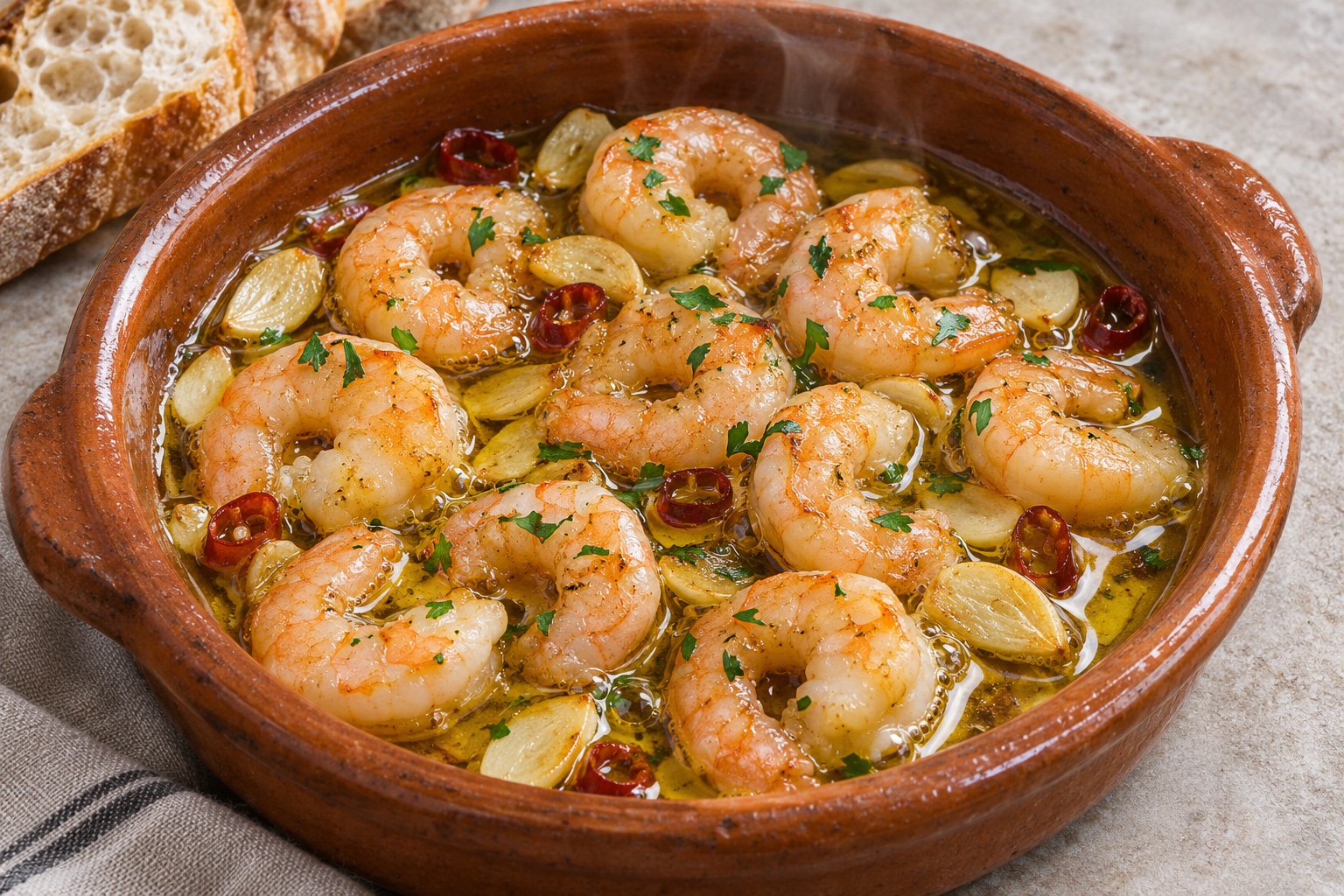
The garlic needs your attention before the shrimp does. Leave it in hot oil until it turns dark brown and the whole dish will taste scorched, however expensive the seafood was. Gambas al ajillo asks for very little shopping and a few minutes at the stove, but those minutes are hands-on.
This Spanish garlic shrimp recipe uses peeled raw shrimp, sliced garlic, extra virgin olive oil, a little dried chile and parsley. Bread belongs beside the dish so that the oil gets eaten too. Have it cut before you turn on the burner. Once the shrimp are ready, there is no useful reason to keep them waiting in a hot pan.
What goes into gambas al ajillo
Chef Karlos Arguiñano's version on Hogarmania provides the starting point: shrimp, garlic, dried chile, olive oil, salt and parsley. His advice centers on briefly cooking the shrimp and watching the garlic so it does not burn. There is no butter or cream in that version.
The oil belongs on the table with the shrimp. Garlic and chile flavor it as the shrimp release their juices. A wide plate loses that oil around its edges; a shallow serving bowl or small casserole keeps it together where bread can reach it.
Spanish recipes also differ within that short ingredient list. Omar Allibhoy uses dried cayenne chiles and parsley. José Pizarro's recipe for Spain's official tourist office uses fresh red chiles and lemon slices. Lemon, wine and paprika remain optional; the basic dish can do without them.
Buying shrimp in an American grocery store
Buy raw shrimp for this recipe. Already cooked shrimp can turn tough while you heat them through the garlic stage. The package should say raw, even if the shrimp happen to look pink before cooking.
Peeled and deveined shrimp save work. Shell-on shrimp are also an option, but peeling them takes extra preparation time and reduces the weight you will eventually serve. The ingredient weight below refers to the peeled shrimp that actually go into the pan. If you buy shell-on, ask the seafood counter how much to purchase for that usable weight.
Choose shrimp of similar size so the pieces finish together. Read the count per pound on the package. A word such as jumbo varies between sellers. You do not need an unusually large shrimp for this dish. Smaller pieces simply need closer attention during cooking.
Frozen shrimp are practical, provided you thaw them safely and drain them before cooking. The FDA's seafood guidance recommends thawing in the refrigerator overnight. Its faster alternative is a sealed bag in cold water. Keep the shrimp cold while you prepare the garlic and serving dishes; do not leave them on the counter to thaw.
Keep raw shrimp separate from the bread and parsley while you work. Put the bread on a clean board, and use clean utensils for serving the cooked shrimp. The FDA advises washing hands after handling raw seafood and washing the board, utensils and work surface before using them for ready-to-eat food. Set those serving utensils aside before cooking so you do not reach for the fork or tongs that touched the raw shrimp.
Ingredients and timing
Makes 4 appetizer servings. Allow about 5 minutes of preparation with peeled shrimp and 5 minutes of cooking, for about 10 minutes total. Those times follow Arguiñano's published recipe and exclude thawing or peeling a shell-on purchase. Your shrimp's size, your burner and the pan will affect the actual cooking time.
- About 1 3/4 lb (800 g) raw shrimp, peeled and deveined
- 4 garlic cloves, peeled and thinly sliced
- Extra virgin olive oil, enough to cover the bottom of the pan generously
- 1/2 small dried red chile, sliced, or less to taste
- Salt, to taste
- Flat-leaf parsley, chopped, to taste
- Crusty bread, for serving
Arguiñano leaves the amount of oil and parsley open. The pan is a better guide here than a fixed spoon measurement. There should be oil available to carry the garlic flavor and spoon over the finished shrimp. If your shrimp cannot fit comfortably without a deep pile, use a wider pan or cook separate batches.
The dried chile is an accent. Begin with less if its heat is unfamiliar. You can add a little more heat in a later batch; removing chile pieces after the oil has become very hot will not undo all their flavor. Avoid assuming that a large fresh chile and a small dried chile will have the same effect.
Cooking the shrimp
Prepare before heating. Drain the thawed shrimp and pat them dry with paper towels. Put the sliced garlic, chile and chopped parsley beside the stove. Set out a shallow serving dish and the bread so you can serve promptly.
Flavor the oil. Pour enough extra virgin olive oil into a wide skillet to coat the bottom generously. Heat over medium heat, add the garlic and chile, and watch closely. Let the garlic begin to turn pale gold; reduce the heat if the slices color quickly.
Cook the shrimp. Add the shrimp in an even layer and season lightly with salt. Turn them as they cook, allowing about 2 to 3 minutes as a starting point, with additional cooking if needed. Follow the FDA guidance: seafood should reach 145°F (63°C), and shrimp flesh should be firm, pearly and opaque.
Finish and serve. Remove the pan from the heat as soon as the shrimp are cooked. Scatter over the parsley, transfer the shrimp and their garlic oil to the serving dish, and serve immediately with the bread. Warn guests that the pan, serving dish and oil may be hot.
The garlic color to look for
Slice the cloves reasonably evenly. Very thin scraps can burn while thick pieces remain pale, so scoop out any stray paper-thin fragments when you notice them. A knife gives you more control here than crushing the cloves into a paste, which behaves differently in the oil.
Keep the pan where you can see its bottom. The garlic should be light gold when the shrimp go in, with enough heat to cook the seafood promptly. Dark, brittle slices are a warning that the oil may already taste bitter. Smell it before committing the shrimp. If it smells scorched, replace the oil and garlic and start that stage again.
Keep enough heat to cook promptly without losing control of the garlic. Allibhoy's method uses a hot pan and very brief cooking. Watch the garlic as you adjust the burner; a heavy skillet responds differently from a thin pan. Lower the heat when its color moves too fast, and stay beside the stove throughout.
Why a pan can turn watery
Thawed shrimp sometimes bring a puddle of liquid with them. Drain that liquid and blot the surface before adding the shrimp. You want garlic oil and seafood juices in the finished dish, but a pan full of thawing water gives you a thinner result and makes the cooking harder to judge.
Crowding creates a related problem. Shrimp piled on top of each other do not meet the pan at the same time. The bottom layer may finish while the top layer still needs cooking. Use a broad skillet and spread them out. For a larger gathering, repeat the recipe in batches and serve each batch while it is fresh.
Some liquid is normal. Do not keep cooking already done shrimp just to reduce it away. Move the shrimp to the serving dish when they are ready. If necessary, briefly reduce the liquid in the pan separately, keeping a close watch on the garlic, then pour it over the shrimp.
Using a skillet or a terracotta dish
A skillet is a good choice for an American home kitchen. Both Allibhoy and Pizarro explicitly allow a frying pan in their recipes. It lets you see the garlic, turn the shrimp easily and lift the pan away from the burner when the food is ready.
A terracotta casserole gives the dish a familiar presentation, but a serving bowl and a flameproof cooking vessel are different things. Use earthenware on the stove only if the maker says it is suitable for that heat source. Otherwise, cook in the skillet and transfer to the casserole for serving.
Remember that a heavy dish retains heat after it leaves the stove. That is useful for bringing food to the table, but it also keeps cooking the shrimp. Transfer promptly and make the serving arrangement simple. Put a trivet down first so no one has to improvise with a hot dish in their hands.
Variations worth keeping separate
For a lemon version, follow Pizarro's choice of lemon slices cooked with the prawns. The citrus changes the flavor of the oil. Leave it out for a batch focused on garlic and shrimp, without the extra acidity.
Arguiñano notes versions with white wine, sherry or paprika. These are options, not requirements for the ingredient list above. Wine adds liquid that needs its own cooking time, while paprika needs care around hot oil. For your first batch, use the short list and get comfortable with the garlic stage before changing it.
Parsley belongs at the end, where it stays visible and fresh tasting. It should not bury the shrimp under a dense green layer. If you have only curly parsley, chop it finely and use it sparingly; the result will look different without requiring a different cooking method.
Serving as tapas or dinner
For a tapas table, put the shrimp within easy reach and provide small plates. Bread should be close to the garlic oil, with a serving spoon available so guests do not have to reach into a hot dish. Cook other dishes first and finish the shrimp when people are ready to eat.
The recipe can also be part of dinner with a salad or vegetables and bread. Rice is a possible side if you want a larger meal, but it is not an ingredient in this pan. Keep the shrimp and garlic oil together until serving so the plain side can take up some of the juices.
Plan portions around what else you are serving. The stated yield is for appetizers, so it does not promise that the same quantity will feed the same group as their entire dinner. For larger portions, cook extra batches with enough room in each pan.
Leftovers and food safety
Cook the amount you expect to eat right away when possible. If shrimp remain, refrigerate them promptly in a shallow covered container. The USDA's leftovers guidance gives a general refrigerated limit of 3 to 4 days and a reheating temperature of 165°F (74°C). Reheating can make the shrimp firmer, so immediate serving is the better choice for texture.
Keep the refrigerator at 40°F (4°C) or below. Refrigerate perishable food within 2 hours, or within 1 hour when the surrounding temperature is above 90°F (32°C). Do not wait for a large serving dish to cool completely on the counter. Divide leftovers into small containers so they can cool promptly.
Questions before you cook
Can I use cooked cocktail shrimp? Buy raw shrimp for this recipe. Cocktail shrimp need only reheating and will not respond to the stated cooking method in the same way.
Is sherry essential? No. The base recipe has none. Arguiñano lists it as a variation, while the chefs linked above use different combinations of garlic, chile and citrus.
Must I leave the tails on? No. Allibhoy and Pizarro leave tails on for their presentations, but fully peeled shrimp are easier to eat with a fork. The peeled weight matters more than the tail arrangement.
Can I prepare it before guests arrive? Prepare the garlic and parsley ahead and keep the shrimp refrigerated. Cook when you are ready to serve; holding finished shrimp in hot oil keeps cooking them.
Sources
The linked recipes by Karlos Arguiñano, Omar Allibhoy and José Pizarro document the ingredients and chef variations. The FDA provides seafood handling and cooking guidance. The USDA provides the leftover storage and reheating limits.
Zokko is a community marketplace based in Spain. In La Plaza we write about the places, the food and the everyday life we know.
Marta Ledesma
Escribe en La Plaza sobre cultura, gastronomía y consumo.
Comentarios (0)
No hay comentarios todavía. ¡Sé el primero en comentar!