Polvorones: Spanish Christmas Cookies That Melt in Your Mouth
Toasted flour, lard, almonds and a little lemon: the crumbly cookie Spaniards eat every Christmas, each one twisted in paper like a candy.

Marta Ledesma
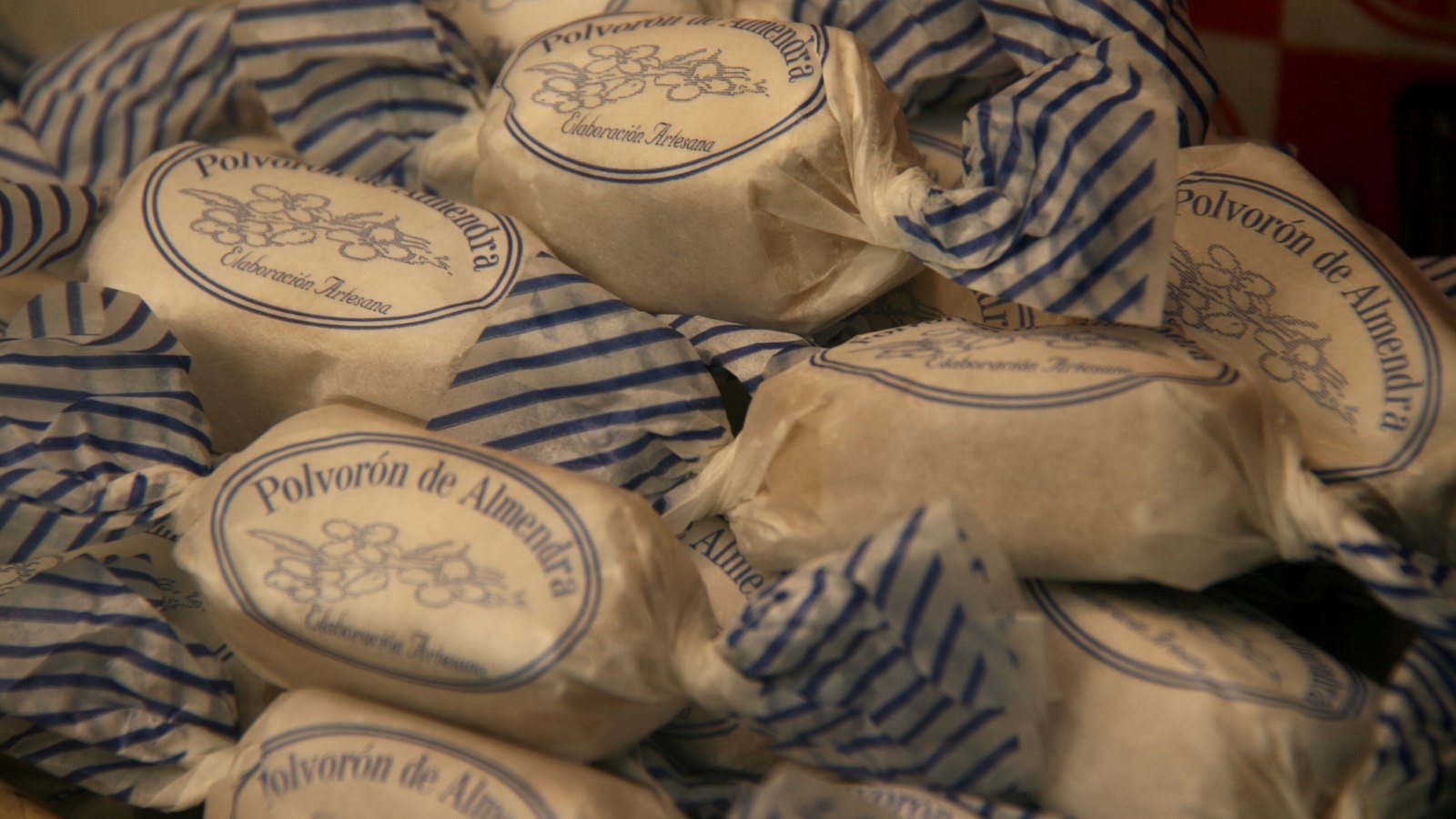
Cover photo: Tamorlan, CC BY 3.0, via Wikimedia Commons, cropped.

On a Spanish table at Christmas there's always a tray: slices of turrón, a few peladillas (sugared almonds) and a pile of little cookies twisted in paper like oversized candies. Those are polvorones. People reach for one and, before unwrapping it, squeeze it gently in their fist, which is what Spaniards do so it doesn't fall apart at the first bite. Sooner or later someone tries to say "Pamplona" with a whole one in their mouth. Nobody manages.
The name comes from polvo, "dust", and it's a fair description. A good polvorón is made with toasted flour, lard, sugar and ground almonds, and it's so crumbly that it turns into a sweet, nutty powder as soon as it's in your mouth. They're easy to make at home, and homemade ones are lighter and taste far more of almond than the boxed kind.
Polvorones or mantecados?
In Spain you'll find both in the same box, and plenty of Spaniards use the two names for the same thing. Strictly speaking, polvorones are one kind of mantecado, the family of Christmas cookies made with lard (manteca), sugar, flour and cinnamon. What makes a polvorón a polvorón is the almond: it always has ground almonds, it's usually oval rather than round, and it's coated in powdered sugar. The classic mantecado is round and topped with sesame seeds. In Estepa, polvorones also get a little grated lemon zest and fine spices.
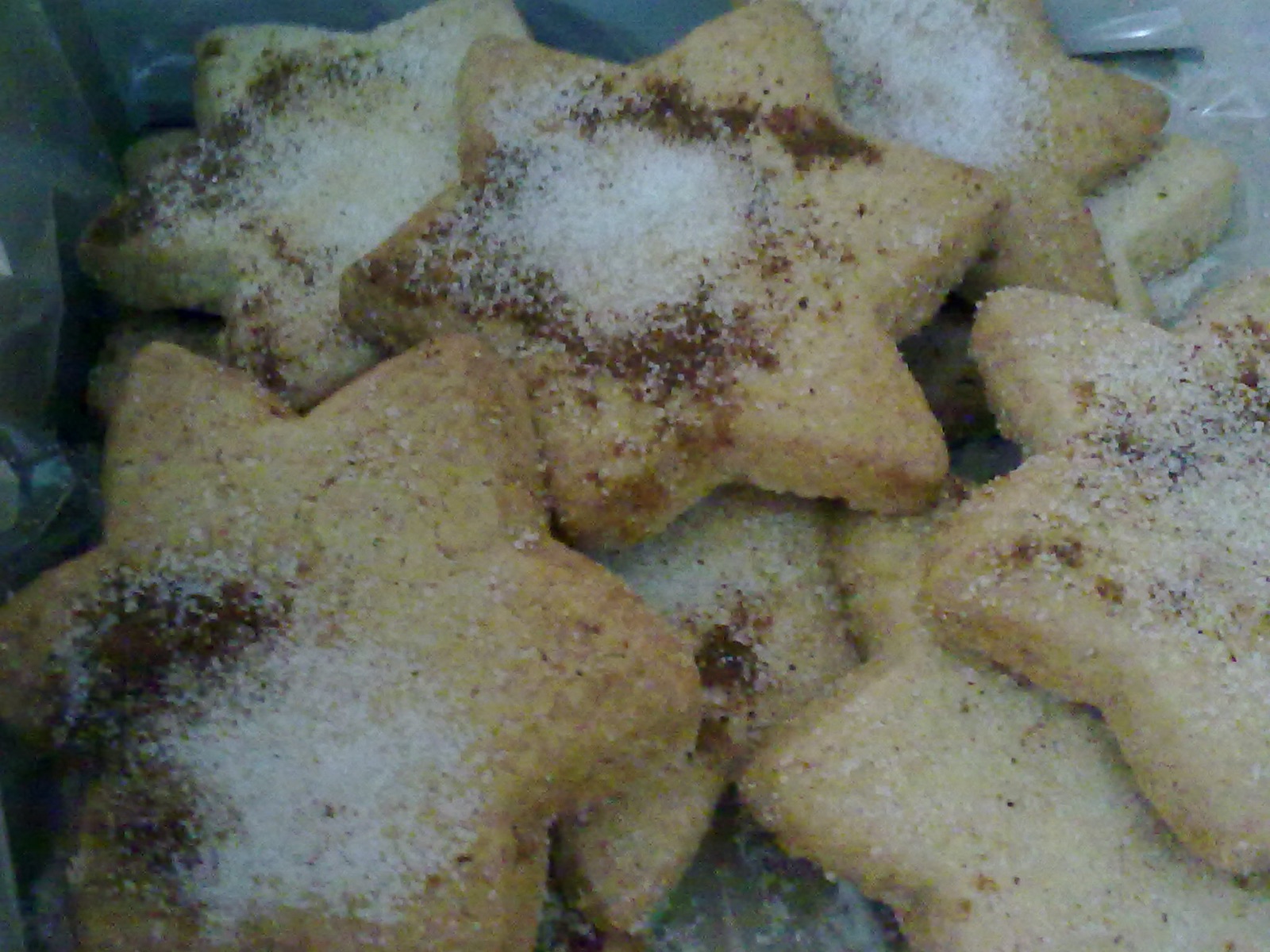
Homemade mantecados, the polvorón's closest cousin. Photo: Lobo, public domain, via Wikimedia Commons.

Estepa, the town that lives on polvorones
The best-known polvorones come from Estepa, a small town in the province of Seville. For a long time they were made at home, only at Christmas, because they went stale fast. That changed with a woman known as La Colchona, Micaela Ruiz Téllez, who lived from 1821 to 1904. She found a way to dry the dough with heat so the cookies stayed firm outside and tender inside for longer, which meant they could travel. Her husband, who carried goods between Estepa and Córdoba, started selling them along his route around 1855, and around 1870 she opened a workshop to make them in larger amounts. It's still running under her descendants' brand and is considered the oldest mantecado factory in Estepa still in operation.
Other families followed, and the town built an industry on it. "In the old days, every other house was a mantecado factory," a veteran baker from Estepa said on the Andalusian channel Canal Sur in 2024. The European Union protected the name Mantecados de Estepa in 2011 and Polvorones de Estepa in 2016, so only cookies made there, the traditional way, can carry it. In 2020 the Spanish newspaper El Español put the industry's turnover at around 80 million euros.
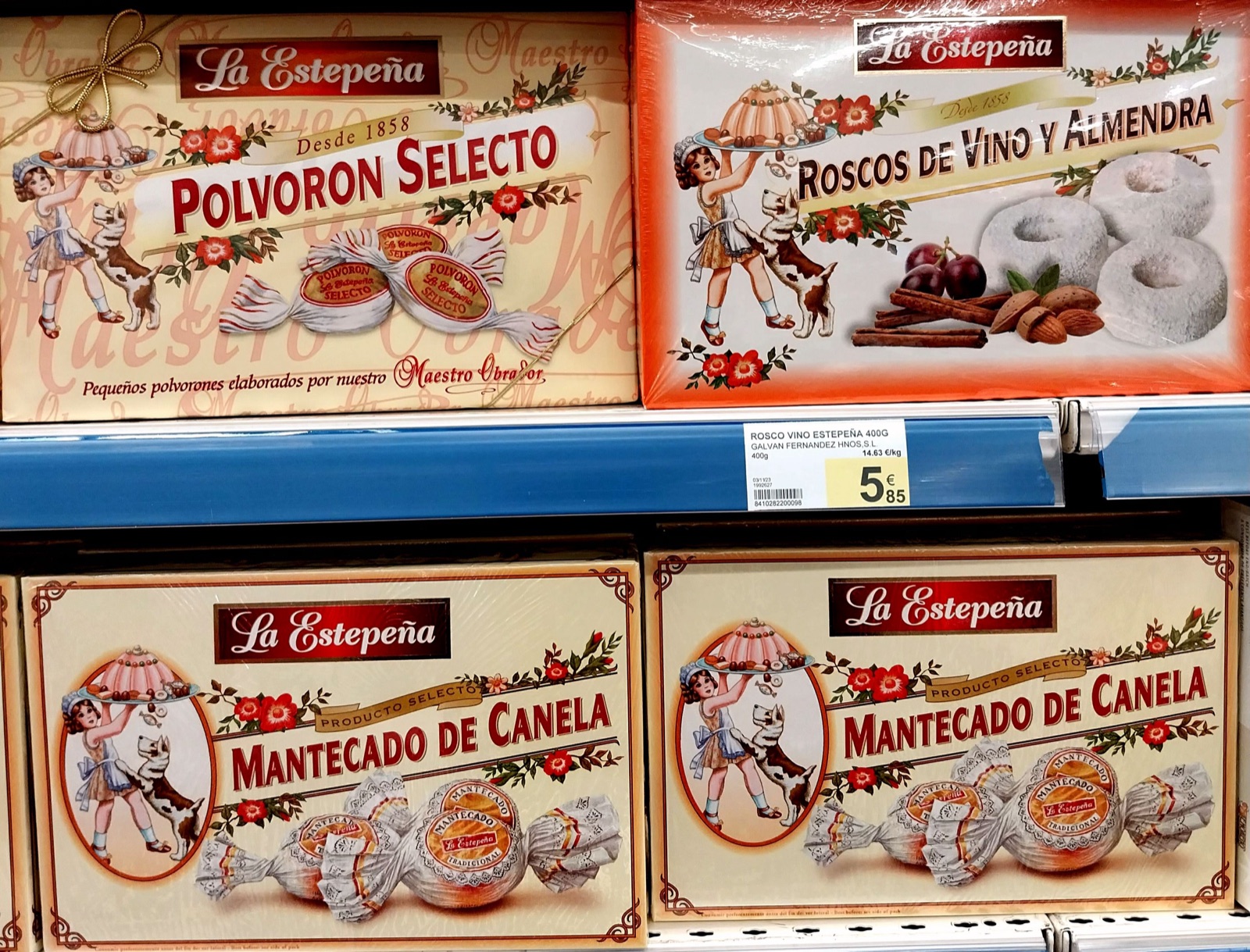
Boxes from Estepa on a Spanish supermarket shelf. Photo: Zarateman, CC0, via Wikimedia Commons.

Estepa isn't the only place that makes them. Antequera, Sanlúcar de Barrameda and Fondón in Andalusia, Tordesillas in Castile and Tafalla in Navarre all have their own.
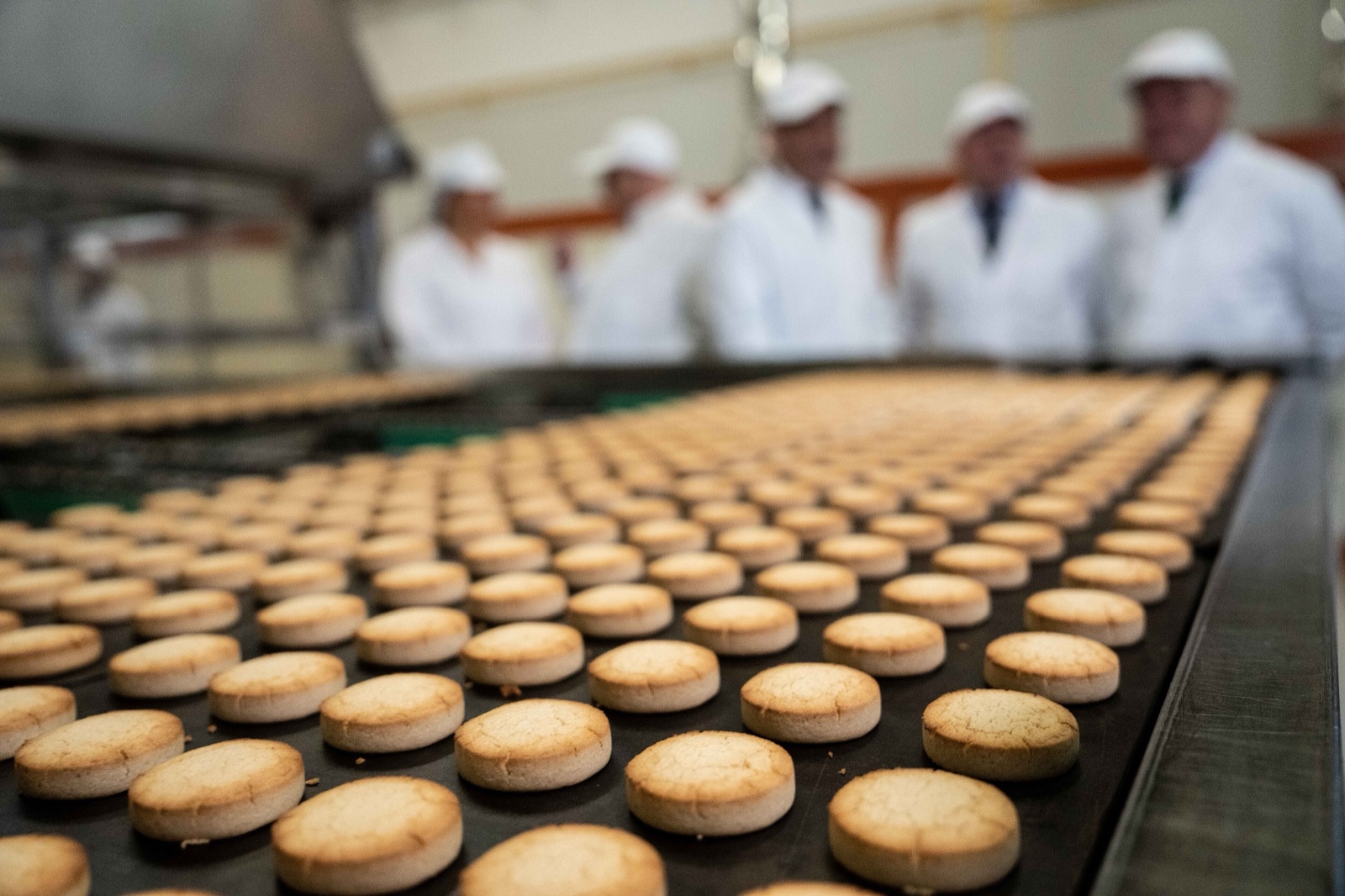
Polvorones on the production line of a confectionery factory in Antequera, Málaga. Photo: Junta de Andalucía, CC BY-SA 2.0, via Wikimedia Commons.

Ingredients (about 18 polvorones)
- 3 1/4 cups (400 g) all-purpose flour
- 1 cup (100 g) almond flour, or 2/3 cup (100 g) blanched almonds, toasted and finely ground
- 3/4 cup plus 1 tbsp (100 g) powdered sugar, plus 1/2 cup (50 g) for dusting
- 1 cup (200 g) lard, at room temperature
- 1 tsp ground cinnamon
- Finely grated zest of 1 lemon
That's the classic proportion: twice as much flour as lard. Use real lard if you can. In the US, the lard sold in tubs on supermarket shelves is often hydrogenated, and rendered lard from a butcher (leaf lard is the finest) gives a much better result. If you'd rather not use lard, butter works, although the polvorones come out richer and a little less crumbly. Spanish home cooks also make them with a mild extra virgin olive oil, using about 2/3 cup (145 g) of oil instead of the lard.
How to make them
Toast the flour. Heat the oven to 250°F (120°C). Spread the flour on a baking sheet and toast it for about an hour, stirring every 15 to 20 minutes, until it's dry and only very lightly golden. You can also toast it in a wide pan over low heat, stirring constantly, for about seven minutes, taking it off the heat before it starts to color. Either way, let it cool completely and then sift it, because toasting leaves small lumps.
Toast the almonds. If you're using almond flour, toast it in a dry pan over low heat, stirring, until it smells nutty, and let it cool. If you're using whole blanched almonds, toast them, let them cool and grind them as fine as you can.
Make the dough. In a large bowl, mix the toasted flour, the almonds, 100 g of powdered sugar, the cinnamon and the lemon zest. Add the lard, soft like ointment, and work everything together with your hands until you have a smooth dough.
Roll and cut. Roll the dough between two sheets of parchment to about 3/4 inch (2 cm) thick and cut it with a small round or oval cutter, about 2 inches (5 cm) across. Gather the scraps, press them together and cut again.
Chill. Put the polvorones on a baking sheet lined with parchment and refrigerate them for at least an hour, until firm. Cold dough holds its shape in the oven.
Bake. Heat the oven to 350°F (180°C) and bake for 10 to 13 minutes, until they're just turning golden at the edges.
Let them cool. Hot polvorones are extremely fragile. Leave them on the sheet until they're completely cool.
Dust and wrap. Dust them with the rest of the powdered sugar and wrap each one in a square of tissue paper, twisting the ends like a candy.
Why the flour is toasted
Toasting is what separates polvorones from other shortbread. It dries the flour and gives it a nutty taste, and the heat weakens the proteins that would normally form gluten, so the dough can't turn chewy or elastic. That's where the sandy, melt-away texture comes from. Without it you'd have a good almond cookie, and polvorones are something else.
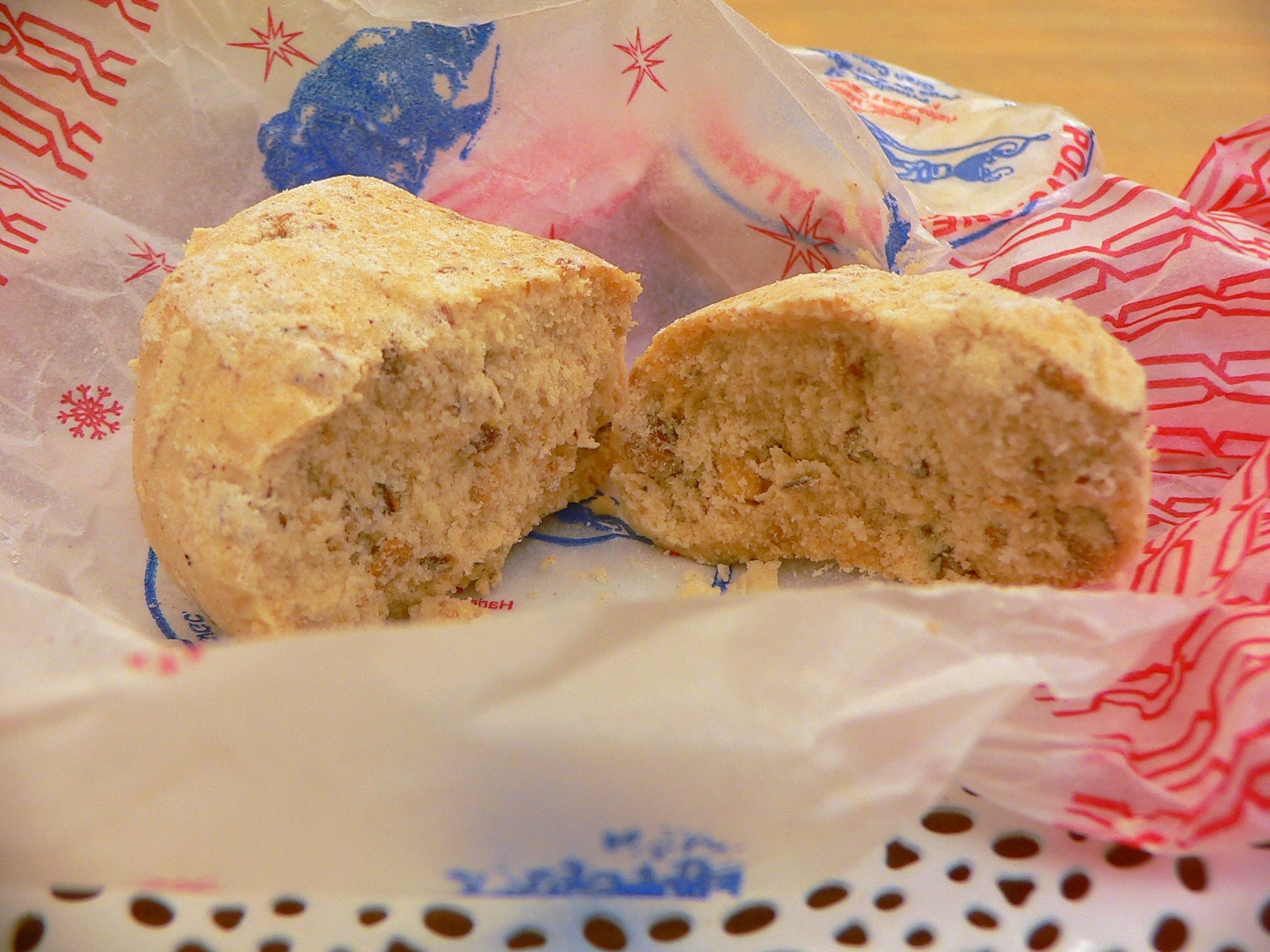
A polvorón from Estepa broken in half, with its sandy crumb. Photo: Marianne Perdomo, CC BY-SA 4.0, via Wikimedia Commons.

If they crumble or turn hard
Polvorones that fall apart as soon as you touch them, even when cool, are short of fat, and next time they need a little more lard. If they come out hard, they were in the oven too long; take them out as soon as the edges start to color. If the dough is too dry to come together, add a teaspoon of anise liqueur or water, the way some Spanish cooks do. And if one breaks, press it back together. Under the powdered sugar, nobody will notice.
Storing them, and giving them away
Kept wrapped in a tin or an airtight glass jar, somewhere dry and dark, homemade polvorones last through December and January. They're even better after a day or two, once the flavors have settled. Wrapped in colored tissue paper and packed in a tin, they also make one of the best edible Christmas gifts, and they travel well.
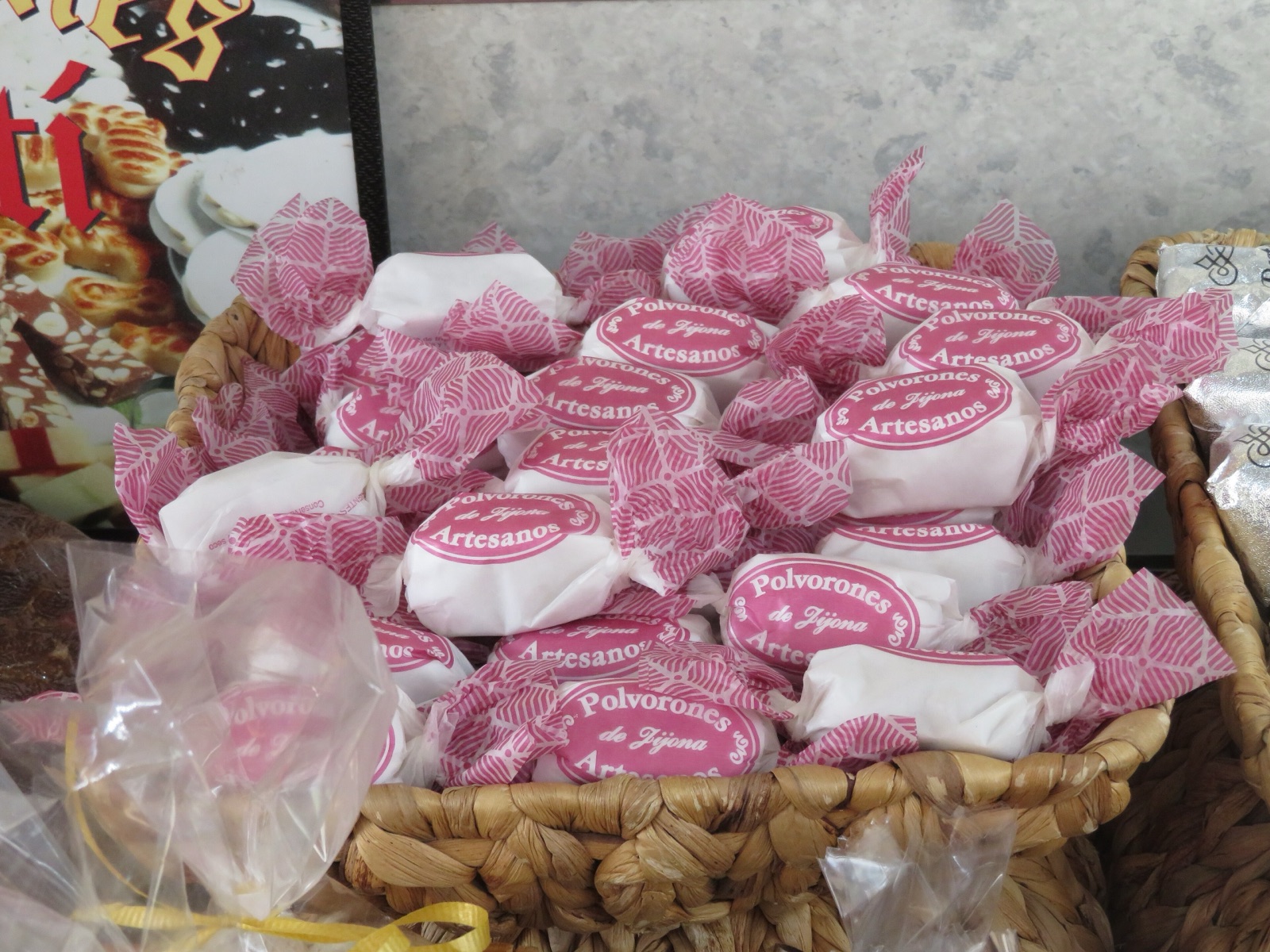
Polvorones from Jijona, each one wrapped in paper. Photo: Juan Emilio Prades Bel, CC BY 4.0, via Wikimedia Commons.

Flavors and variations
Almond is the classic, but Spanish shops sell polvorones in all kinds of flavors: chocolate, cinnamon, lemon, even gluten-free ones. At home, the easiest change is the nut. Hazelnuts or pine nuts work in exactly the same amount as the almonds, toasted and finely ground, and a spoonful of cocoa or a few drops of anise give you two more classic flavors. Some cooks roll the tops in sesame seeds, which takes them closer to a traditional mantecado.
How Spaniards eat them
Polvorones come out in December, on the tray with turrón, marzipan and sugared almonds, and people eat them with coffee, a glass of sweet wine or a small glass of anís. Before unwrapping one, most Spaniards squeeze it in their hand so it holds together when they bite it. At some point in the evening, someone always takes on the challenge of saying "Pamplona" with a whole polvorón in their mouth.
Spanish polvorones and Filipino polvoron
If you grew up with Filipino polvoron, this is a different sweet with the same name. The Filipino version is made with toasted flour, sugar, powdered milk and butter, it isn't baked, and it's pressed into shape with a small mold. In the Philippines it's an everyday snack rather than a Christmas one. Spanish polvorones are baked, made with lard and almonds, and belong firmly to Christmas.
Quick answers
Are polvorones gluten-free? No, they're made with wheat flour. Some Spanish brands sell gluten-free versions, but the classic recipe isn't.
Can I make them without lard? Yes, with butter or a mild olive oil, as explained above. The texture changes a little.
How long do they keep? Wrapped and stored in a tin, through December and January.
Why do Spaniards squeeze them before eating? It compacts the polvorón a little, so it doesn't fall apart into crumbs at the first bite.
Can I freeze them? You can, but they're at their best fresh, and since they keep for weeks in a tin there's rarely a reason to.
What's the paper for? Partly tradition, and partly practical: wrapped one by one, they stay fresh longer and don't crumble against each other in the tin.
Zokko is a community marketplace based in Spain. In La Plaza we write about the places, the food and the everyday life we know.
Marta Ledesma
Escribe en La Plaza sobre cultura, gastronomía y consumo.
Comentarios (0)
No hay comentarios todavía. ¡Sé el primero en comentar!