The 12 Grapes of Luck: How Spain Rings in the New Year
One grape for each chime of the clock at midnight: the story of Spain's favorite New Year's tradition, and how to do it without running out of time.

Marta Ledesma
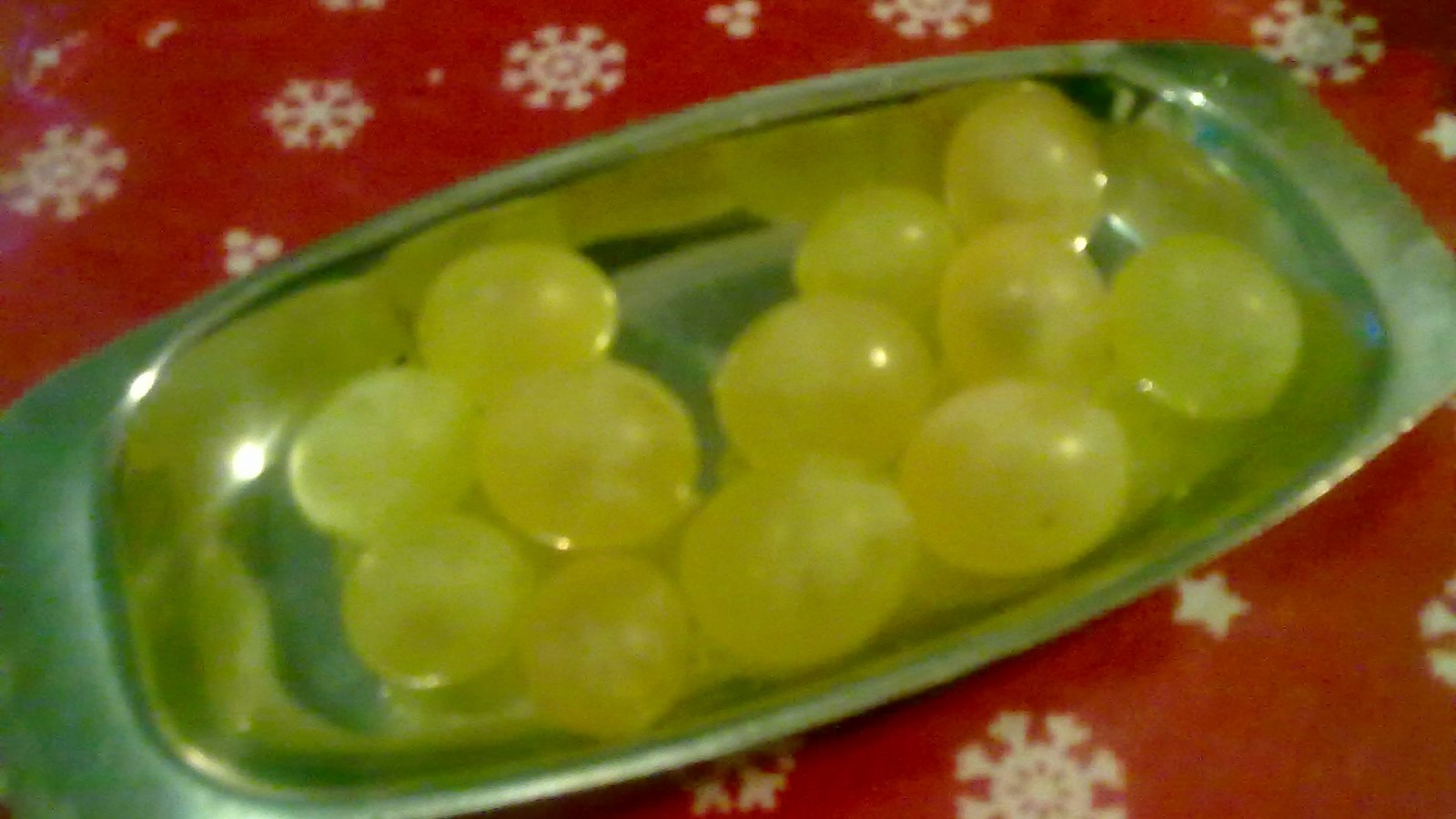
Cover photo: Lobo, public domain, via Wikimedia Commons.

It's ten seconds to midnight on December 31 and most of Spain is staring at the same clock. In most living rooms the TV is tuned to a square in Madrid, there's a small bowl of grapes in front of every person at the table, and the cava is in the fridge, waiting. Then the chimes start, everyone starts chewing as fast as they can, and the new year begins with a room full of people laughing with their mouths full.
This is las doce uvas de la suerte, the twelve grapes of luck: one grape for each of the twelve chimes at midnight, one for each month of the year ahead. It's the most Spanish of all New Year's traditions, and it's spread far beyond Spain, to Latin America, the Philippines and Hispanic families in the United States. Below are its history, how the countdown actually works, and how to do it at home without choking.
What the tradition is
The rule is simple. At midnight, the clock strikes twelve times, and you eat one grape with each stroke. Finish all twelve by the last chime and the year will bring you luck. Some people say each grape tells you how its month will go: a sweet one means a good month, a sour one a rough month. In some parts of Spain the grapes were once believed to keep witches and bad luck away, but today it's simply how Spaniards welcome the new year.
There are two ways to do it. Some people eat them at home, after the long New Year's Eve dinner, with the countdown on TV. Others go out to the main square of their town, and the most famous of all is the Puerta del Sol in Madrid, where the tradition started.
Where it comes from
Nobody knows exactly. Madrid newspapers already described people eating grapes at the first stroke of midnight in January 1894, and at the end of 1895 even the head of the Spanish government saw the year out with grapes and champagne, a habit wealthy families had picked up from France.
The story most Spaniards tell is a little more mischievous. In 1882, Madrid's mayor started charging a fee to the people who went out on the night of January 5 to "welcome the Three Kings", a rowdy local custom. Some Madrileños, annoyed, decided to make fun of the grapes-and-champagne crowd instead: they went to the Puerta del Sol and ate grapes to the sound of the clock, half as a joke. By 1903 people were already doing it in Santa Cruz de Tenerife, in the Canary Islands.
The other story is about farmers. In 1909, grape growers in Alicante had a huge harvest and more grapes than they could sell, and they promoted the custom of eating them at midnight. They may not have started it, but 1909 is when it really took off.
The clock at the Puerta del Sol
The clock that every Spaniard watches on December 31 sits on top of the Real Casa de Correos, the old post office building on the Puerta del Sol, which today houses Madrid's regional government. It was made in London by José Rodríguez Losada, a clockmaker from the province of León who had fled Spain as a young liberal soldier and built a successful business in Regent Street. He gave it to the city of Madrid in 1866.
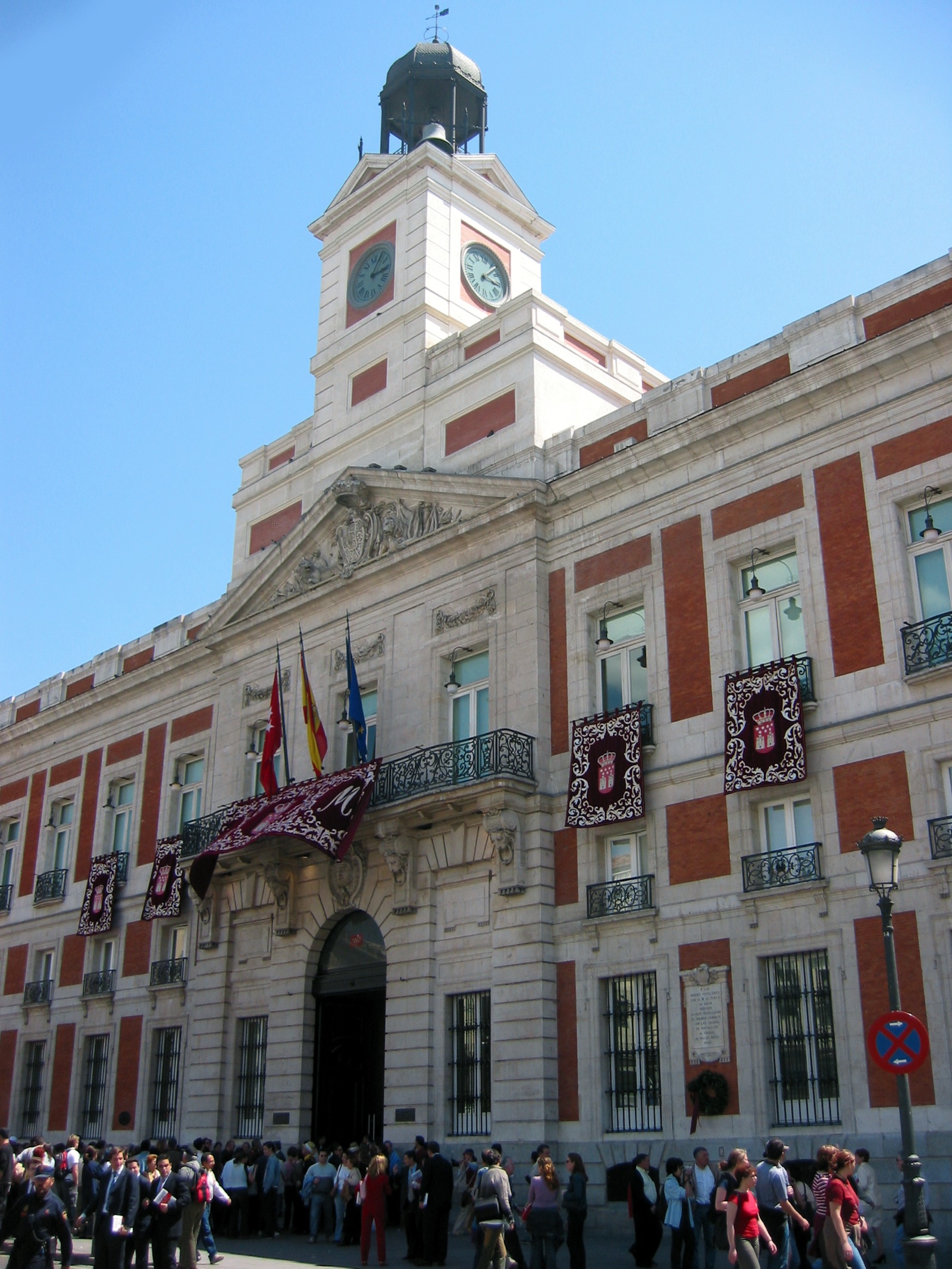
The clock of the Real Casa de Correos, on the Puerta del Sol. Photo: Pablo Sanchez from Sunnyvale, CA, USA, CC BY 2.0, via Wikimedia Commons.

Spanish television has broadcast the chimes from that clock since 1962; before that, people followed them on the radio. For decades the broadcast came from Madrid every year, except in 1973, when it was done from Barcelona. At the end of 2020, during the pandemic, the square was closed to the public, and the chimes rang over an empty Puerta del Sol, with only Nacho Cano at the piano and the singer KUVE performing in memory of the victims. The night before New Year's Eve, on December 30, thousands of people gather there for the preúvas, a rehearsal with the same chimes.
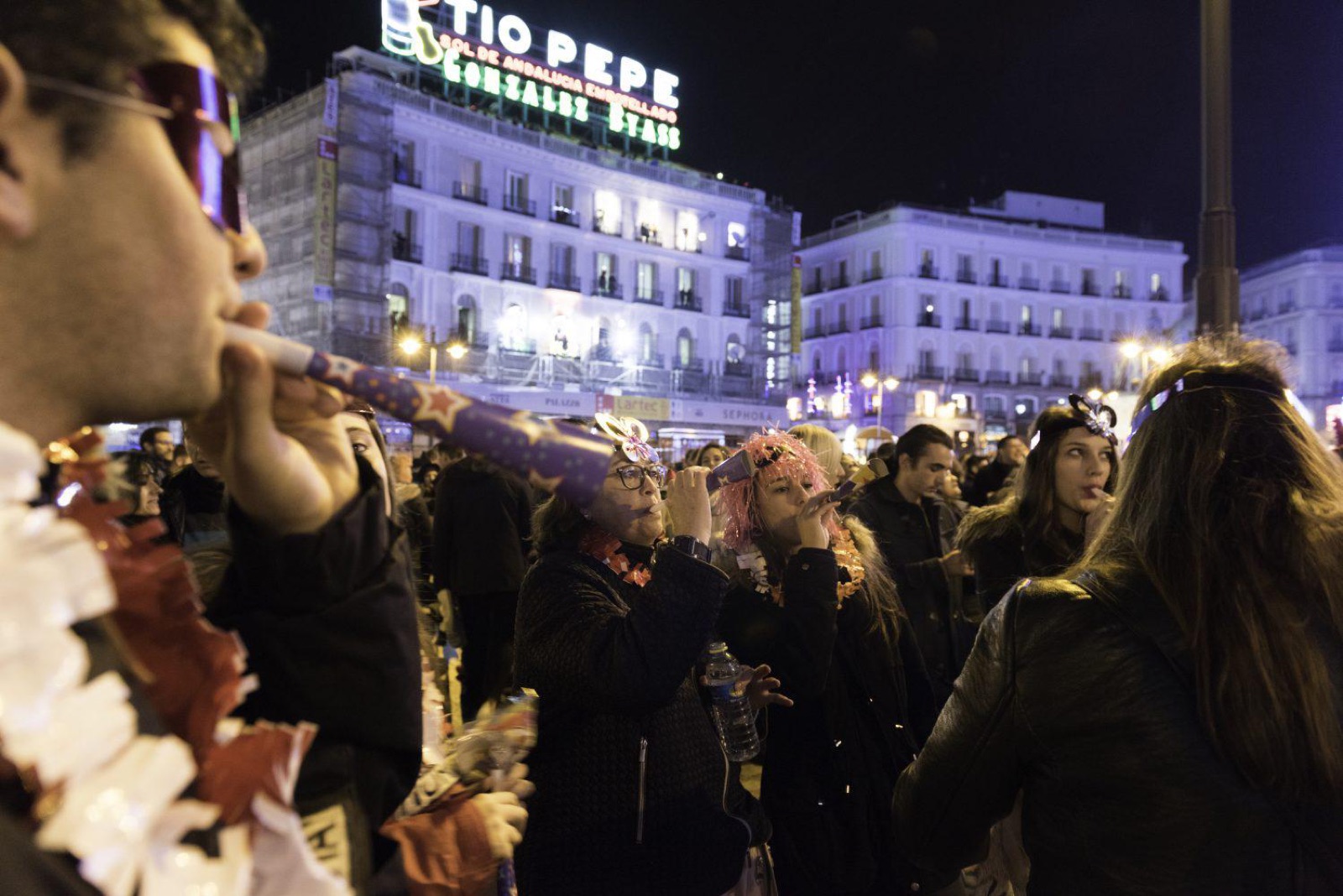
The "preúvas" rehearsal on the Puerta del Sol. Photo: Diario de Madrid, CC BY 4.0, via Wikimedia Commons.

The Canary Islands are an hour behind the mainland, so the islands get their own midnight an hour later. Since the night of 1983 to 1984, Spanish public television has broadcast that second midnight live, from a different island each year.
If you're in Madrid for New Year's Eve
Go early, and check that year's arrangements. For the 2024 celebration, the square was cleared at 9 p.m. and people were let back in only from Calle Mayor, Calle del Arenal, Calle de Alcalá and the Carrera de San Jerónimo, up to a limit of 15,000. The Sol metro station closed at 9 p.m., although the rest of the metro ran until its usual 1:30 a.m. Bring your grapes in something easy to open, and expect to be very close to a lot of strangers.
How the countdown works (and the mistake everyone makes)
The twelve chimes aren't the first thing you hear, and that catches out a lot of newcomers. About half a minute before midnight, the ball on top of the clock tower starts to drop, which takes about seven seconds. After a short pause come the cuartos, four double chimes that last about four seconds each. Don't eat yet: those aren't the chimes. There's a few seconds of silence, and then, at exactly midnight, the twelve strokes begin, one every three seconds.
That leaves three seconds per grape, and thirty-six seconds after the first stroke it's all over. Every year someone starts on the cuartos and runs out of grapes, and every year someone else is still chewing when everyone else is already toasting.
How to do it at home
Buy small, seedless grapes. In Spain the classic ones are white grapes from the Vinalopó valley, in Alicante, a protected designation of origin since 1982. The varieties are Aledo and Ideal, and they're grown inside paper bags on the vine, which protects them from birds, insects and the weather and makes them ripen later, so they're picked late in the season. Any small green seedless grape will do.
Wash them, dry them and count twelve per person into a small bowl or a glass. Some people peel them and take out the seeds to make them easier to swallow. In Spanish supermarkets you can even buy cans of twelve grapes, already peeled and seedless, for people who don't want to take any chances.
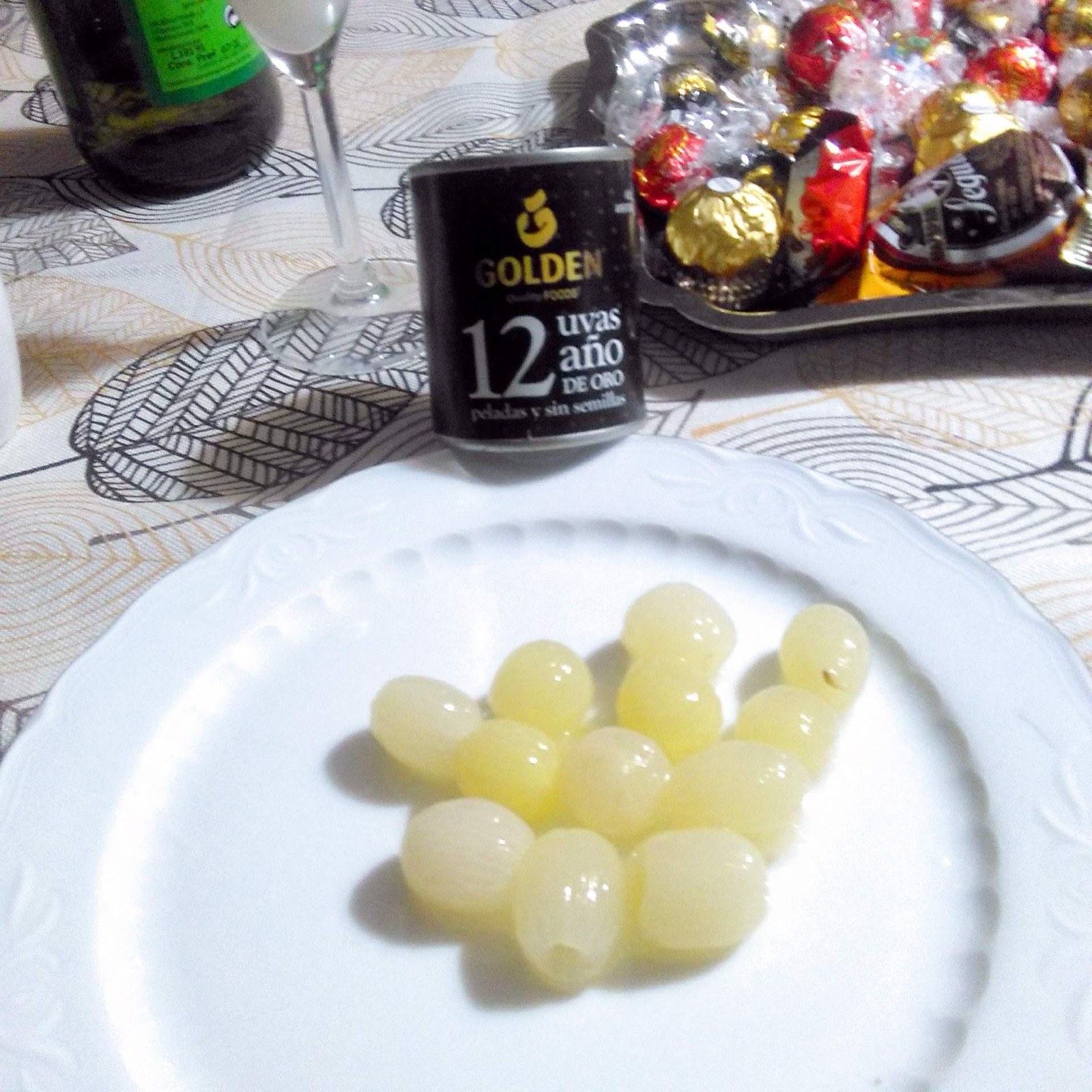
Peeled, seedless grapes from a can, ready for the chimes. Photo: Zarateman, CC0, via Wikimedia Commons.

Have the cava (or champagne) open and the glasses poured before the countdown starts, because you'll want to toast the moment the twelfth grape is gone. If you'd like to follow Madrid's clock from the US or Canada, midnight there is 6 p.m. on the East Coast and 3 p.m. on the West Coast, and 11 p.m. in the UK. Most people abroad simply do it at their own midnight.
Red underwear and the grapes under the table
The grapes aren't the only New Year's ritual in Spain. Many Spaniards wear red underwear on New Year's Eve for luck in the year ahead.
The people on TikTok eating their grapes under a table are doing something else. A video of a woman who ate her twelve grapes under the table, and got a boyfriend that year, had 5.3 million views when Newsweek wrote about it. The under-the-table version is a Latin American tradition, said to bring love in the new year, and it isn't part of the original Spanish custom. In Spain people eat their grapes at the table, or standing in the square. In the UK, the trend got big enough that Tesco started selling packs of exactly twelve grapes for New Year's Eve.
Quick answers
When exactly do you start eating? On the first of the twelve strokes at midnight, after the four double chimes of the cuartos.
Green or red grapes? Spaniards usually eat white (green) grapes, but any seedless grape works.
What if I don't finish in time? Tradition says you need all twelve for a lucky year, so keep them small. In practice, nobody keeps score.
Do people do it in other countries? Yes. The twelve grapes are part of New Year's Eve in many Latin American countries, in the Philippines and among Hispanic families in the US.
Zokko is a community marketplace based in Spain. In La Plaza we write about the places, the food and the everyday life we know.
Marta Ledesma
Escribe en La Plaza sobre cultura, gastronomía y consumo.
Comentarios (0)
No hay comentarios todavía. ¡Sé el primero en comentar!