Spanish Churros with Hot Chocolate: The Madrid Recipe
Crisp churros made with only flour, water and salt, and hot chocolate thick enough to stand a spoon in: the Madrid breakfast, made in your own kitchen.

Marta Ledesma
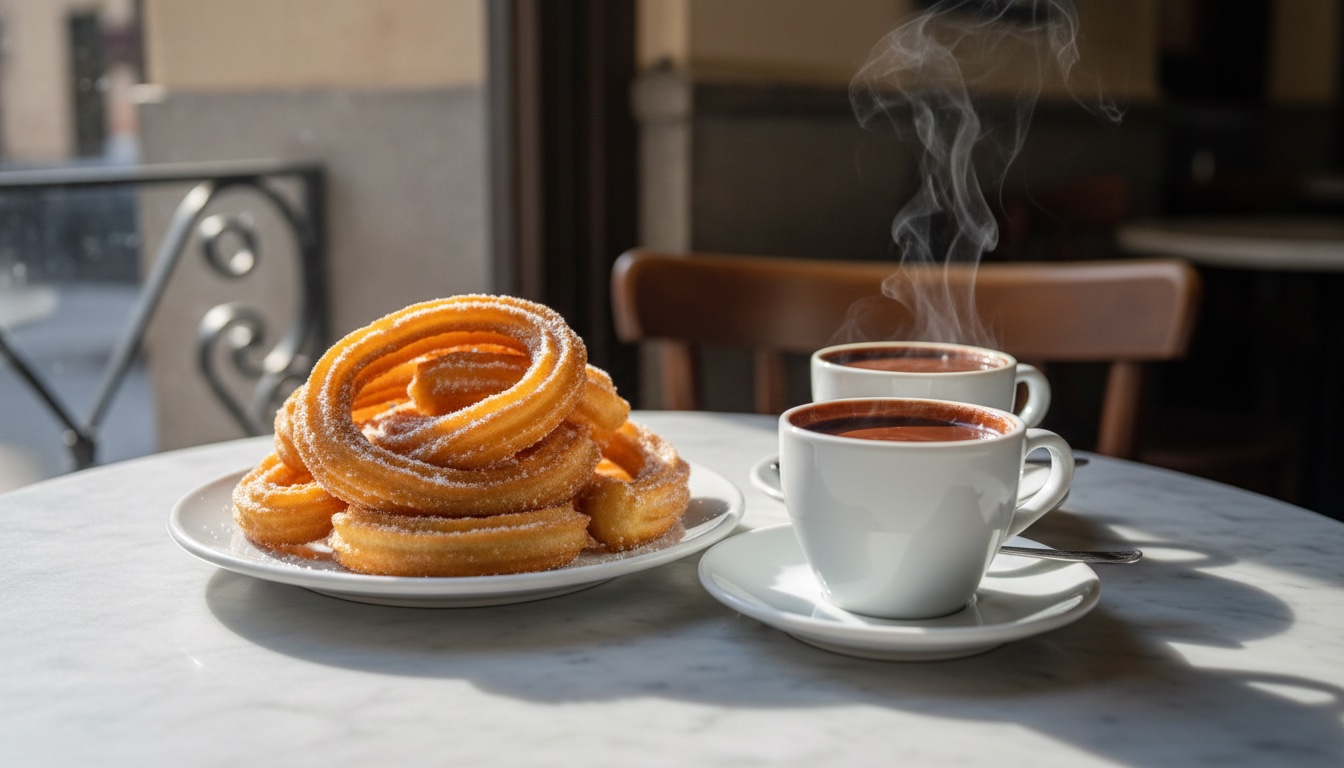
In Madrid, churros aren't a fair-ground snack. They're breakfast on a cold morning, or the last stop on the way home after a long night out, when the chocolaterías are still open and full. You get a plate of crisp, ridged fritters and a cup of hot chocolate so thick it coats the churro like a sauce. Dip, bite, dip again.
What surprises most people outside Spain is how plain the dough is. Classic Madrid churros have no eggs, no butter and no sugar. Just flour, water and a pinch of salt, which is exactly why they're so light and crisp.
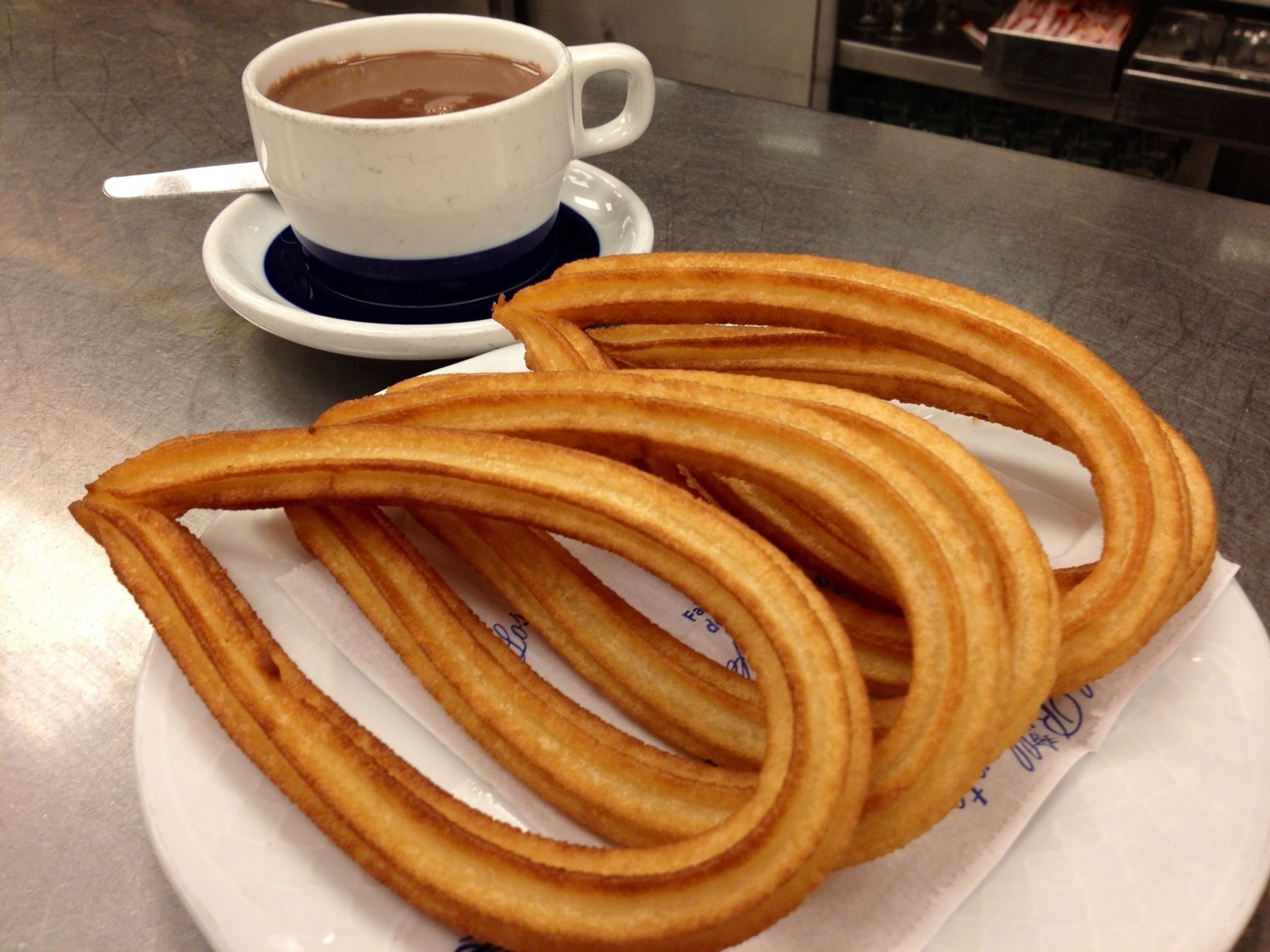
Churros de lazo, the looped Madrid kind, with a cup of chocolate. Photo: LWY from Pasadena, USA, CC BY 2.0, via Wikimedia Commons.

Where churros come from
The name comes from a sound. According to the Spanish Royal Academy's dictionary, churro imitates the sizzle of dough hitting hot oil. Where they come from is less clear. The food historian Michael Krondl has pointed out that a fritter of flour and water already appears in Apicius, a Roman cookbook from the first century, and the Mediterranean has been frying dough ever since. You'll also hear that Spanish shepherds invented them to replace fresh bread in the mountains, which is unlikely given how much oil frying needs. And the popular story that the Portuguese brought them back from China, inspired by a fried dough called youtiao, has no evidence behind it; El País included it in a list of food hoaxes in 2024.
Ingredients
For the churros (about 20):
- 1 cup (240 ml) water
- 1 cup (125 g) all-purpose flour
- 1/2 tsp fine salt
- 1 tbsp olive oil (optional, for a slightly softer dough)
- Sunflower or vegetable oil, for frying
- Sugar, for sprinkling (optional)
For the hot chocolate (4 cups):
- 2 cups (480 ml) whole milk
- 4 oz (115 g) dark chocolate, 60 to 70% cocoa, chopped
- 2 tbsp sugar, or to taste
- 1 tbsp cornstarch
You'll also need a piping bag with a large open star tip, about 1/2 inch (1 cm), or a churro press, and a deep, heavy pot.
This is the home version, one cup of water to one cup of flour: a firm dough, but one you can still pipe from a strong bag. Spanish churrerías work with roughly equal weights of water and flour, an even stiffer dough that needs a proper churrera to push it out.
Make the chocolate first
Whisk the cornstarch with a quarter cup of the cold milk until there are no lumps. Heat the rest of the milk in a saucepan until it steams, then add the chocolate and sugar and whisk until they melt. Pour in the cornstarch mixture and keep whisking over medium-low heat for three to five minutes, until it thickens to the texture of a warm pudding sauce. Leave it on the lowest heat while you fry.
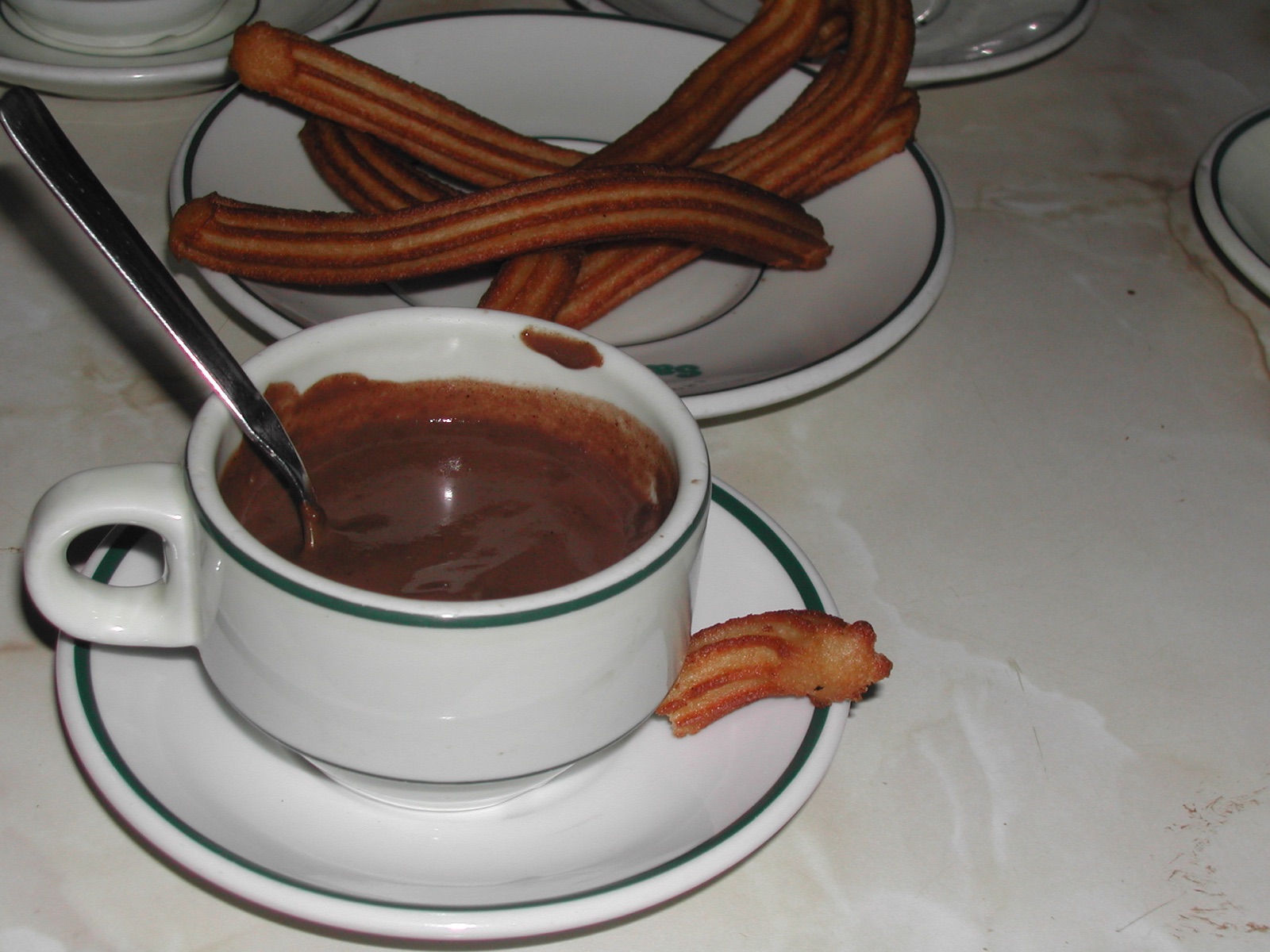
Chocolate con churros, the classic pairing. Photo: Thierry Caro, public domain, via Wikimedia Commons.

Then the churros
Pour at least 2 inches (5 cm) of oil into the pot and heat it to 375°F (190°C).
Bring the water, salt and olive oil to a boil. Take the pan off the heat, tip in all the flour at once and stir hard with a wooden spoon for about a minute. You'll get a thick, smooth ball of dough with no dry flour left. Let it cool for five minutes so it's easier to handle, then pack it into the piping bag. The dough is stiff, so use a strong bag and twist the top tight.
Pipe lengths of 4 to 5 inches (10 to 12 cm) straight into the hot oil, snipping them off with scissors. Fry a few at a time for two to three minutes, turning them once, until they're deep golden. Drain them on paper towels and sprinkle with sugar if you like, although in Madrid they usually come plain because the chocolate is sweet enough.
Serve them right away, with the chocolate in cups for dipping.
What makes them crisp
The oil temperature is everything. Below about 350°F (175°C) the churros drink oil and turn heavy; much above 400°F (205°C) they brown on the outside before the inside cooks. A cheap thermometer solves it. Pack the dough tightly into the bag, because trapped air can make the dough pop in the oil, and keep your hands and face back while you fry. The star tip matters too: the ridges are what make churros crunchy and help them cook evenly. And eat them within 15 minutes, because they go soft fast.
Churros or porras?
In Madrid you'll also find porras, thicker and longer churros made with a lighter dough that's fluffy inside. Many chocolaterías serve both, and madrileños have strong opinions about which is better.
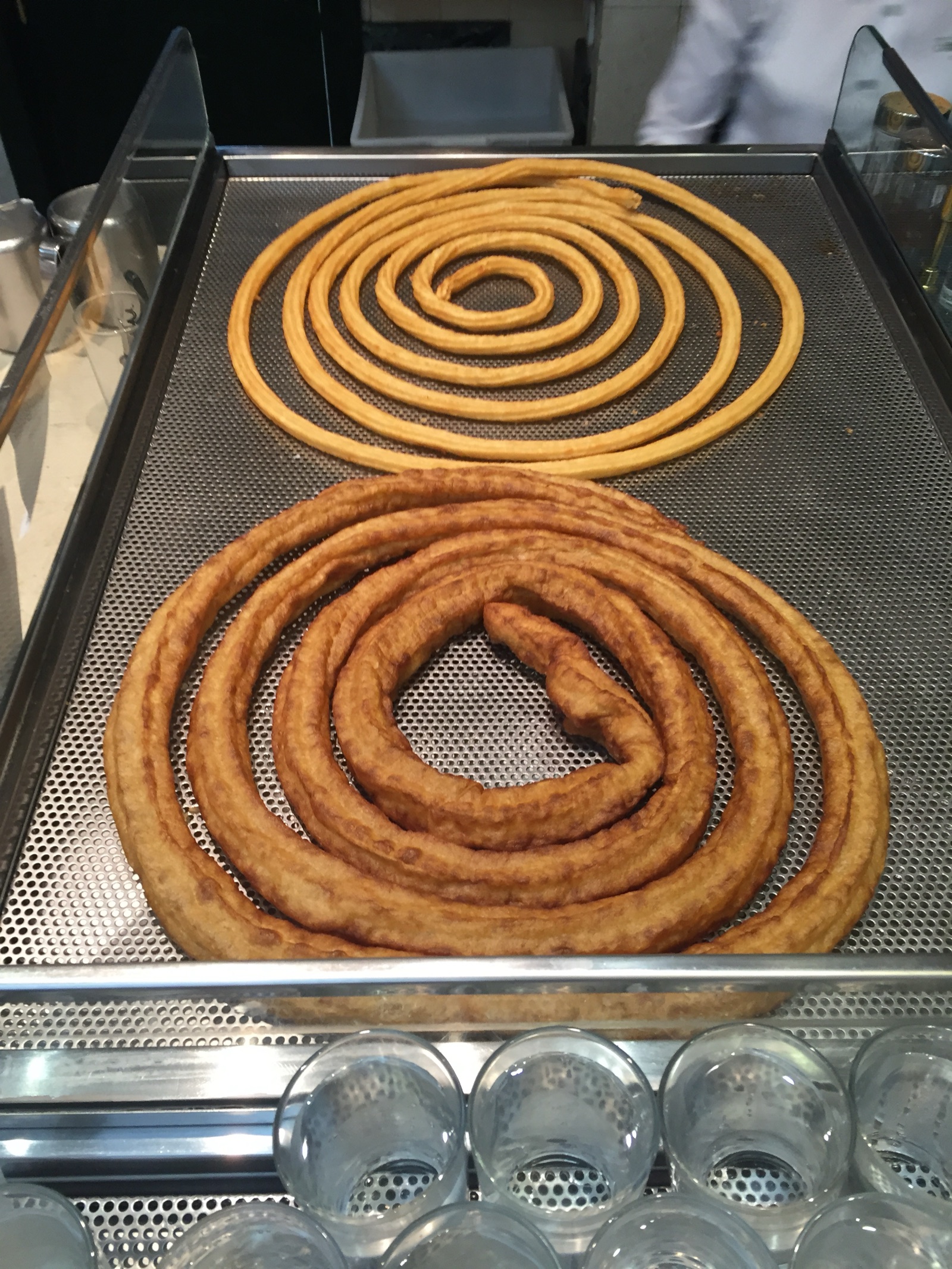
A thin churro and a thick porra, both fried as spirals. Photo: Joy, CC BY 2.0, via Wikimedia Commons.

Porras are piped as one long spiral into the oil and cut into pieces once they're fried, and their dough has a little more water and a pinch of baking soda. In Madrid, the thin churros are often fried as loops, churros de lazo, which used to be sold threaded on a reed so you could carry them home.
The same churro, a dozen names
Travel south and the name changes almost from city to city. They're tejeringos in Málaga, Cádiz and Granada, jeringos in Córdoba, calentitos in Seville and Huelva, and tallos in Jaén. The Royal Academy traces tejeringo to the syringe-like tool used to squeeze out the dough. The word churro has slowly replaced most of the local names, but you'll still hear them in Andalusia.
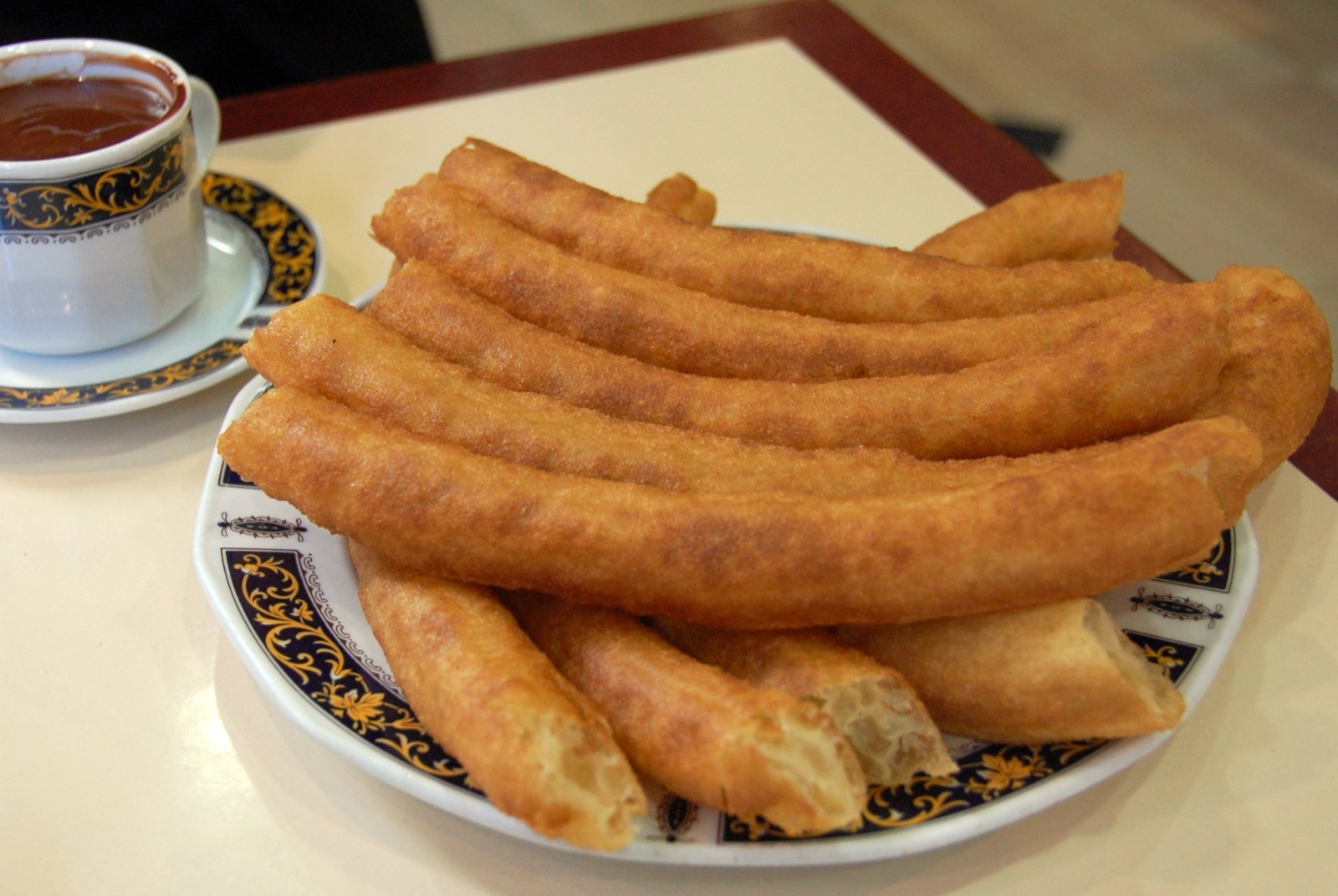
Churros and chocolate in Granada, where they're often called tejeringos. Photo: LWY from Pasadena, USA, CC BY 2.0, via Wikimedia Commons.

When Spaniards eat them
Mostly at breakfast or as an afternoon snack, dipped in hot chocolate or in milky coffee, and far more in winter than in summer. Churrerías, the shops and kiosks that specialize in them, are busiest in winter. And there's one date when they're almost compulsory: the early hours of New Year's Day, after the twelve grapes and the party, when a lot of Spaniards go out for chocolate con churros before going to bed.
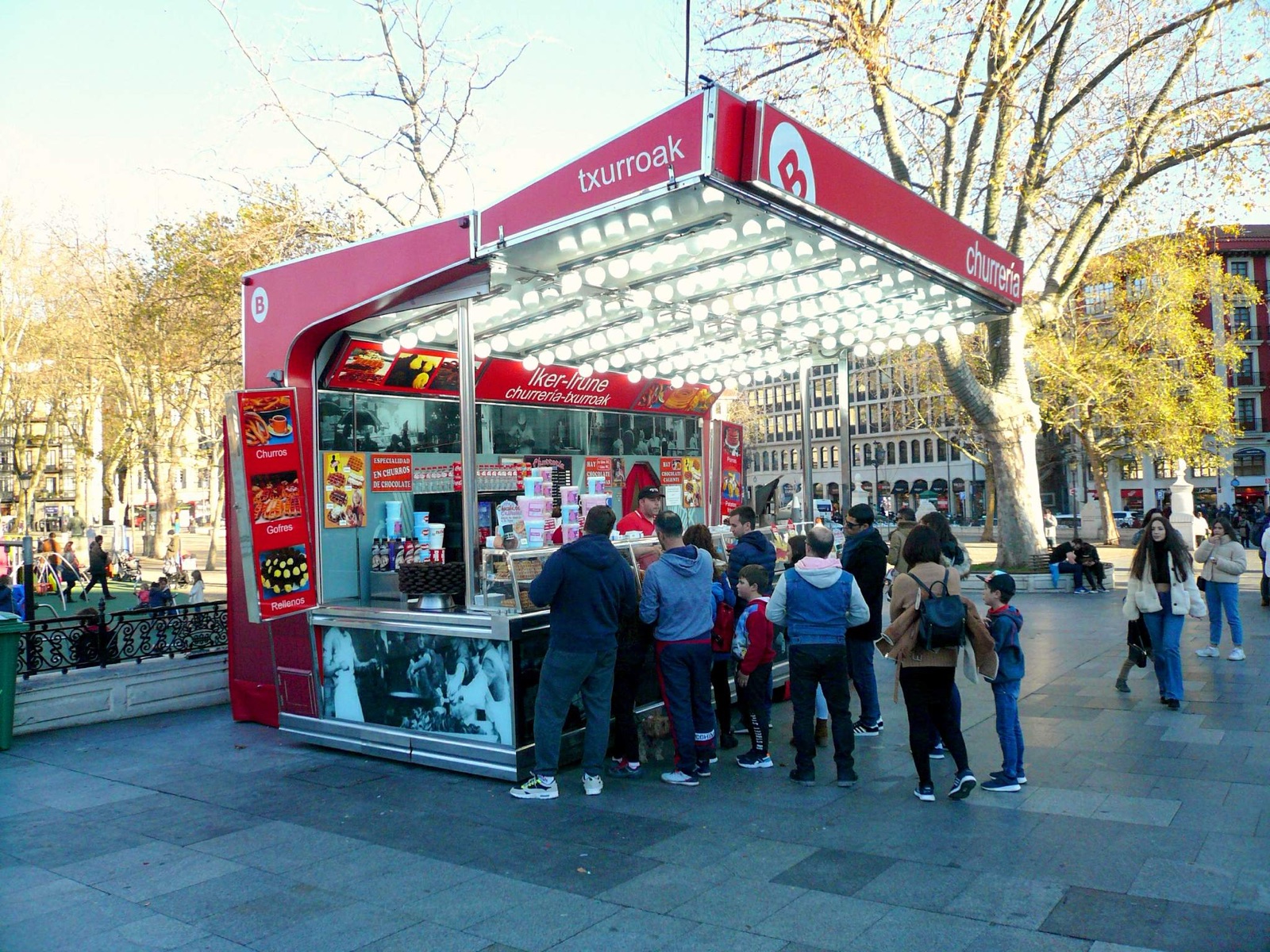
A churros kiosk in Bilbao. Photo: Zarateman, CC0, via Wikimedia Commons.

Spanish churros or Mexican churros?
In the US, most churros are Mexican-style, sold at theme parks, fairs and street stands. They're usually rolled in cinnamon sugar, and in Mexico they're often filled with chocolate, jam, condensed milk or cajeta, a goat's milk caramel. Spanish churros are plainer: no cinnamon, often no sugar at all, because the point is the hot chocolate they're dipped in. Both are the real thing, made for different tables.
Quick answers
Can I make the dough ahead? It's best fresh, but it will keep covered for about an hour at room temperature.
Can I bake them or use an air fryer? They won't taste like churros. This dough is made to be fried; baked, it turns out dry. Spanish supermarkets do sell frozen churros that are already fried and only need reheating in the oven or an air fryer, which is a different thing.
Can churros be gluten-free? Yes, with a dough made from cornstarch, rice flour or mashed potato or sweet potato instead of wheat flour. The texture is a little different.
Is Spanish hot chocolate the same as cocoa? Not at all. It's much thicker, almost a warm pudding, and it's made for dipping rather than sipping.
Why do some churros have cinnamon? That's the Mexican style. In Spain, churros are usually plain or just sprinkled with sugar.
Zokko is a community marketplace based in Spain. In La Plaza we write about the places, the food and the everyday life we know.
Marta Ledesma
Escribe en La Plaza sobre cultura, gastronomía y consumo.
Comentarios (0)
No hay comentarios todavía. ¡Sé el primero en comentar!