Spanish Tortilla (Tortilla de Patatas): The Classic Recipe from Spain
Potatoes poached slowly in olive oil, eggs and salt: the juicy potato omelette from every tapas bar in Spain, with the famous flip explained without drama.

Marta Ledesma
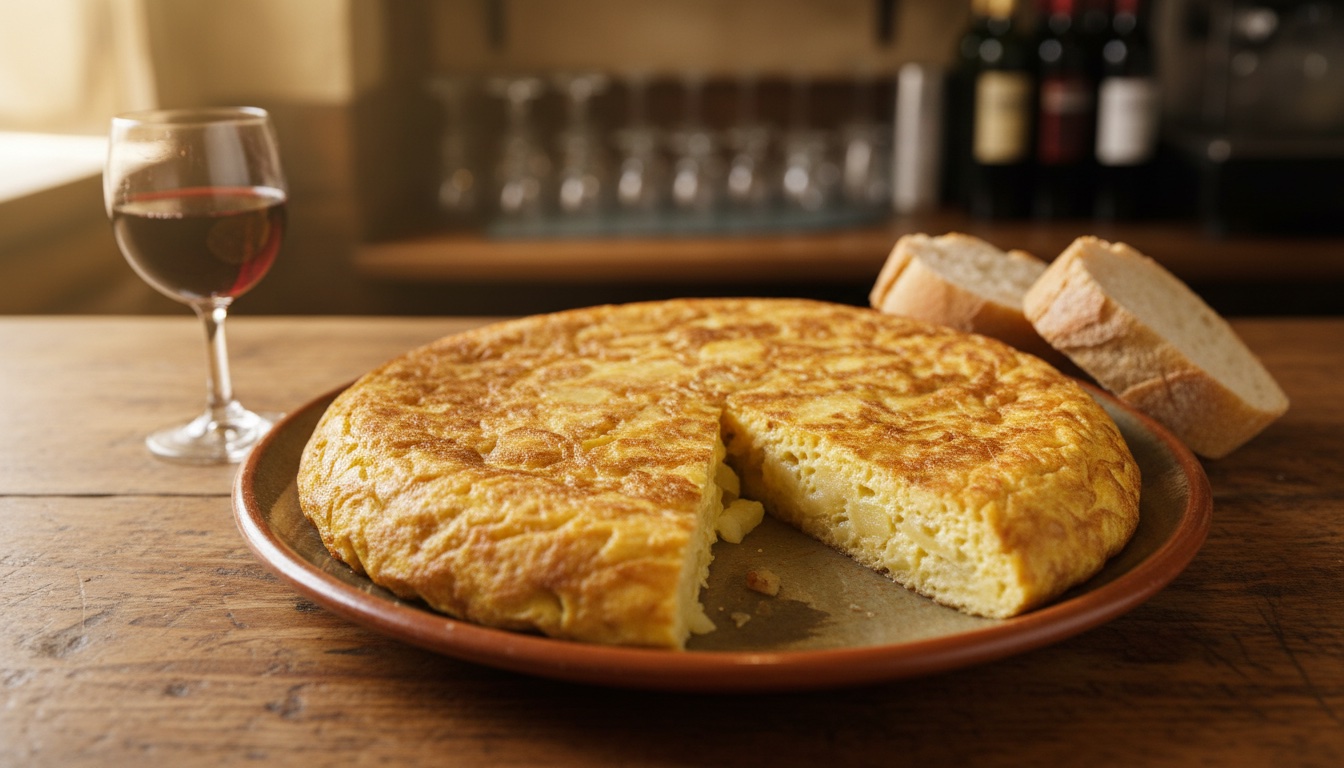
If you want to start an argument in Spain, ask whether a tortilla should have onion. People who say yes call themselves concebollistas; the others, sincebollistas, will tell you onion is for people who can't cook. The numbers aren't close, though. In 2026, Spain's official polling institute, the CIS, asked about 6,000 people, and 71.2% said a tortilla needs onion, against 22% who said it doesn't. Everybody agrees on the rest: potatoes cooked slowly in olive oil, eggs, salt, and a center that's still a little soft.
The tortilla de patatas is the dish Spaniards grow up with. You'll find it in almost every bar in the country, cut into thick wedges with a slice of bread, and in most homes on a Sunday night. It isn't a frittata and it isn't an American omelette. It's thick, round and tender, and it's just as good warm as it is the next day at room temperature, which is why it shows up at every picnic and every beach day.
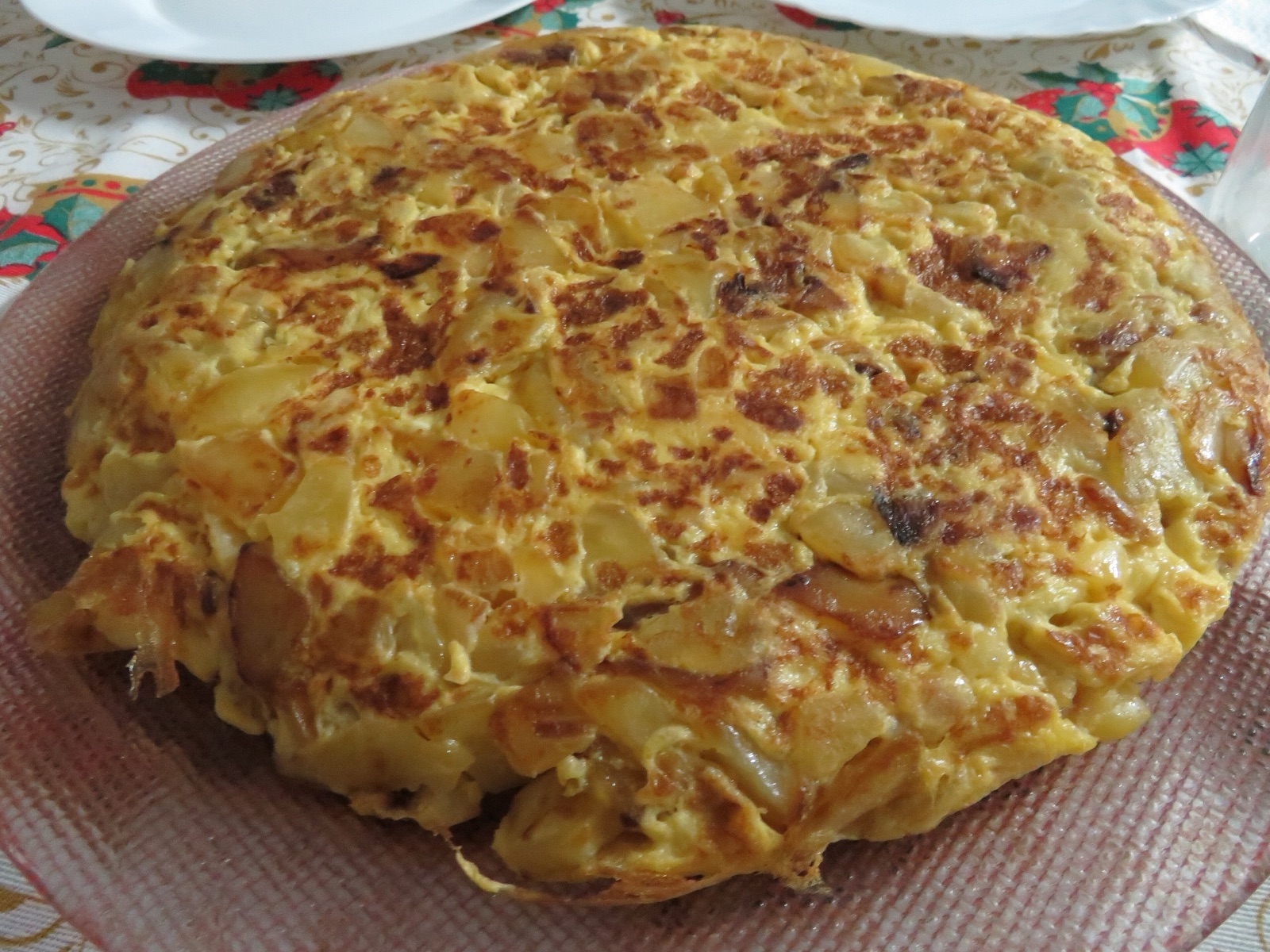
A tortilla with potatoes and onion, the way most Spaniards like it. Photo: Juan Emilio Prades Bel, CC BY 4.0, via Wikimedia Commons.

Where the tortilla comes from
There's no birth certificate, but there are clues. The oldest written mention found so far is from 1767, in an agriculture manual by Joseph Antonio Valcárcel, which says that in Spain potatoes were usually eaten "in stews and tortillas". In 1798, two landowners in Villanueva de la Serena, in Extremadura, wrote about the tortilla as a cheap way to feed people during hard times, and since 2013 the town has held a tortilla fair.
A few years later, in 1817, an anonymous letter to the parliament of Navarre complained about how poorly mountain farmers ate, with "two or three eggs in a tortilla for five or six people, because our women know how to make it big and thick with few eggs, mixing in potatoes, bits of bread or something else". It was a way to make a few eggs feed a whole family, and it still is.
There's also a legend, which nobody has been able to prove, that General Tomás de Zumalacárregui came up with it during the siege of Bilbao in the Carlist wars, as a quick, filling meal for his soldiers. And during the Spanish Civil War, when there were no eggs or potatoes, people made a "fake tortilla" with the white pith of oranges and a batter of flour and water.
Onion or no onion
The CIS has asked the question more than once, and onion has won every time. In 2023 it was 70.4% for onion. The young are the most convinced: that year, 77.6% of people aged 25 to 34 wanted it. In the 2026 survey, the tortilla even edged out paella as the dish that best represents Spain, chosen by 62.7% of people against 61.1% for paella.
In practice, make it the way you like it. Onion makes the tortilla sweeter and juicier; without it, it tastes more of potato and egg. The recipe below works both ways.
Ingredients (serves 4 to 6)
- 2 lb (900 g) potatoes, such as Yukon Gold
- 1 medium yellow onion (optional, see above)
- 6 large eggs
- About 1 1/2 cups (360 ml) olive oil, to cook the potatoes
- 1 tsp fine salt, or to taste
Don't panic about the oil. The potatoes simmer gently in it rather than soaking it up, and afterwards you strain it and keep it in a jar for the next tortilla.
You'll also need a 10-inch (25 cm) nonstick skillet with sloped sides and a flat plate that's wider than the pan.
How to make it
Slice. Peel the potatoes, cut them into quarters lengthwise and slice them thin, about 1/8 inch (3 mm). Slice the onion thin as well.
Poach the potatoes in oil. Heat the oil in the skillet over medium heat and add the potatoes and onion with a pinch of salt. They should bubble gently, not fry. Let them cook for 20 to 25 minutes, turning them now and then, until they're soft enough to break with a spoon. Pale and tender is what you want; if they start to brown, the heat is too high.
Drain. Tip everything into a colander set over a bowl and let the oil drain off.
Mix with the eggs and wait. Beat the eggs with the salt in a big bowl, add the warm potatoes and press them gently into the egg. Now leave it for ten minutes. It's an old home cook's trick: the potatoes soak up some of the egg, and the tortilla holds together much better.
Set the first side. Wipe out the skillet, add a tablespoon of the strained oil and heat it over medium-high. Pour in the mixture, spread it out and give it a minute, then turn the heat down to medium. Run a spatula around the edge to round it off and shake the pan every so often so it doesn't stick. After three or four minutes the edges should be set and the bottom golden.
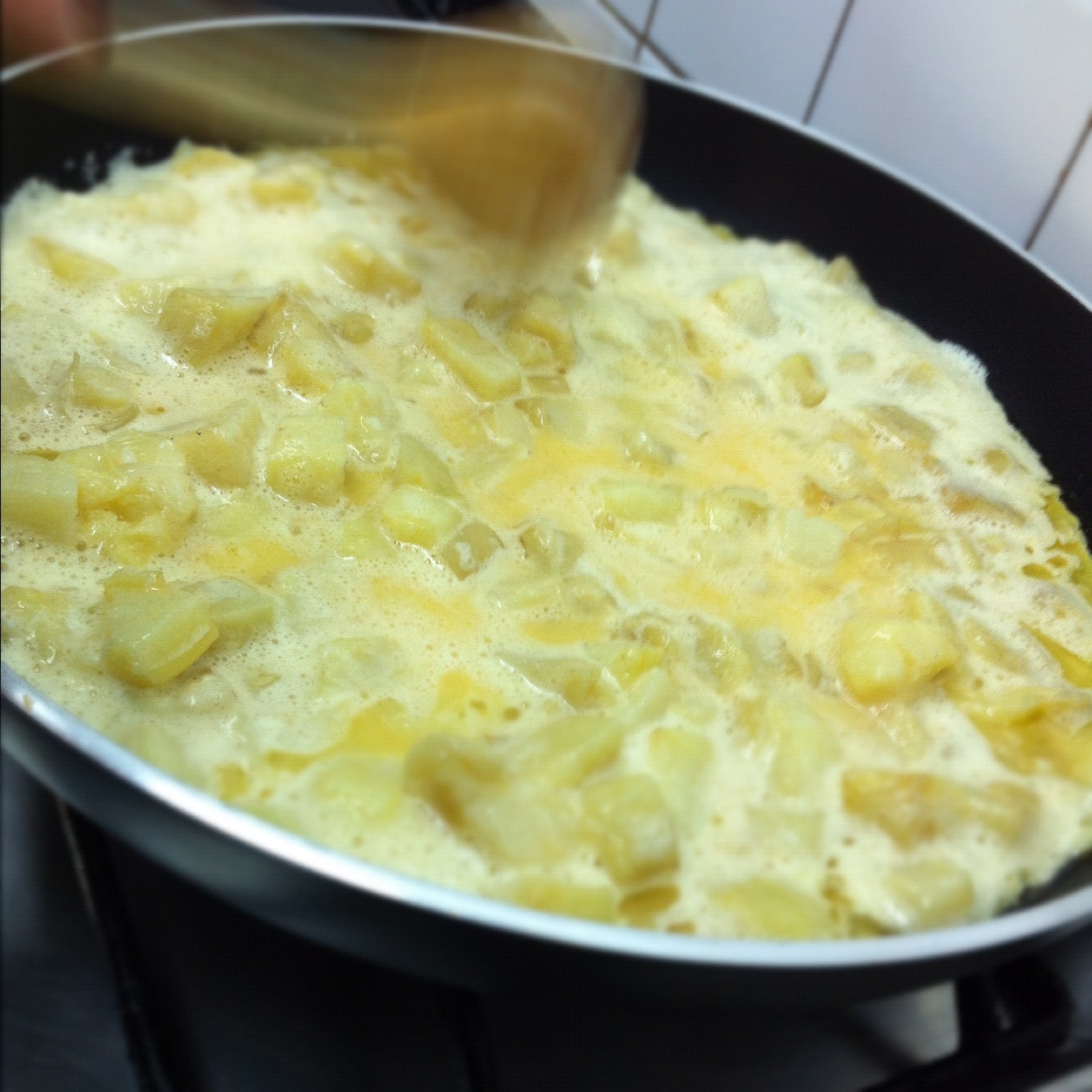
The tortilla setting in the pan, just before the flip. Photo: Xavi Talleda from Barcelona, CC BY 2.0, via Wikimedia Commons.

Flip it. This is the part people dread. Put the plate upside down on top of the pan, hold it firmly with one hand and the handle with the other, and turn the whole thing over in one quick, confident move. Hesitating is what causes the mess. Then slide the tortilla back into the pan, uncooked side down, and tuck the edges in with the spatula.
Finish. One or two more minutes gives you the juicy center most Spaniards like. Three or four if you prefer it fully set. Slide it onto a plate and let it sit for five minutes before you cut it.
Runny or set?
The other debate is how runny it should be, and the runny side is ahead: in the 2026 CIS survey, 56.3% of Spaniards wanted their tortilla poco hecha, barely set in the middle, against 27.2% who like it firm.
The extreme version comes from Betanzos, a town in Galicia, where the tortilla is made with just potatoes, eggs, olive oil and salt, no onion, and cooked so briefly that the center flows when you cut it. The town traces the style to a cook called Angelita at an eatery named La Casilla, around 1910, and has held a tortilla week every year since 2007. The style has spread far beyond Galicia: the Spanish tortilla championship of October 2025 was won by a Betanzos-style tortilla made in Madrid.
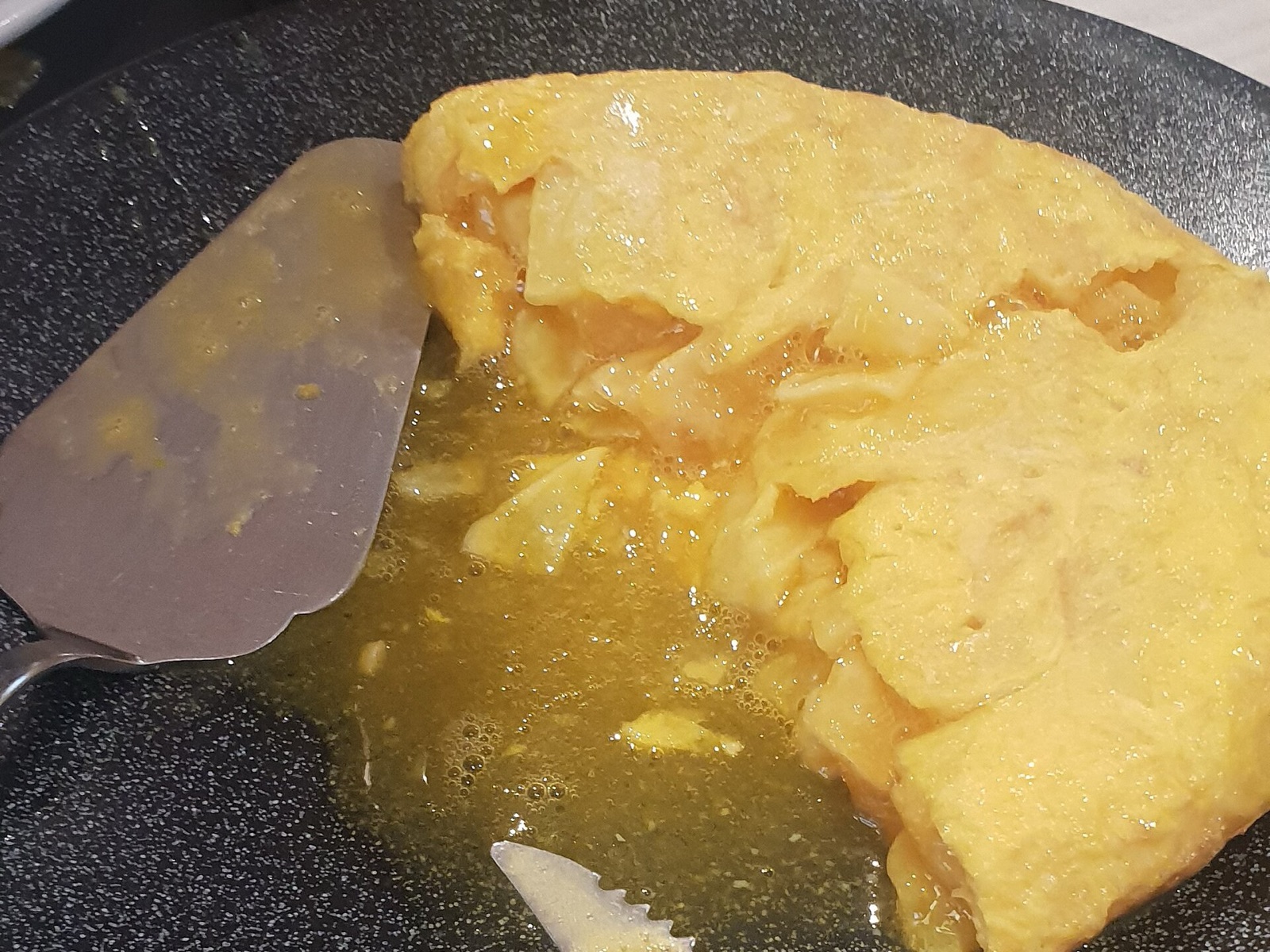
A Betanzos-style tortilla, with a center that runs (cropped). Photo: Bea.miau, CC0, via Wikimedia Commons.

A runny center means the eggs aren't fully cooked. If you're making it for small children, pregnant women or older people, cook it through or use pasteurized eggs. Many Spanish bars use pasteurized liquid egg for exactly that reason.
How Spaniards eat it
In a bar, you'll get a wedge with a slice of crusty bread, or small squares on toothpicks as a tapa. At home it's dinner with a simple tomato salad. And in a crusty roll, a slice of tortilla is one of the most popular sandwiches in the country.
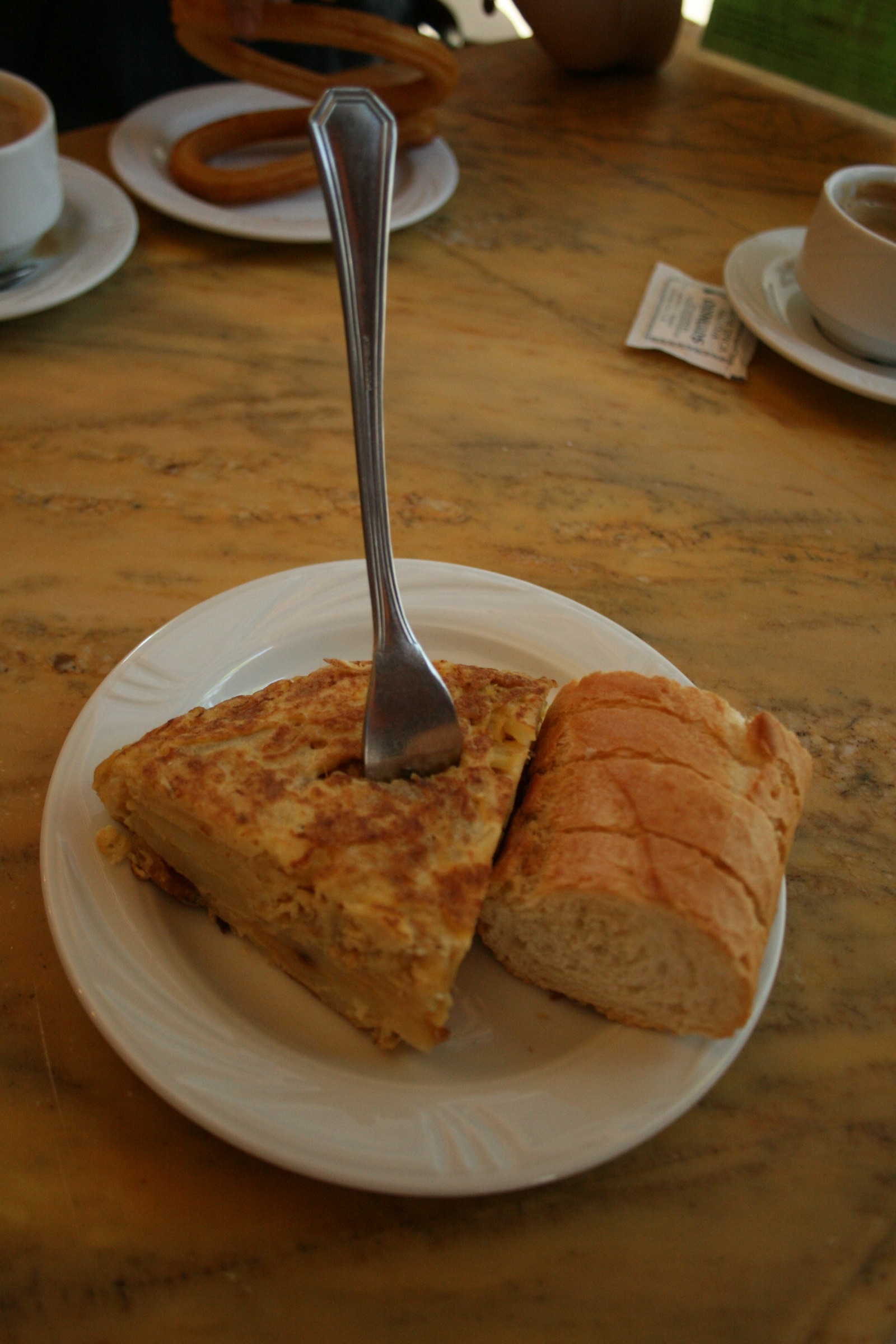
A pincho de tortilla with bread in a Madrid café. Photo: Tamorlan, CC BY 3.0, via Wikimedia Commons.

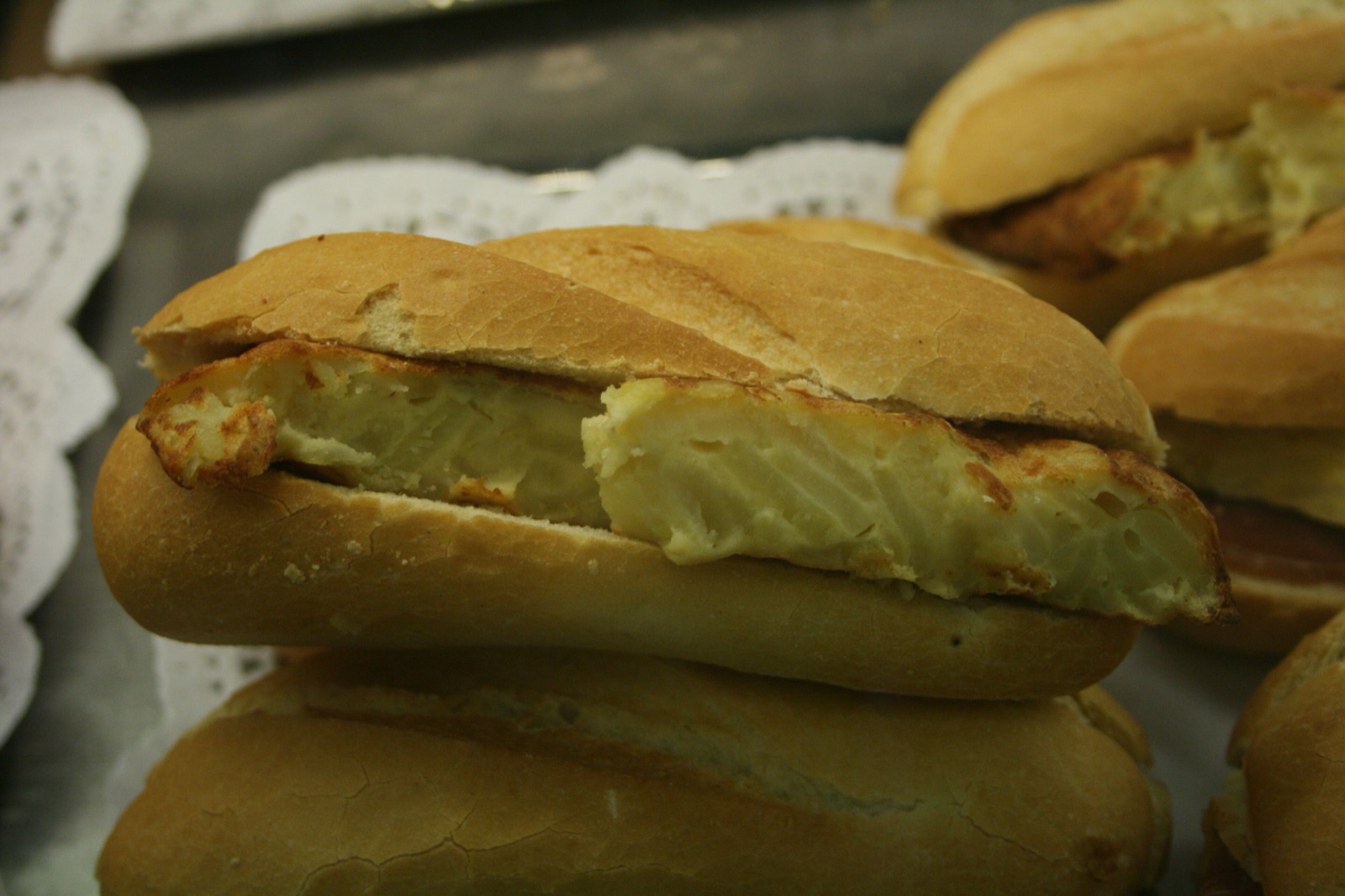
Bocadillos de tortilla on a bar counter. Photo: Tamorlan, CC BY 3.0, via Wikimedia Commons.

Variations you'll find in Spain
The classic is potatoes and eggs, with or without onion, but bars have their own versions. The tortilla paisana adds chorizo, red pepper and peas. A stuffed tortilla is cut in half like a cake, or made as two thin ones, and filled with ham and cheese or vegetables. Most Spaniards still order the plain one.
A few things that help
Waxy or all-purpose potatoes keep their shape; very floury ones fall apart. Keep the heat low while the potatoes cook. Don't skip the ten-minute rest. And if the flip goes wrong and the tortilla breaks, push it back together with the spatula. Once it's on the plate, nobody will ever know.
Quick answers
Can I make it ahead? Yes, and many Spaniards prefer it that way. It keeps for two days in the fridge; take it out an hour before eating.
Can I use less oil? You need enough to cook the potatoes gently, but since you strain and reuse it, very little ends up in the tortilla.
How is it different from a frittata? A frittata is often finished in the oven and filled with all kinds of things. A Spanish tortilla is cooked on the stove, flipped, and made with potatoes, eggs and, depending on who you ask, onion.
Is a runny tortilla safe? The center isn't fully cooked, so for small children, pregnant women and older people use pasteurized eggs or cook it until set.
Zokko is a community marketplace based in Spain. In La Plaza we write about the places, the food and the everyday life we know.
Marta Ledesma
Escribe en La Plaza sobre cultura, gastronomía y consumo.
Comentarios (0)
No hay comentarios todavía. ¡Sé el primero en comentar!